작가 약력
A Life Carved in Stone: The Sculptural Journey of Ercole Drei
Ercole Drei, born in Faenza on September 28th, 1886, emerged as a significant figure in Italian sculpture during a period of dynamic artistic transition. His life unfolded against the backdrop of shifting aesthetic ideals—from the waning influence of traditional academicism to the burgeoning currents of modernism and then a deliberate return to classical forms. Drei’s path wasn't one of radical revolution but rather a considered evolution, marked by diligent study, technical mastery, and a profound engagement with the human form. He began his formal training at the Scuola di Arte e Mestieri in Faenza at just fourteen years old, demonstrating an early aptitude for artistic expression. A scholarship to the Academy of Fine Arts in Florence proved pivotal, where he benefited from the guidance of Augusto Rivalta and, crucially, the mentorship of Giovanni Fattori—a painter whose influence instilled in Drei a deep appreciation for realism and emotional depth.
Early Works and Academic Foundations
Drei’s initial artistic explorations were characterized by a meticulous attention to detail and a focus on portraiture and figurative studies. Works like “Testa di donna” (1906) reveal a nascent talent for capturing the subtleties of human anatomy and expression. His dedication earned him recognition in 1913 when he won the prestigious National Pensioner competition with his sculpture, “Death of the Hero,” an achievement that secured his relocation to Rome—the heart of Italian artistic life. The early years in Rome were a period of consolidation, as Drei honed his skills and absorbed the rich artistic heritage surrounding him. He participated in the 1920 Venice Biennale with “Adolescent”, signaling his growing presence on the national art scene. These formative works demonstrate a clear grounding in academic principles, yet hints of a personal style—a sensitivity to form and a burgeoning interest in monumental scale—begin to emerge.
Monumental Commissions and a Return to Classicism
The 1920s witnessed Drei’s transition towards larger-scale public commissions, solidifying his reputation as a sculptor capable of handling ambitious projects. He undertook significant works such as the monument to Nazario Sauro in Ravenna and the monument to Vittorio Emanuele in Rome—projects that demanded not only technical prowess but also an understanding of civic symbolism and historical narrative. This period marked a deliberate shift away from modernist experimentation towards a more classical aesthetic, characterized by idealized forms, balanced compositions, and a sense of timeless grandeur. This wasn’t merely a stylistic choice; it reflected a broader cultural trend in Italy during the interwar years—a yearning for order, stability, and a connection to the nation's glorious past.
Teaching and Legacy
In 1927, Drei was appointed Professor of Sculpture at the Royal Academy of Fine Arts in Bologna, a position he held with distinction for thirty years, eventually becoming Director between 1952 and 1957. His tenure as an educator profoundly influenced generations of Italian sculptors, instilling in them not only technical skills but also a deep respect for artistic tradition and the importance of anatomical study. His own work continued to evolve, balancing monumental public commissions with more intimate sculptures and portraits. Perhaps his most widely recognized achievement came with “Giuocatori di calcio” (Football Players), created in 1929, which received an Honourable Mention at the 1932 Olympic Games art competition—a testament to his ability to capture both physical dynamism and human spirit. Ercole Drei passed away in Rome on October 1st, 1973, leaving behind a legacy of refined craftsmanship, monumental works that grace public spaces, and a generation of artists shaped by his dedication and vision. His sculptures stand as enduring symbols of an era—a testament to the power of art to reflect cultural values, celebrate human achievement, and transcend the boundaries of time.
Influences and Artistic Philosophy
Drei’s artistic journey was a synthesis of diverse influences. The realism and emotional intensity he absorbed from Giovanni Fattori provided a foundation for his early figurative work. The classical sculptures of antiquity—encountered during his studies in Florence and Rome—inspired his later embrace of idealized forms and balanced compositions. However, Drei wasn't simply a replicator of past styles; he infused his work with a distinctly Italian sensibility—a sensitivity to form, a passion for narrative, and a deep understanding of the human condition. His sculptures weren’t merely representations of physical reality but rather expressions of emotional truth and symbolic meaning. He believed in the power of art to elevate the spirit, inspire civic pride, and connect viewers to a shared cultural heritage. This philosophy is evident throughout his oeuvre—from the monumental public commissions that celebrate national heroes to the intimate portraits that capture the essence of individual character.

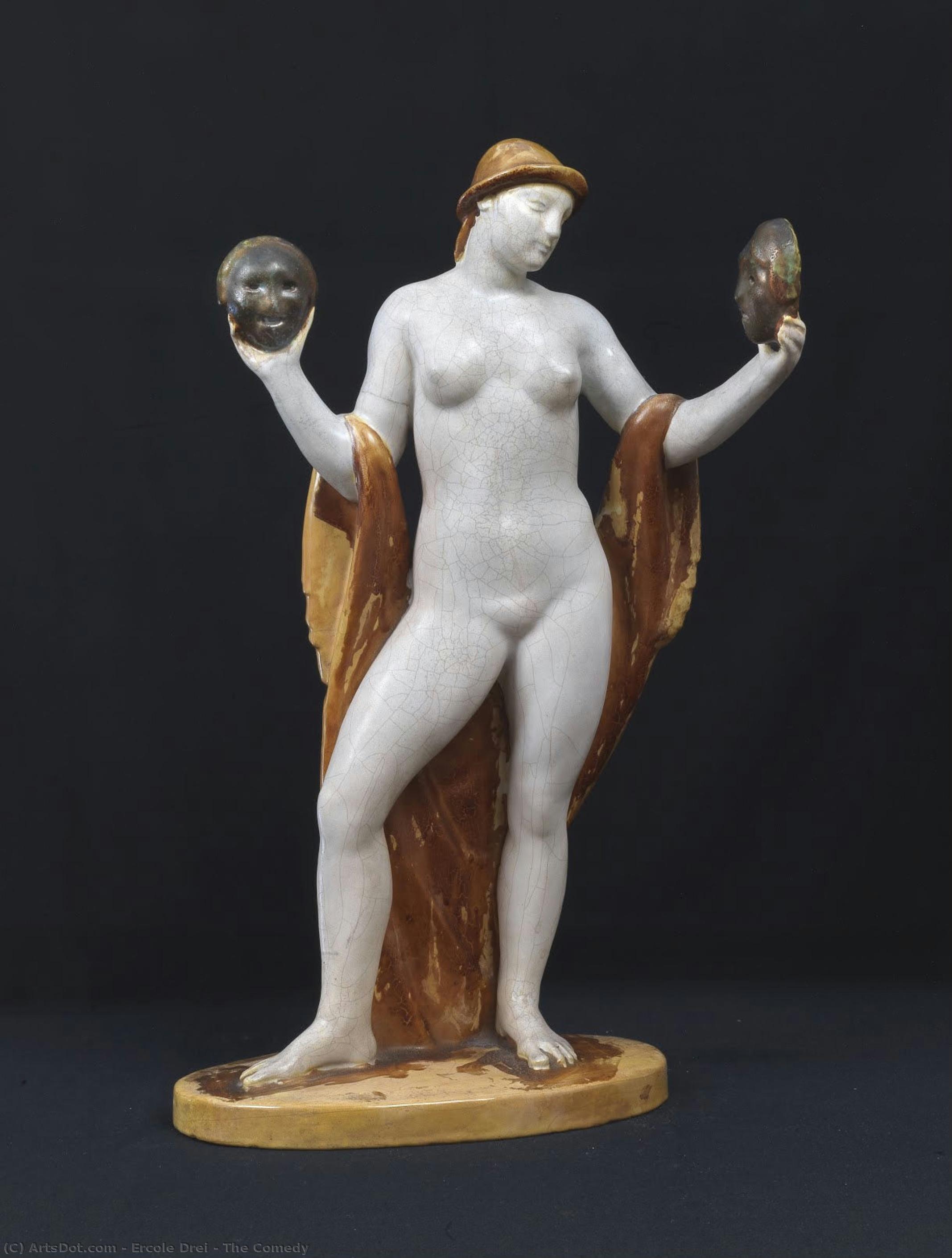
 24.0 x 45.0 cm
 Biennale Internazionale dell'Antiquariato di Firenze
 프린트 주문으로 전환





 미리보기
미리보기
 공유하기
공유하기 공유하기
공유하기
 상세 정보
상세 정보

 다운로드
다운로드
 유사 작품
유사 작품 X-레이
X-레이 슬라이드 쇼
 더 보기
더 보기






































 유리 옵션은 110cm 미만 크기에서만 선택 가능합니다.


