


 실제 크기로 보기
 보내기
보내기 공유하기
공유하기
 상세 보기
상세 보기 가이드 보기

 이미지 다운로드
 유사 작품 더 보기
 X-레이
X-레이 슬라이드 쇼 보기
 통계 정보
통계 정보Venus at Vulcan's Forge
 Oil On Panel
- WallArt
- Northern Renaissance
 1560
1560- Renaissance
 150.0 x 198.0 cm
 슈타틸리체 무제엔
A dynamic display of mythological grandeur unfolds in Frans Floris's Venus at Vulcan's Forge, a masterpiece of Flemish Renaissance Romanism that invites you to explore the power and beauty of this classical scene.
Explore the history paintings & portraits of Frans Floris, a Flemish master influenced by Italy's Romanism movement. Discover his role in Northern Renaissance art.
 상세 보기
상세 보기
지클레 / 아트 프린트
빠른 제작과 다양한 마감 옵션을 선택할 수 있는 박물관 수준의 지클레이 및 캔버스 프린트. ( 수작업 채색 복제본 주문하기 디지털 이미지 판매 채널로 전환)




P118B ₩10

P118H ₩10

P118W ₩10

P438Z ₩10

P508JH ₩12

P508YH ₩12

P805H ₩10

P805Z ₩10

P919BZ ₩10

P919G ₩10

P919XJ ₩10

P959ZH ₩10

P968JZ ₩12

W106C ₩8

W218G ₩10

W218JH ₩8

W218Y ₩10

W307PJ ₩10

W316G ₩10

W316PJ ₩8

W316Y ₩10

W398PJ ₩8

W4111J ₩10

W500HY ₩15

W500JH ₩15

W692G ₩12

W849H ₩8

W940BG ₩15

W953PJ ₩8




표준 규격
맞춤 제작
CM
INCH
작품의 원본 비율을 그대로 유지하는 프리셋 사이즈 중에서 선택해 보세요.
Loading sizes...

가로 너비
높이
액자나 벽면 크기에 맞춰 필요한 가로와 세로 길이를 입력해 주세요. 프린트는 원본 이미지보다 크게 제작할 수 없으며 오직 자르는 것만 가능하므로, 비율이 다른 사이즈를 선택할 경우 이미지의 일부가 잘려 나갈 수 있습니다. 인쇄 작업에 들어가기 전, 최종 확인을 위해 디지털 목업을 보내드립니다. 이 페이지에 표시된 이미지는 실제 잘리는 영역을 나타내지 않으며, 오직 목업을 통해서만 정확한 확인이 가능합니다.


 유리 옵션은 110cm 미만 크기에서만 선택 가능합니다.

Venus at Vulcan's Forge
지클레 / 아트 프린트
복제본 규격
-


총 결제 금액
₩ 94169
작가 소개
The Flemish Master of Romanism: The Life and Legacy of Frans Floris
In the vibrant, intellectual landscape of the 16th-century Low Countries, few figures loomed as large or as influential as Frans Floris. Known to history as Frans Floris the Elder, this Flemish Renaissance pioneer acted as a vital bridge between the Northern traditions of his homeland and the monumental grandeur of the Italian High Renaissance. Born in Antwerp around 1519 into a lineage of skilled craftsmen, Floris carried the weight of a family tradition rooted in stonemasonry and artistry. This heritage of precision and structural understanding would later manifest in his ability to compose massive, complex scenes that commanded the attention of both royalty and the burgeoning merchant class of Antwerp.
The trajectory of Floris’s career was irrevocably altered by his immersion in Romanism, a stylistic movement that saw Northern artists traveling to Italy to absorb the lessons of masters like Michelangelo and Raphael. Under the guidance of mentors such as Lambert Lombard, Floris developed an acute sensitivity to anatomical accuracy and the dramatic use of light and shadow. His work became a profound dialogue between Flemish meticulousness and Italian muscularity. This synthesis allowed him to move beyond mere representation, creating works that embodied the humanist ideals of his era—where classical mythology and biblical narratives were reimagable through a lens of epic scale and emotional depth.
A Tapestry of Myth and Allegory
The breadth of Floris’s oeuvre is nothing short of extraordinary, spanning monumental history paintings, intimate portraits, and intricate designs for tapestries. His mastery lay in his ability to breathe life into the ancient myths, transforming static legends into dynamic, breathing dramas. In works such as The Judgment of Paris, one can witness the opulent textures and complex compositions that defined his mature style, utilizing classical mythology to explore themes of beauty, desire, and fate. Similarly, his Pomona serves as a stunning testament to his ability to depict mythological abundance, blending the grotesque with the sublime in a way that foreshadowed the dramatic energy of the Baroque era.
Beyond the grand scale of his mythological epics, Floris possessed a remarkable gift for capturing the human essence in portraiture and allegorical studies. His paintings often functioned as intellectual puzzles, rich with symbolic detail intended for a sophisticated audience:
- The Allegory of Music: A captivating scene where a lady with a lute is set against the backdrop of Roman soldiers, offering a profound glimpse into the era's use of musical symbolism.
- Head of a Woman: A masterclass in light and shadow, where pearl-adorned curls and lifelike skin tones demonstrate his command over the subtle nuances of portraiture.
- The Awakening of the Arts: A work that showcases his ability to utilize rich textures and dynamic movement to convey the very spirit of creative rebirth.
Historical Significance and Enduring Influence
Frans Floris was more than just a painter; he was an architect of a new Northern aesthetic. By integrating the anatomical rigor of the Italian Renaissance with the narrative richness of Flemish tradition, he helped establish Antwerp as a premier center for European art. His influence extended far beyond the canvas, as his designs for tapestries and prints disseminated his Romanist ideals across the continent, shaping the visual language of generations of Northern artists.
Though his life was cut short in 1570, the impact of his work remained a cornerstone of the Northern Renaissance. He successfully navigated the transition from the late Gothic sensibilities to the sophisticated humanism of the 16th century, leaving behind a legacy of monumental history paintings that continue to captivate viewers with their dramatic compositions and profound intellectual depth. To study the works of Frans Floris is to witness the very moment when the North truly embraced the light of the Renaissance.

Frans Floris
1519 - 1570
작가 정보 요약
- Artistic Movement Or Style: Romanism
- Artists Or Movements Influenced By This Artist: ['Lucas de Heere']
- Artists Who Influenced This Artist: ['Lambert Lombard']
- Date Of Birth: 1519
- Date Of Death: 1570
- Full Name: Frans Floris
- Nationality: Flemish
- Notable Artworks:
- The Awakening of the Arts
- Banquet of the Gods
- Head of a Woman
- Place Of Birth: Antwerp
관련 기사
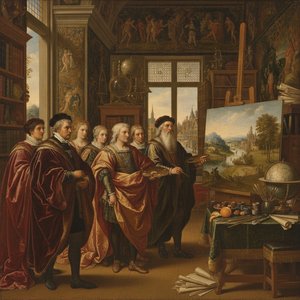
The Timeless Allure of Flemish Painting: A Journey Through Light and Detail
Embark on a luminous journey through the Flemish masters. Discover the alchemical secrets of oil glazing, intricate symbolism, and the breathtaking realism of the Northern Renaissance. An expert exploration of light and detail for the discerning art enthusiast.

Mastering Drama & Light: A Guide to the Grandeur of Flemish Baroque Art
Explore the breathtaking drama of Flemish Baroque art. Discover how masters like Peter Paul Rubens used chiaroscuro and motion to redefine 17th-century grandeur through a sophisticated lens of history and light.

Capturing Eternal Glory: Impressionist Visions of the Roman Empire's Timeless Grandeur
Explore the breathtaking intersection of Roman grandeur and Impressionist light. Discover how masters like Monet reimagined classical ruins through vibrant, emotive brushstrokes. A cultural journey for true art lovers seeking to bring eternal glory into their homes.