
작품의 원본 비율을 유지하는 미리 설정된 크기 중에서 선택하세요.

특정 프레임이나 공간에 맞도록 직접 크기를 입력할 수 있습니다. 선택하신 크기가 원본 이미지의 비율과 일치하지 않는 경우, 작품을 자르거나 추가적인 손으로 그린 요소를 사용하여 그림을 확장합니다. 제작 시작 전 승인을 위해 디지털 목업을 보내드립니다.
화면 미리 보기는 실제 자르기 또는 확장을 반영하지 않습니다. 최종 구성은 목업을 통해서만 정확하게 확인하실 수 있습니다.
맞춤 크기 제작도 가능하지만, 원본 비율을 유지하기 위해 사전 정의된 목록에서 크기를 선택하시는 것을 권장합니다.

Winter scene
복제본 크기
Frederik Marianus Kruseman stands as a cornerstone of Dutch Romantic landscape painting, embodying the profound spirit of his era and leaving an indelible mark on the history of European art. Born in 1816 in Haarlem to a family steeped in artistic tradition—his father was a hatter and his lineage connected to the vibrant creative pulse of the Netherlands—Kruseman’s early life fostered a deep appreciation for the nuances of light and observation. His journey began with formal drawing lessons under Jan Reekers, where he mastered the fundamental rules of perspective and the art of sketching directly from nature. This foundational training prepared him for a career that would eventually transcend mere topographical accuracy, moving instead toward a soulful exploration of the natural world.
As his talent blossomed, Kruseman sought out the masters of his time, studying under Nicolaas Johannes Roosenboom and later engaging with the advanced techniques of Jan van Ravenswaay. His artistic formation was further enriched by brief but significant encounters with the works of Barend Cornelis Koekkoek, a titan of the Romantic landscape tradition. These influences coalesced to create a style that was uniquely his own—a blend of meticulous detail and atmospheric grandeur. While his early years were spent navigating the artistic hubs of Haarlem and The Hague, his travels through Kleve and eventually his settlement in Brussels allowed him to absorb the diverse light and textures of Northern Europe, imbuing his canvases with a cosmopolitan yet deeply Dutch sensibility.
The true essence of Kruseman’s oeuvre lies in his ability to capture the fleeting, ephemeral moments of the natural world. He was a master of the sublime, particularly through his celebrated winter landscapes, which constitute approximately two-thirds of his total body of work. In these compositions, the artist achieved a breathtaking realism; he perfected the rendering of the jet-black, mirror-like surface of frozen rivers and the delicate, intricate marks left by skaters upon the ice. His ability to depict the skeletal beauty of coral-like tree branches against a pale, wintry sky demonstrates a technical precision that serves an even higher emotional purpose: the evocation of solitude and quiet contemplation.
As his career progressed toward its full fruition around 1860, Kruseman’s palette underwent a fascinating evolution. The cool, silvery grey-blue tones that characterized his earlier works gradually gave way to a much warmer, more luminous spectrum. This transition allowed him to capture the magical transition of light during the fading hours of early evening. His most evocative scenes often feature a soft warmth emanating from a distant, small interior or a low sun breaking through mist, creating a sense of profound psychological depth. Through this mastery of light and temperature, Krusebman did not merely paint scenery; he painted the very feeling of a season, inviting the viewer to experience the stillness and the biting chill of a Dutch winter.
Beyond the technical brilliance of his brushwork, Kruseman’s historical significance lies in his role as a bridge between the classical traditions of the Dutch Golden Age revival and the burgeoning emotionalism of 19th-century Romanticism. He moved away from the rigid documentation of landscapes to embrace a more symbolic approach, where a misty vista or a lonely castle on a hill served as metaphors for the human condition. His work resonates with the themes of solitude and the spiritual resonance found in the works of Caspar David Friedrich, yet it remains grounded in the specific, tactile beauty of the Low Countries.
Throughout his life, from his debut at the Exhibition for Living Masters in The Hague to his final years in Sint-Gillis, Kruseman remained a dedicated observer of the earth's quietest transformations. His legacy is preserved in canvases that continue to captivate collectors and historians alike, serving as a testament to a period when art sought to find the infinite within the intimate. Today, we remember him not just as a painter of landscapes, but as a poet of the atmosphere, whose work continues to breathe with the light and shadows of a bygone era.

1817 - 1882 , Netherlands

Discover the breathtaking beauty of Dutch Golden Age landscapes. Explore the mastery of light, chiaroscuro, and 17th-century realism through an expert art history lens, celebrating the enduring legacy of the Dutch Masters for discerning collectors and art lovers.
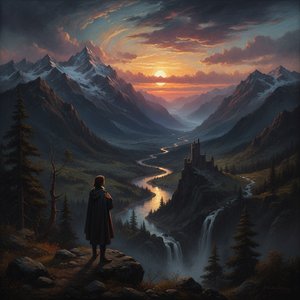
Explore the profound emotional depth of Romantic landscape painting. Discover how masters like Turner and Friedrich captured the sublime power of nature through intuition and imagination in this expert art history retrospective.

Explore the profound emotional depth of Romantic landscape painting. Discover how masters like Friedrich and Turner captured the sublime through light, shadow, and nature's power in this expert art history retrospective for discerning collectors.


최신 미술 뉴스, 특별 혜택 및 인테리어 아이디어를 가장 먼저 만나보세요.
프로젝트에 대해 알려주시면 저희 미술 전문가들이 맞춤형 아트 제안 3가지를 전달해 드립니다.
당신만을 위한 맞춤형 옵션 3가지를 무료로 추천해 드립니다!


 미리보기
미리보기
 프린트 구매
 공유하기
공유하기 공유하기
공유하기
 상세 정보
상세 정보

 다운로드
다운로드
 유사 작품
유사 작품 X-레이
X-레이 슬라이드 쇼
 더 보기
더 보기






































 유리 옵션은 110cm 미만 크기에서만 선택 가능합니다.


