
 OilWallArtBaroque
 Early Modern
 5.0 x 112.0 cm
 Musei Civici di Palazzo Farnese
온라인 미리보기보다 훨씬 뛰어난 품질의 고해상도 디지털 이미지를 구매해 보세요.
각 파일은 사내 전문가가 고급 도구와 숙련된 수동 리터칭 기술을 사용하여 세심하게 준비합니다. 우리는 모든 이미지가 탁월한 선명도, 정확한 색상 재현력, 그리고 미세한 디테일까지 완벽하게 갖추도록 보장합니다.
최종 파일은 전문적인 편집 및 인쇄 환경에서 즉시 사용할 수 있도록 최적화되어 72시간 이내에 이메일로 발송됩니다. 이는 세계적인 디자인 스튜디오, 출판사 및 갤러리가 신뢰하는 것과 동일한 품질입니다.
개인 소장 및 전시, 인쇄, 창작 프로젝트를 위한 고해상도 파일을 다운로드하세요. ( 프린트 주문으로 전환 수제 페인팅으로 전환하기)
TopImpressionists.com를 선택하시면 단순히 이미지를 받는 것을 넘어, 정밀한 보정 과정을 거친 전문적인 디지털 예술 작품을 만나보실 수 있습니다. 모든 작품에는 만족 보장 서비스가 함께 제공되며, 주문 시 다음과 같은 사항들이 자동으로 포함됩니다:

주문 후 72시간 이내에 고해상도 디지털 이미지 파일이 이메일로 발송되며, 즉시 사용하실 수 있습니다.

귀하의 작품은 고급 AI 도구와 수동 편집 과정을 거쳐 전문적으로 최적화되며, 이를 통해 디테일과 선명도, 색상의 정확도를 극대화합니다.

파일을 실수로 삭제하거나 분실하셨나요? 걱정 마세요. 언제든 무료로 다시 보내드립니다.

관세나 부가세, 배송비 부담 없이 작품을 즉시 감상하세요 - 디지털 다운로드는 언제나 면세 혜택이 적용됩니다.

전문적인 도구와 색상 관리 시스템을 통해 디지털 이미지가 원본의 색상을 최대한 정확하게 구현하도록 보장합니다.

구매하신 디지털 이미지에 만족하지 못하실 경우, 60일 이내에 수정 또는 100% 환불을 진행해 드립니다 - 어떠한 문의도 필요 없습니다.

만족하지 못하셨나요? 디지털 파일을 수령하신 후 60일 이내라면 별도의 이유를 밝힐 필요 없이 전액 환불해 드립니다.

이미지 3매 구매 시 10% 할인 - 5매 구매 시 15% 할인 - 10매 이상 구매 시 20% 할인. 크리에이티브 프로젝트, 갤러리, 에이전시에 매우 유용합니다.
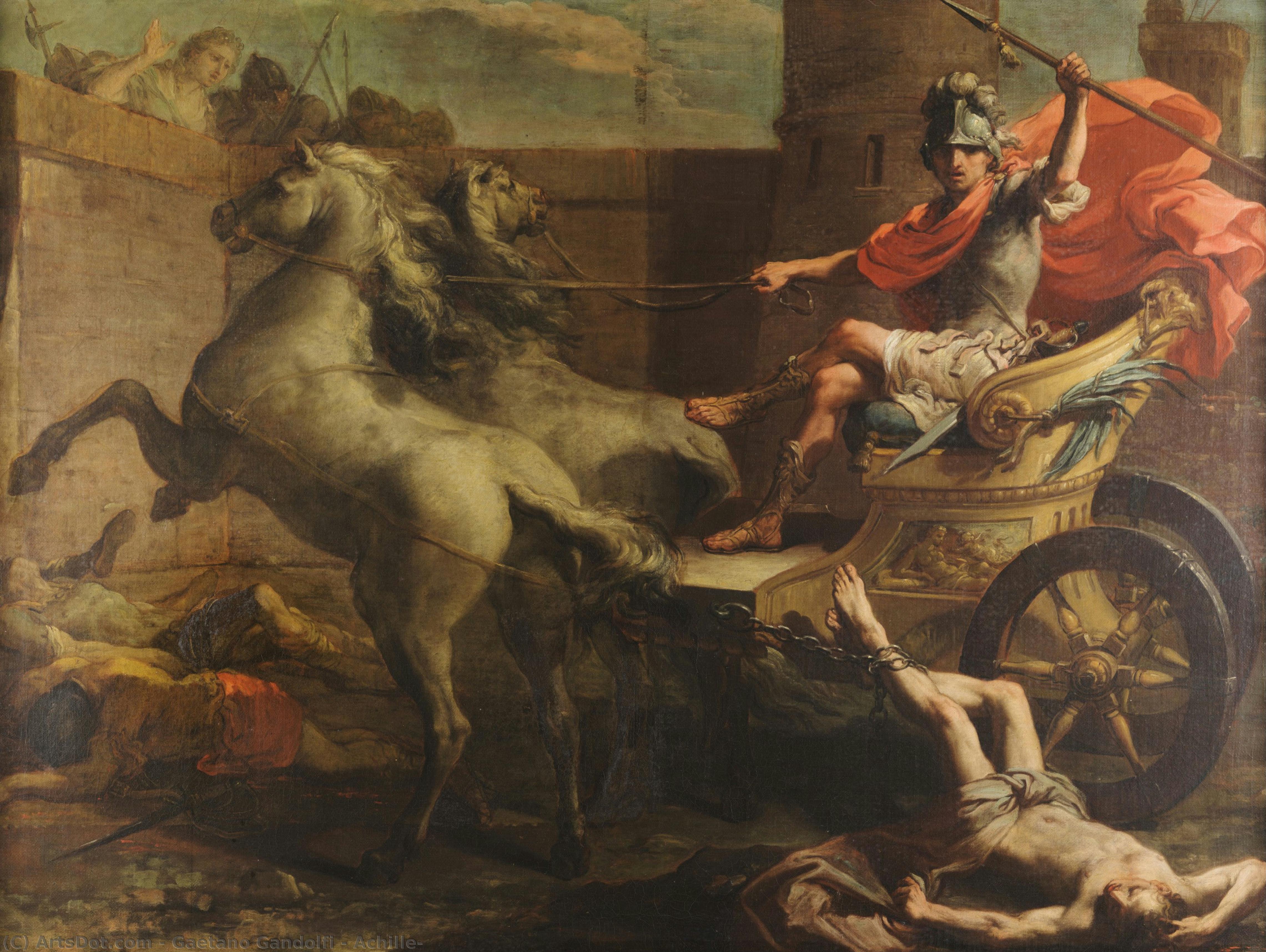
In the sweeping landscape of late Baroque and early Neoclassical art, few moments capture the raw, unbridled intensity of myth as effectively as Gaetano Gandolfi’s Achille. This breathtaking composition serves as a window into the heart of the Trojan War, transporting the viewer directly onto a battlefield thick with dust, motion, and the heavy scent of impending tragedy. The painting depicts the Greek hero Achilles in the midst of a frenzied charge, his chariot pulled by powerful horses that seem to surge forward from the canvas itself. As he leads his soldiers into the fray, the scene is alive with the chaotic energy of combat, where every brushstroke contributes to a sense of breathless momentum and the terrifying grandeur of ancient legend.
Gandolfi, a master of the Bolognese school, utilizes a technique that marries the theatricality of the Baroque period with the emerging clarity of Neoclassicism. The artist’s ability to manipulate light and shadow creates a profound sense of depth, pulling the eye from the prominent, muscular horses in the center toward the distant, scattered figures of fallen soldiers and onlookers. There is a palpable tension in the way the swords catch the light and how the composition directs our gaze through the swirling action. For the discerning collector or interior designer, this piece offers more than mere decoration; it provides a focal point of immense narrative power, capable of anchoring a room with its sophisticated interplay of movement and stillness.
Beyond the surface-level spectacle of the battlefield, Achille resonates with deep symbolic significance. The chariot is not merely a vehicle of war but a symbol of unstoppable destiny and the overwhelming force of nature and heroism. As Achilles drives through the carnage, he embodies the dual nature of the hero: the magnificent strength of a demigod and the devastating consequences of unchecked rage. The presence of other figures—soldiers caught in the tide of battle and those watching from the periphery—serves to ground this epic myth in human emotion, reminding us of the collateral cost of glory. This layer of tragic depth ensures that the painting remains intellectually stimulating long after the first glance.
For those seeking to incorporate fine art into a curated space, this reproduction offers an unparalleled opportunity to evoke themes of strength, resilience, and classical elegance. The artwork’s elongated format and dynamic composition make it an exquisite choice for grand hallways or formal dining areas, where its sweeping narrative can unfold across the wall. Owning a piece that captures such a pivotal moment in human mythology allows one to surround themselves with the enduring spirit of the classics, bringing a sense of historical gravity and artistic excellence to any modern or traditional interior.
In the vibrant heart of the Italian late Baroque, a period defined by theatrical grandeur and emotional depth, the name Gaetano Gandolfi resonates as a symbol of artistic transition and mastery. Born in 1734 in San Mateo della Decima, near the illustrious city of Bologna, Gandolfi was destined for a life steeped in the aesthetics of his era. His very lineage was woven into the fabric of Italian art; with a brother, Ubaldo, and a son, Mauro, also pursuing the brush, the creative impulse was a familial inheritance. This early immersion provided him with a profound understanding of the discipline required to navigate the complex demands of painting, sculpture, and draughtsmanship.
Gandolfi’s formal journey began within the hallowed halls of the Accademia Clementina in Bologna. It was here that his raw talent was refined through rigorous classical training under the guidance of masters such as Felice Torelli and Ercole Lelli. This academic foundation did more than teach him technique; it instilled in him a reverence for the human form and the structural integrity of composition. His early prowess was quickly recognized by the academy, where he earned prestigious accolades for his skill in figure drawing and sculpture, signaling the arrival of a formidable talent capable of bridging the gap between the exuberant Baroque and the emerging clarity of Neoclassicism.
The evolution of Gandolfi’s style was profoundly shaped by his travels and his encounters with the monumental. One of the most transformative moments in his career occurred during his journey to England, where he was exposed to the breathtaking illusionistic frescoes of Andrea Pozzo in the Sant’Ignazio Basilica. This encounter with quadratura—the art of painting architectural perspectives—deeply moved him, sparking an admiration for the sweeping, theatrical compositions perfected by Tiepolo. As a result, Gandolfi’s work began to exhibit a unique synthesis: the dramatic lighting and opulent ornamentation characteristic of the Baroque, infused with a newfound sense of spatial grandeur and airy elegance.
His repertoire was as diverse as his influences, ranging from the sacred to the profane. He possessed a singular ability to breathe life into biblical narratives and mythological legends, imbuing them with an emotional intensity that captivated both clergy and nobility alike. Whether depicting the divine intervention of a saint or the ethereal beauty of a mythological deity, Gandolfi utilized light not merely as a tool for visibility, but as a narrative force capable of evoking awe and spiritual contemplation.
Beyond his grand canvases, Gandolfi was a master of the intimate. His portraits serve as windows into the 18th-century soul, capturing the dignity, status, and psychological depth of his subjects with remarkable precision. This versatility—the ability to command a massive frescoed ceiling and a delicate portrait with equal grace—is what secures his place in the pantheon of Italian masters. His work stands as a testament to a period of profound cultural shift, where the heavy shadows of the past were beginning to yield to the luminous clarity of a new age.
The historical significance of Gaetano Gandolfi lies in his role as a bridge between eras. He did not merely replicate the styles of his predecessors; he synthesized them into a cohesive visual language that reflected the intellectual fervor of Bologna. Today, his oeuvre remains a vital study for anyone seeking to understand the transition from the dramatic flourishes of the Baroque to the disciplined grace of Neoclassicism, ensuring that his luminous legacy continues to inspire awe in the hearts of art lovers worldwide.

1734 - 1802 , Italy


최신 미술 뉴스, 특별 혜택 및 인테리어 아이디어를 가장 먼저 만나보세요.
프로젝트에 대해 알려주시면 저희 미술 전문가들이 맞춤형 아트 제안 3가지를 전달해 드립니다.
당신만을 위한 맞춤형 옵션 3가지를 무료로 추천해 드립니다!

 미리보기
미리보기
 공유하기
공유하기 공유하기
공유하기
 상세 정보
상세 정보

 다운로드
다운로드
 유사 작품
유사 작품 X-레이
X-레이 슬라이드 쇼
 더 보기
더 보기