


 실제 크기로 보기
 보내기
보내기 공유하기
공유하기
 상세 보기
상세 보기 가이드 보기

 이미지 다운로드
 유사 작품 더 보기
 X-레이
X-레이 슬라이드 쇼 보기
 통계 정보
통계 정보Hintersee


Admire 'Hintersee' by Georg Janny – a serene watercolor landscape of a mountain lake. Experience tranquility & natural beauty in this evocative 1923 artwork.
Georg Janny (1864-1935) was an Austrian landscape painter renowned for his evocative depictions of Alpine scenery and fantastical fairy tales. His work blends Romanticism with imaginative elements, showcasing a unique artistic vision within the context of late 19th/early 20th-century art.
 상세 보기
상세 보기
지클레 / 아트 프린트
빠른 제작과 다양한 마감 옵션을 선택할 수 있는 박물관 수준의 지클레이 및 캔버스 프린트. ( 수작업 채색 복제본 주문하기 디지털 이미지 판매 채널로 전환)




P118B ₩10

P118H ₩10

P118W ₩10

P438Z ₩10

P508JH ₩12

P508YH ₩12

P805H ₩10

P805Z ₩10

P919BZ ₩10

P919G ₩10

P919XJ ₩10

P959ZH ₩10

P968JZ ₩12

W106C ₩8

W218G ₩10

W218JH ₩8

W218Y ₩10

W307PJ ₩10

W316G ₩10

W316PJ ₩8

W316Y ₩10

W398PJ ₩8

W4111J ₩10

W500HY ₩15

W500JH ₩15

W692G ₩12

W849H ₩8

W940BG ₩15

W953PJ ₩8




표준 규격
맞춤 제작
CM
INCH
작품의 원본 비율을 그대로 유지하는 프리셋 사이즈 중에서 선택해 보세요.
Loading sizes...

가로 너비
높이
액자나 벽면 크기에 맞춰 필요한 가로와 세로 길이를 입력해 주세요. 프린트는 원본 이미지보다 크게 제작할 수 없으며 오직 자르는 것만 가능하므로, 비율이 다른 사이즈를 선택할 경우 이미지의 일부가 잘려 나갈 수 있습니다. 인쇄 작업에 들어가기 전, 최종 확인을 위해 디지털 목업을 보내드립니다. 이 페이지에 표시된 이미지는 실제 잘리는 영역을 나타내지 않으며, 오직 목업을 통해서만 정확한 확인이 가능합니다.


 유리 옵션은 110cm 미만 크기에서만 선택 가능합니다.

Hintersee
지클레 / 아트 프린트
복제본 규격
-


총 결제 금액
₩ 93636


작가 소개
Georg Janny: Weaver of Alpine Dreams and Mythic Landscapes
The Austrian artist Georg Janny (1864-1935) wasn’t a name etched into the annals of art history during his lifetime, yet his evocative paintings—particularly those depicting the majestic Alps and populated with fantastical creatures—hold a quiet power. Born in Vienna, Janny's artistic journey began not in a formal academy but within the bustling workshops of Brioschi, Burghart, and Kautsky, renowned for their theatrical scenery design for the prestigious Vienna State Opera. This early apprenticeship profoundly shaped his visual language, instilling a deep understanding of composition, color theory, and the dramatic interplay of light and shadow—skills that would later inform his captivating landscapes.
Janny’s initial role was as a scene painter, contributing to lavish productions like the iconic “Iron Curtain” commemorating Emperor Franz Joseph I's golden jubilee in 1898. This experience exposed him to the demands of large-scale painting and the collaborative nature of theatrical design. However, it was during this period that his artistic sensibilities truly began to flourish. He quickly evolved beyond mere decoration, developing a distinctive style characterized by atmospheric perspective, meticulous detail, and an almost dreamlike quality. His work wasn’t simply about depicting mountains; it was about capturing their essence—their grandeur, their solitude, and the sense of timelessness they evoke.
A World Beyond Reality: The Influence of Fairy Tales and Mythology
What truly distinguishes Janny's oeuvre is his infusion of folklore and mythology into his landscapes. While rooted in meticulous observation of the Austrian Alps—from the dramatic peaks of the Sella Group to the serene shores of Lake Pisciadu—his paintings frequently feature elements that transcend the purely representational. Fairies, elves, and other mythical beings subtly emerge from the rocky terrain, adding a layer of enchantment and hinting at hidden worlds beneath the surface. This wasn’t an attempt to create overtly fantastical scenes; rather, Janny seemed to believe that these creatures were already present in the landscape, waiting to be revealed by a discerning eye.
This fascination with folklore likely stemmed from his exposure to the rich artistic traditions of Vienna and his own imaginative spirit. He drew inspiration from artists like Arnold Böcklin, whose evocative Symbolist paintings explored themes of mystery and the supernatural, as well as Gustave Doré, known for his detailed illustrations of fairy tales and biblical stories. Janny’s work can be seen as a continuation of this tradition—a visual exploration of the intersection between reality and imagination.
Technique and Style: Watercolor's Delicate Embrace
Janny primarily worked in watercolor, a medium that perfectly suited his delicate style and atmospheric approach. The transparency of watercolor allowed him to build up layers of color gradually, creating subtle gradations of tone and light—essential for capturing the ethereal quality of the Alpine landscape. His brushwork is often loose and expressive, conveying a sense of movement and spontaneity. He skillfully employed techniques such as wet-on-wet washes to create soft, diffused effects, particularly in his depictions of clouds and mist.
Despite the inherent challenges of watercolor—its tendency to bleed and its difficulty in achieving sharp detail—Janny mastered the medium with remarkable precision. His paintings are not simply renderings of landscapes; they are carefully constructed compositions that invite the viewer to lose themselves in their beauty and mystery. The use of muted, earthy tones—greens, browns, grays, and blues—further enhances the sense of atmosphere and creates a feeling of quiet contemplation.
Legacy and Recognition
While Janny’s work didn't achieve widespread fame during his lifetime, it has since been recognized for its unique charm and artistic merit. His paintings are now housed in museums and private collections throughout Austria and beyond, offering a glimpse into the world of a talented artist who dedicated his life to capturing the beauty and mystery of the Alpine landscape. The Bezirksmuseum Hernals in Vienna holds a significant collection of his works, providing valuable insights into his creative process and artistic vision.
Janny’s legacy lies not only in his individual paintings but also in their contribution to the broader tradition of landscape art—a tradition that continues to inspire artists today. His ability to seamlessly blend observation with imagination, realism with fantasy, solidifies his place as a significant figure in Austrian art history, a quiet master of Alpine dreams.

Georg Janny
1864 - 1935
작가 정보 요약
- Full Name: Georg Janny
- Nationality: Austrian
- Date Of Birth: 1864
- Date Of Death: 1935
- Place Of Birth: Vienna, Austria
- Notable Artworks:
- Fairytale Scene with Elves
- Hintersee
- Artistic Movement Or Style: Landscape painting, set design
- Artists Who Influenced This Artist:
- Alphonse Mucha
- Carlo Brioschi
- Artists Or Movements Influenced By This Artist:
- Arnold Böcklin
- Gustave Doré
관련 기사

The Beauty of Impermanence: Capturing Decay through Impressionist Eyes
Explore the profound beauty of impermanence through Impressionist and Post-Impressionist eyes. Discover how masters like Monet and Van Gogh captured fleeting light and the poetic essence of nature's transitions in our deep dive into art history and emotional landscapes.
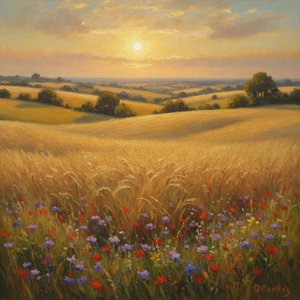
Golden Fields & Sun-Drenched Meadows: Capturing the Soul of Impressionist Landscapes
Immerse yourself in the luminous world of Impressionist landscapes. Discover how masters like Monet and Gauguin captured ephemeral light through plein air painting, and learn to bring the soul of sun-drenched meadows into your home with exquisite, hand-painted oil reproductions.

Capturing Light: The Ethereal Beauty and Timeless Legacy of Watercolor Landscapes
Embark on a visual journey through the ethereal beauty of watercolor landscapes. Discover how Impressionist masters captured light and emotion, and learn to bring this timeless, luminous elegance into your home with expert art curation and hand-painted reproductions.

Beyond the Light: Capturing Raw Emotion and Subjective Vision in Post-Impressionist Landscapes
Explore the profound emotional depth of Post-Impressionist landscapes. Discover how masters like Van Gogh moved beyond light to capture raw human feeling through vibrant color and expressive texture in this expert art history retrospective.

Capturing the Soul: The Most Emotionally Moving Impressionist and Post-Impressionist Masterpieces
Discover the profound emotional depth of Impressionist and Post-Impressionist masterpieces. Explore how legends like Monet, Van Gogh, and Gauguin captured light and soul through evocative landscapes and vibrant brushwork for a timeless connection to art history.