

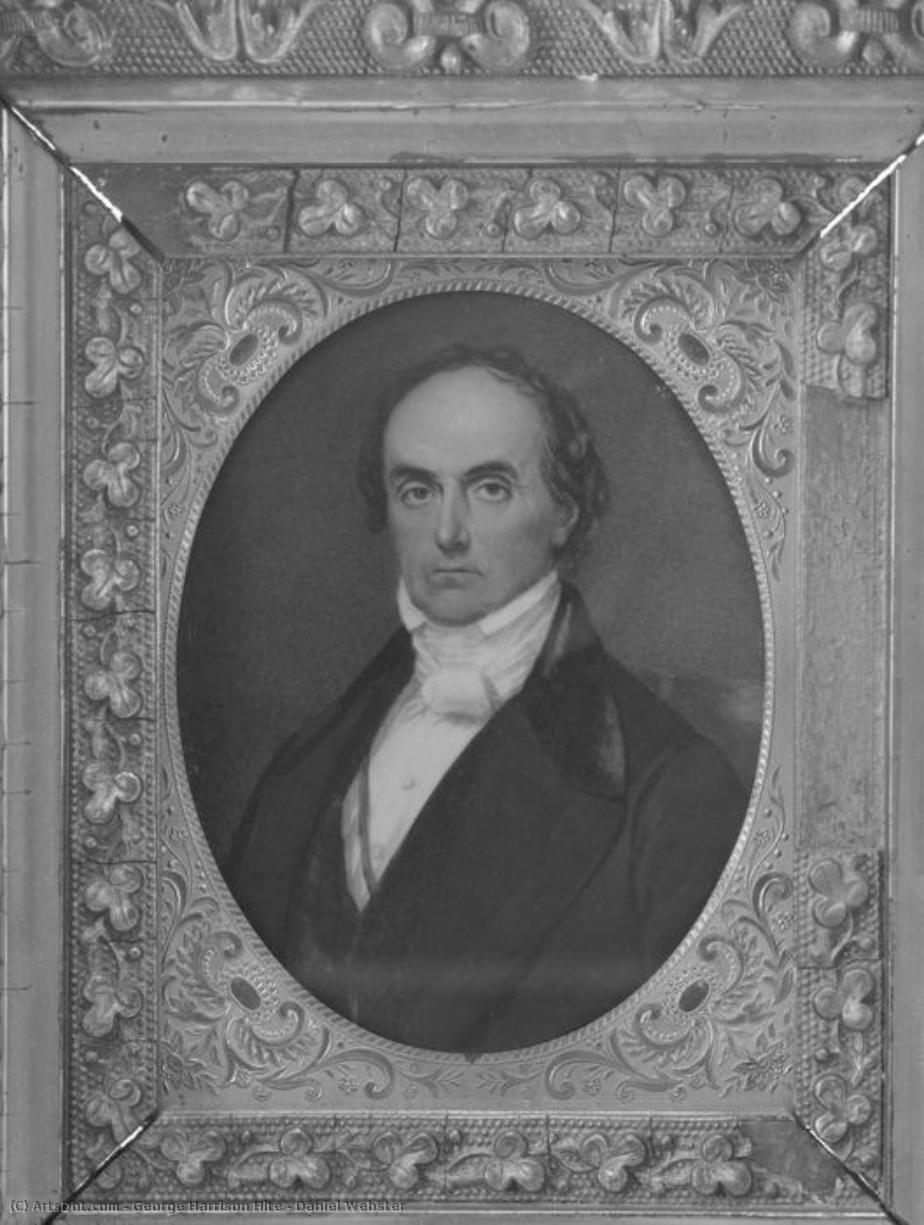
 1844
1844 12.0 x 9.0 cm
작품의 원본 비율을 유지하는 미리 설정된 크기 중에서 선택하세요.

특정 프레임이나 공간에 맞춰 직접 치수를 입력하실 수 있습니다. 선택하신 사이즈가 원본 이미지의 비율과 일치하지 않을 경우, 작품을 크롭(자르기)하거나 이미지를 대칭 또는 단색 채우기로 확장하여 제작합니다. 제작 시작 전, 최종 확인을 위해 디지털 목업이 전송됩니다.
화면상의 미리보기는 실제 크롭이나 확장 상태를 반영하지 않으므로, 최종 구도는 오직 목업을 통해서만 정확하게 확인하실 수 있습니다.
맞춤 사이즈 제작도 가능하지만, 원본 비율을 유지하기 위해서는 사전 정의된 목록에서 치수를 선택하시는 것을 권장합니다.

Daniel Webster
복제본 크기
George Harrison Hite (1807-1880), a name perhaps less familiar than many of his contemporaries, nevertheless represents a fascinating and significant chapter in 19th-century American art. Born in Urbana, Ohio, Hite’s journey to becoming an artist was remarkably unconventional – he largely taught himself, developing a distinctive style rooted in observation and a keen understanding of the Appalachian landscape. While often categorized as a portraitist due to his notable works featuring figures like Daniel Webster and Henry L. Taylor, Hite's true legacy lies in his evocative depictions of the American frontier, capturing its rugged beauty and the lives intertwined with it.
Hite’s early career is shrouded in some mystery, though accounts suggest he began exhibiting his work as early as 1835 in Charleston, South Carolina, presenting himself as a “native and self-taught artist of Kentucky.” This deliberate construction of an origin story speaks to the challenges faced by artists operating outside established artistic circles. The lack of formal training forced Hite to rely entirely on his own observation skills and artistic intuition – a process that undoubtedly shaped the unique character of his work. His style, characterized by loose brushwork, vibrant colors, and a palpable sense of atmosphere, stands apart from the more polished techniques prevalent in academic art circles at the time.
Hite’s fame initially stemmed from his portraiture, and he quickly gained recognition for his ability to capture not just physical likeness but also the essence of his subjects. His portraits of prominent figures like Daniel Webster, a towering figure in American politics, and Henry L. Taylor, a wealthy planter and politician, demonstrate a remarkable skill in conveying character and presence. These works are notable for their immediacy and lack of idealization; Hite doesn’t shy away from portraying the wrinkles of age or the weariness of experience, instead presenting his subjects with an honest and dignified realism.
The technique employed in these portraits is particularly noteworthy. Hite utilized a relatively quick painting process, often working *alla prima* – directly on the canvas without extensive underpainting. This approach resulted in a sense of spontaneity and energy that imbues the portraits with life. His use of color was equally expressive, employing bold hues to capture the light and shadow of his subjects’ faces and clothing.
While portraiture provided a steady income, Hite's true passion lay in depicting the landscapes of Kentucky and surrounding areas. His paintings of mountain scenes, farms, and rural communities offer a compelling glimpse into the lives of early Americans who carved out a living from the land. These works are not simply topographical representations; they’re infused with a deep sense of place and an appreciation for the beauty of the natural world.
Hite's landscapes often feature dramatic lighting, capturing the shifting moods of the Appalachian mountains – the golden light of dawn, the brooding shadows of twilight. He skillfully rendered the textures of the terrain—the rough bark of trees, the weathered stone walls of farmhouses, and the undulating contours of the hillsides. His depictions of frontier life—farmers tending their fields, families gathered around a hearth, hunters tracking game—portray a world of hard work, resilience, and close-knit community.
George Harrison Hite’s story is one of remarkable self-determination. He defied the conventions of his time by forging a successful artistic career without formal training, relying instead on his own observation, talent, and unwavering dedication. His work stands as a testament to the power of individual vision and the enduring appeal of depicting the American experience.
Hite’s influence extends beyond his individual paintings. He represents a crucial link in the development of American landscape painting, demonstrating that compelling art could emerge from outside the established artistic institutions. His work provides valuable insights into the lives and landscapes of 19th-century America, offering a poignant reminder of a time when the frontier was still being shaped by human hands.
Further research into Jacob Hite, his family history, and the circumstances surrounding his financial difficulties offers additional context to understanding the artist’s life and motivations. His story is intertwined with broader themes of westward expansion, economic hardship, and the complex relationship between settlers and Native American populations in early America.

1807 - 1880 , United States of America


최신 미술 뉴스, 특별 혜택 및 인테리어 아이디어를 가장 먼저 만나보세요.
프로젝트에 대해 알려주시면 저희 미술 전문가들이 맞춤형 아트 제안 3가지를 전달해 드립니다.
당신만을 위한 맞춤형 옵션 3가지를 무료로 추천해 드립니다!
 작품 구매하기
 공유하기
공유하기 공유하기
공유하기
 상세 정보
상세 정보

 다운로드
다운로드
 유사 작품
유사 작품 X-레이
X-레이 슬라이드 쇼
 더 보기
더 보기






































 유리 옵션은 110cm 미만 크기에서만 선택 가능합니다.


