


 실제 크기로 보기
 보내기
보내기 공유하기
공유하기
 상세 보기
상세 보기 가이드 보기

 이미지 다운로드
 유사 작품 더 보기
 X-레이
X-레이 슬라이드 쇼 보기
 통계 정보
통계 정보Granida and Daifilo
 Oil On Canvas
- WallArt
- Baroque Painting
 1625
1625 145.0 x 179.0 cm
 Центральний музей
Experience Gerard van Honthorst's dramatic 'Granida and Daifilo,' a captivating 1625 painting depicting a shepherdess and her lover amidst nature, showcasing Caravaggio-inspired chiaroscuro.
 상세 보기
상세 보기
Gerard van Honthorst는 네덜란드 황금시대의 대표적인 바로크 화가입니다. 카라바조의 영향으로 '밤의 제라르도'라는 별명을 얻었으며, 극명한 명암 대비(테네브리즘) 기법을 사용하여 인물과 성경 장면을 생생하게 표현했습니다.
핸드메이드 유화 복제화
작가가 직접 캔버스에 손으로 그린 유화 작품으로, 원하는 크기와 액자로 맞춤 제작해 드립니다. ( 프린트 판매로 전환 디지털 이미지 판매 채널로 전환)




P118B $10

P118H $10

P118W $10

P438Z $10

P508JH $12

P508YH $12

P805H $10

P805Z $10

P919BZ $10

P919G $10

P919XJ $10

P959ZH $10

P968JZ $12

W106C $8

W218G $10

W218JH $8

W218Y $10

W307PJ $10

W316G $10

W316PJ $8

W316Y $10

W398PJ $8

W4111J $10

W500HY $15

W500JH $15

W692G $12

W849H $8

W940BG $15

W953PJ $8




표준 규격
맞춤 제작
CM
INCH
작품의 원본 비율을 그대로 유지하는 프리셋 사이즈 중에서 선택해 보세요.
Loading sizes...

가로 너비
높이
특정 프레임이나 공간에 맞춰 원하는 크기를 직접 입력하실 수 있습니다. 선택하신 크기가 원본 이미지의 비율과 일치하지 않을 경우, 작품을 자르거나 추가적인 수작업 요소를 더해 그림을 확장하여 제작합니다. 제작 시작 전, 최종 확인을 위해 디지털 목업을 보내드립니다.
화면상의 미리 보기는 실제 크롭(자르기)이나 확장된 상태를 완벽히 반영하지 않을 수 있습니다. 최종 구도는 오직 목업을 통해서만 정확하게 확인하실 수 있습니다.
맞춤 크기 제작도 가능하지만, 원본의 비율을 그대로 유지하기 위해서는 미리 정의된 목록에서 크기를 선택하시는 것을 권장합니다.
변경 가능한 예시: 얼굴을 고객님의 사진으로 교체, 반려동물 추가(예: 고양이를 강아지로 변경), 배경에 숨겨진 메시지 삽입, 배경 풍경 또는 요소 변경 등
주문 완료 후 TopImpressionists.com 팀에서 상세 안내를 위해 고객님께 이메일을 보내드리며, 미리보기 시안을 함께 제공해 드립니다.
주문 완료 후 TopImpressionists.com 팀에서 상세 안내를 위해 고객님께 이메일을 보내드리며, 미리보기 시안을 함께 제공해 드립니다.


 유리 옵션은 110cm 미만 크기에서만 선택 가능합니다.

Granida and Daifilo
재현 매체
복제본 규격
-


총 결제 금액
$ 269
A Dutch Master’s Nocturne: Unveiling “Granida and Daifilo” by Gerard van Honthorst
Gerard van Honthorst's "Granida and Daifilo," painted in 1625, is more than just a pastoral scene; it’s a meticulously crafted tableau of romance, intrigue, and the dramatic interplay of light and shadow that defined the artist’s signature style. This captivating work, now housed within the collections of esteemed institutions like the Rijksmuseum, offers a glimpse into the burgeoning artistic landscape of 17th-century Holland – a period marked by Caravaggio's profound influence and a fervent embrace of theatrical lighting.
The painting depicts a tender encounter between Granida, a princess from an Eastern kingdom, and Daifilo, a shepherd who has captured her heart. The narrative unfolds amidst a verdant woodland setting, populated with a cast of characters engaged in a delicate dance of courtship and potential conflict. A watchful soldier stands poised to apprehend Daifilo, hinting at the obstacles inherent in their love – a subtle tension that elevates the scene beyond simple idyllic beauty. The composition is remarkably balanced, drawing the eye through a carefully orchestrated arrangement of figures and elements, creating a sense of depth and inviting the viewer into this intimate world.
The Shadowed Light: Honthorst’s Caravaggistic Technique
Honthorst's mastery lies in his ability to evoke atmosphere through masterful manipulation of light. He was deeply influenced by Caravaggio, adopting his signature *tenebrism* – a dramatic contrast between intensely bright highlights and deep shadows. In “Granida and Daifilo,” this technique is particularly evident in the way the figures are illuminated, creating a sense of mystery and drawing attention to their faces and gestures. The dappled sunlight filtering through the trees casts an ethereal glow upon the scene, while pockets of darkness conceal details and heighten the drama.
The artist’s brushwork is remarkably loose and expressive, contributing to the painting's dynamic quality. Notice how he uses rapid, short strokes to define the foliage and create a sense of movement within the landscape. Furthermore, Honthorst skillfully employs color – rich greens, earthy browns, and subtle hints of red – to establish mood and enhance the overall visual impact. The use of warm tones in the foreground contrasts with the cooler shades in the background, creating a compelling depth of field.
A Courtly Tale: Context and Symbolism
“Granida and Daifilo” was commissioned by Stadholder Frederik Hendrik for his residence at Honselaerdijk as one of a series of pastoral paintings intended to adorn his lavish home. The play itself, written by Pieter Hooft, was immensely popular during the Dutch Golden Age, exploring themes of love, loyalty, and social upheaval. The painting’s subject matter – a forbidden romance between a princess and a shepherd – resonated deeply with audiences, reflecting broader anxieties about social hierarchies and the challenges faced by those who dared to defy convention.
Beyond its narrative content, the work is laden with symbolism. The soldier represents societal constraints and the potential for disruption within the established order. The setting itself—a lush woodland—evokes notions of freedom, escape, and the untamed wilderness. Even the sheep present in the scene can be interpreted as symbols of innocence and vulnerability. The inclusion of a bowl suggests hospitality and generosity – elements central to the pastoral ideal.
An Emotional Resonance: Beauty and Intrigue
“Granida and Daifilo” transcends its historical context, offering viewers an enduring sense of beauty and intrigue. The painting’s evocative lighting, dynamic composition, and compelling narrative combine to create a truly captivating experience. It's not merely a depiction of a romantic encounter; it’s a meditation on love, loss, and the delicate balance between desire and duty. The subtle tension within the scene—the impending arrest, the unspoken longing—keeps the viewer engaged long after they’ve turned away, prompting reflection on the complexities of human relationships and the enduring power of art to capture the essence of our emotions.
Reproductions of this masterpiece offer a remarkable opportunity to bring its atmospheric drama into any setting. Consider framing it in a manner that complements its rich palette and dramatic lighting—perhaps against a dark wall to enhance the effect of *tenebrism*, or within a room bathed in natural light to capture the painting’s luminous quality.
작가 소개
빛과 그림자의 거장: 헤라르트 판 혼토르스트의 삶과 예술
1592년 네덜란드 위트레흐트에서 태어난 헤라르트 판 혼토르스트는 네덜란드 황금시대를 밝힌 극적인 예술가였습니다. 장식화가였던 아버지의 지도를 받으며 어린 시절부터 재능을 보인 그는 아브라함 블로마에르트에게서 드래프팅과 구성을 탄탄히 다지는 교육을 받았습니다. 그러나 그의 예술적 발전을 결정적으로 바꾼 것은 로마로의 여정이었죠. 이탈리아 바로크 시대의 열기 속에서 카라바조의 혁신적인 작품들을 접하게 되었고, 이는 그의 시그니처 스타일을 정의하고 “제라르도 델레 노티(Gerardo delle Notti)”라는 별명을 얻게 되는 계기가 되었습니다. 빛과 어둠의 극명한 대비를 활용하는 테네브리즘 기법은 혼토르스트의 특징이 되었으며, 그의 작품에 생생한 드라마와 강렬한 감정적 깊이를 불어넣었습니다. 그는 단순히 카라바조를 모방한 것이 아니라, 이탈리아 거장의 혁신을 네덜란드적인 감각으로 번역하여 인공 광원 – 촛불, 램프, 불 – 으로 비추어진 친밀한 장면들을 표현했습니다. 이러한 빛에 대한 그의 숙달은 단순한 기술적 능숙함이 아니었습니다. 그것은 등장인물의 성격을 드러내고 관객을 각 장면의 감정적인 핵심으로 끌어들이는 수단이었죠.로마에서의 성공과 네덜란드에서의 기량
혼토르스트가 로마에서 보낸 시간은 상당한 성공과 후원을 받았습니다. 그는 빈첸초 지우스티니아니를 비롯한 도시 엘리트들의 호감을 얻었고, 그를 위해 “최후의 심판”과 같은 강력한 작품을 만들었습니다. 이 그림은 현재 런던 내셔널 갤러리에 소장되어 있으며, 그의 기술적 기량뿐만 아니라 등장인물 안에 깊은 심리적 깊이를 담아내는 능력을 보여줍니다. 그는 코시모 2세 데 메디치 토스카나 대공을 위해 일하면서 적응력과 다재다능함을 입증했습니다. 고향 위트레흐트로 돌아온 것은 1620년경이었고, 혼토르스트는 곧 네덜란드 공화국에서 선도적인 초상화가로 자리매김했습니다. 부유한 상인, 귀족, 심지어 왕족들의 호감을 얻을 수 있었던 이유는 단순히 외모를 포착하는 것이 아니라, 앉은 사람의 성격과 사회적 지위를 담아내는 그의 능력 때문이었습니다. 1623년 위트레흐트 성 루카 길드의 회장이 된 것은 예술 공동체 내에서 그의 영향력이 커지고 있음을 보여주는 증거입니다. 이 시기에 그는 의뢰가 늘어나면서 자신의 스타일을 개선하고 네덜란드 회화 안에서 독특한 목소리를 확립할 수 있었습니다.궁정 화가: 의뢰와 협업
혼토르스트의 재능은 네덜란드를 넘어 확장되었습니다. 그의 작품은 더들리 칼턴 경의 관심을 끌었고, 그는 아룬델 백작과 도체스터 경과 같은 저명한 영국 귀족들에게 그를 추천했습니다. 이는 엘리자베스 보헤미아 여왕에게로 이어졌고, 그녀는 혼토르스트를 화가이자 자녀들의 드로잉 스승으로 고용했습니다. 이러한 왕실과의 관계는 햄프턴 코트 궁전에 소장된 카를로스와 엔리에타 마리아의 디아나와 아폴론에 대한 우화적인 묘사와 같은 중요한 작품으로 이어졌습니다. 혼토르스트의 다른 예술가들과 협력하려는 의지는 그의 개방성과 예술적 관대함을 보여줍니다. 그는 위트레흐트를 방문한 피터 파울 루벤스를 유명하게 주최했고, 심지어 디오게네스가 정직한 사람을 찾는 장면에서 그를 묘사했는데, 이는 이 두 바로크 거장 사이의 상호 존경심을 보여주는 증거입니다. 일부 협업 작품, 예를 들어 “그리스도의 체포”는 처음에 혼토르스트에게만 귀속되었지만, 현대 학문은 이 시기 예술 제작의 복잡한 역학 관계를 강조하면서 다른 예술가들의 기여를 밝혀냈습니다. 이러한 협업은 단순한 작업 분담이 아니라 예술적 풍경을 풍요롭게 한 지적인 교류였습니다.유산과 위트레흐트 카라바지스트
헤라르트 판 혼토르스트의 영향력은 그의 생존 기간을 훨씬 넘어 울려 퍼졌습니다. 그는 카라바조의 극적인 사실주의와 테네브리즘을 포용했던 네덜란드 화가 그룹인 *위트레흐트 카라바지스트* 운동의 핵심 인물이었습니다. 헨드릭 테르 브뤼겐과 디르크 반 바부렌과 함께 그는 이탈리아 바로크 스타일의 독특한 네덜란드 해석을 확립하는 데 도움을 주었습니다. 인공 광원으로 비추어진 장르 장면, 뛰어난 초상화, 숙련된 키아로스쿠로를 통해 감정적 깊이를 전달하려는 그의 노력은 네덜란드 황금 시대 회화의 발전에 지울 수 없는 흔적을 남겼습니다. 심지어 그의 형제 빌렘 판 혼토르스트도 그의 뒤를 따랐지만, 스타일적 유사성 때문에 종종 제라르트에게 귀속되는 작품이 많았습니다.- 혼토르스트의 그림은 오늘날에도 관객들을 사로잡고 있습니다.
- 그의 극적인 아름다움과 심리적 통찰력은 지속적인 자질입니다.
- 그는 미술사에서 중요한 인물로서 자신의 위치를 확고히 했습니다.

헤라르트 판 혼토르스트
1590 - 1656
작가 정보 요약
- Artistic Movement Or Style: 바로크, 카라바지오주의
- Artists Or Movements Influenced By This Artist: ['위트레흐 카라바지오주의']
- Artists Who Influenced This Artist: ['카라바지오']
- Date Of Birth: 1590년
- Date Of Death: 1656년
- Full Name: 제라르 반 혼토르스트
- Nationality: 네덜란드인
- Notable Artworks:
- 그리스도 정원에서의 체포
- 만찬 장면
- 디아나와 아폴로
- Place Of Birth (City And Country): 위트레흐, 네덜란드
관련 기사
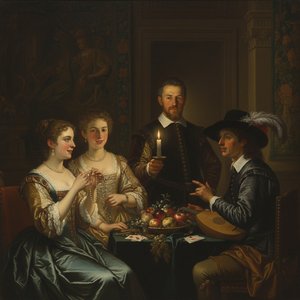
Gerard van Honthorst: Illuminating the Dutch Golden Age with Caravaggism & Courtly Grace
Explore the captivating world of Gerard van Honthorst, a Dutch Golden Age master renowned for his dramatic chiaroscuro & courtly portraits. Discover his life, art, and lasting influence on Baroque painting.

The Dramatic Flourish: Exploring the Baroque Movement's Enduring Legacy in Art History
Explore the dramatic world of Baroque art! Discover iconic artists like Caravaggio & Rubens, defining techniques, and its lasting impact on art history. Expert insights for collectors & enthusiasts at TopImpressionists.

The Visceral Stage: Exploring Dramatic Narratives & Emotional Intensity in Baroque Art
Explore the dramatic world of Baroque art! Discover iconic masters like Caravaggio & Rembrandt, their techniques, and the movement's lasting impact. Expert insights for collectors & enthusiasts at TopImpressionists.

렘브란트 반 레인 명작 25선: 빛과 그림자의 거장, 예술의 정수를 만나다
렘브란트 반 레인 명작 25선을 만나보세요. 빛과 그림자의 거장이 그린 역사화, 초상화 속 예술의 정수를 감상하고, 네덜란드 황금시대 바로크 미술의 깊이를 느껴보세요. TopImpressionists.com에서 고품질 복제화를 컬렉션하세요.
화려함 속에 감춰진 진실! 바로크 미술을 정의한 10대 걸작 탐구
화려함과 극적인 표현이 압권! 바로크 미술을 대표하는 10대 걸작의 숨겨진 이야기를 만나보세요. 베르니니, 루벤스 등 거장의 작품부터 바로크 색감, 예술적 기법까지 – TopImpressionists.com에서 명품 복제 & 인테리어 영감을 얻으세요! 지금 바로 컬렉션을 탐험해보세요.
