

 실제 크기로 보기
 보내기
보내기 공유하기
공유하기
 상세 보기
상세 보기 가이드 보기

 이미지 다운로드
 유사 작품 더 보기
 X-레이
X-레이 슬라이드 쇼 보기
 통계 정보
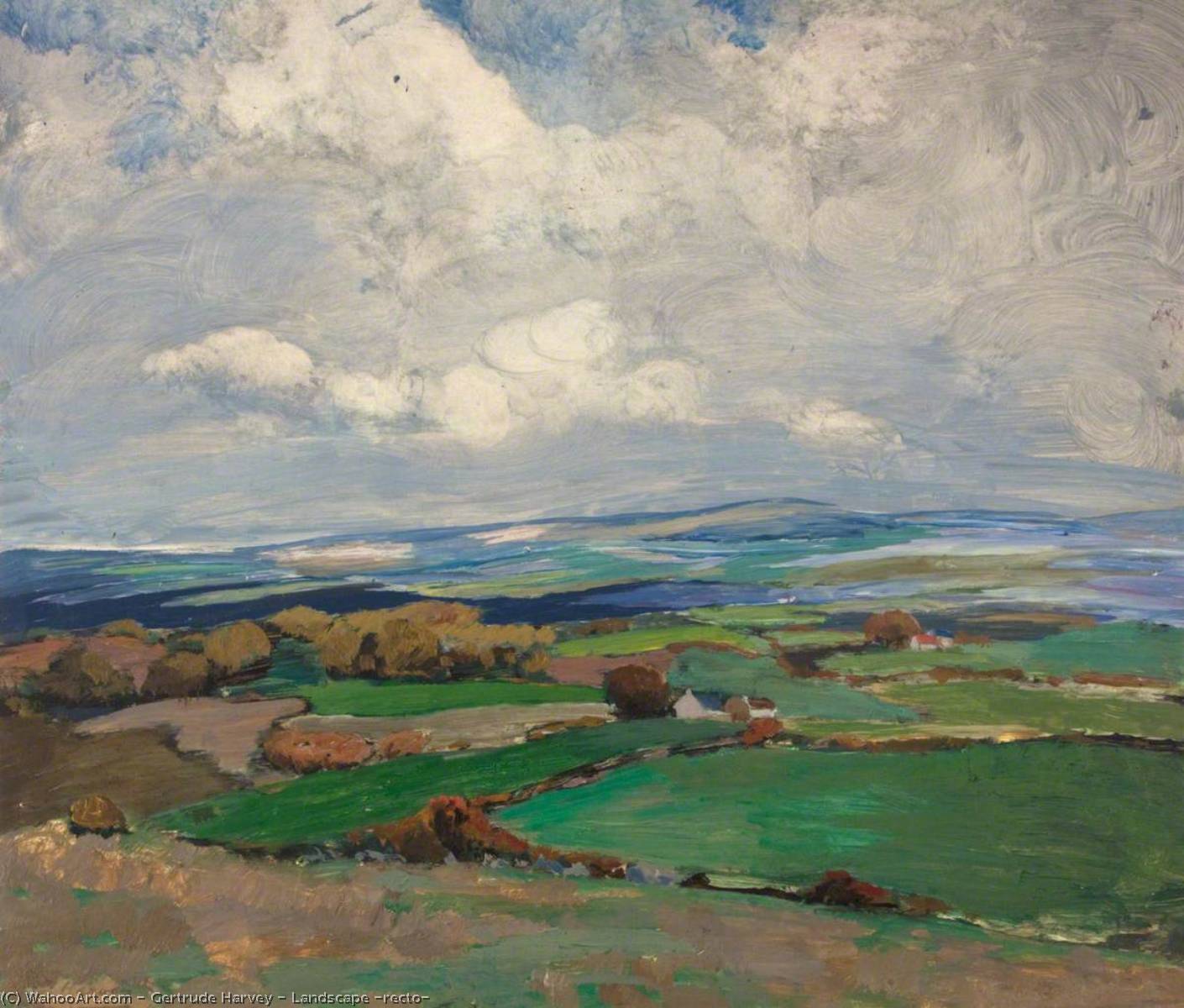
통계 정보Landscape (recto)
 45.0 x 52.0 cm
Discover Gertrude Harvey, a British artist of the Newlyn School. Known for evocative landscapes & still lifes, her work reflects Cornish life & featured in Royal Academy exhibitions.
 상세 보기
상세 보기
이 페이지에 표시된 작품은 저작권법의 보호를 받으며, 이에 따라 동일한 복제품을 제작하거나 판매하는 것은 법으로 금지되어 있습니다. 이러한 권리 보호는 다음과 같은 국제 협약에 따라 시행됩니다. 베른 협약 또한 다음에서 명시하는 법률을 포함한 국내법에 의해 보호됩니다. 미국 저작권법 제17조.
이 방식은 저작권 보호를 받는 예술 작품을 복제하거나 그대로 재현하는 것이 아니기에 저작권 규정을 완벽히 준수합니다. 대신, 이는 창의적인 재해석의 과정을 거칩니다. 즉, 원작에서 영감을 받되 원작과 동일하지 않은 새로운 회화 작품을 의미합니다.
지클레 / 아트 프린트
빠른 제작과 다양한 마감 옵션을 선택할 수 있는 박물관 수준의 지클레이 및 캔버스 프린트. ( 수작업 채색 복제본 주문하기 디지털 이미지 판매 채널로 전환)




































표준 규격
맞춤 제작
CM
INCH
작품의 원본 비율을 그대로 유지하는 프리셋 사이즈 중에서 선택해 보세요.
Loading sizes...

가로 너비
높이
액자나 벽면 크기에 맞춰 필요한 가로와 세로 길이를 입력해 주세요. 프린트는 원본 이미지보다 크게 제작할 수 없으며 오직 자르는 것만 가능하므로, 비율이 다른 사이즈를 선택할 경우 이미지의 일부가 잘려 나갈 수 있습니다. 인쇄 작업에 들어가기 전, 최종 확인을 위해 디지털 목업을 보내드립니다. 이 페이지에 표시된 이미지는 실제 잘리는 영역을 나타내지 않으며, 오직 목업을 통해서만 정확한 확인이 가능합니다.


 유리 옵션은 110cm 미만 크기에서만 선택 가능합니다.

Landscape (recto)
지클레 / 아트 프린트
복제본 규격
-


총 결제 금액
₩ 94169
작가 소개
Gertrude Harvey: A Cornish Visionary Bridging Impressionism and Spiritual Renewal
In the salt-sprayed landscapes of early twentieth-century Cornwall, Gertrude Harvey (née Bodinnar, 1879–1966) emerged as a profound voice within the Newlyn School, a collective renowned for its devotion to the rugged coastal beauty and the intimate rhythms of local life. Her artistry was far more than a mere recording of scenery; it was a deeply personal dialogue between the external world and an internal landscape of faith and observation. Born into a family where the natural world was intimately understood—her maternal grandfather, William Curnow, being a notable botanist and market gardener—Gertrude possessed an innate sensitivity to the botanical intricacies and atmospheric shifts that define the Cornish peninsula. This early immersion in the textures of flora and earth provided the foundational vocabulary for a career defined by meticulous detail and an evocative use of light.
The trajectory of her creative life was irrevocably altered through her connection with Harold Harvey, a fellow artist whose professional and personal partnership would become a cornerstone of her legacy. Initially entering the artistic circle as a model for students at the Forbes School of Painting in Newlyn, Gertrude’s presence in the studio was transformative. Her role as a muse for Harold did not merely provide subject matter; it fostered a shared spiritual conviction and an aesthetic synergy that permeated their collaborative existence. Under the guidance of mentors like Norman Garstin at the Penzance School of Arts, she embraced the tenets of Impressionism, learning to manipulate loose brushstrokes and vibrant palettes to capture the ephemeral, fleeting qualities of light as it dances across the Atlantic swells and settles upon the rolling hills of her homeland.
Artistic Mastery and the Newlyn Legacy
Gertrude Harvey’s work is characterized by a remarkable ability to balance the structural integrity of her subjects with the atmospheric fluidity of the Impressionist style. Her paintings often serve as windows into a tranquil, pastoral world, where the boundaries between the earth and sky seem to dissolve in the mist. Whether depicting a solitary landscape or a delicate still life, her hand is evident in the nuanced textures that suggest both the weight of the Cornish soil and the lightness of coastal air. Her membership in the Newlyn School placed her at the heart of a movement dedicated to truth in painting, yet she infused this realism with a spiritual introspection that set her work apart.
Her achievements were recognized by the most prestigious institutions of her era, including regular exhibitions at the Royal Academy, which solidified her standing within the British art establishment. Her oeuvre remains a testament to several key artistic pillars:
- Impressionistic Technique: A mastery of light and color that captures the transient moods of the Cornish landscape.
- Botanical Precision: An inherited passion for the natural world, visible in her detailed floral compositions and verdant landscapes.
- Spiritual Depth: The integration of Christian faith and quiet contemplation into the very fabric of her visual narratives.
- Cultural Connection: A profound engagement with the Newlyn School’s mission to document the authentic character of Cornish life.
Today, the significance of Gertrude Harvey lies in her ability to have bridged the gap between the observational rigor of the Newlyn tradition and the emotive freedom of Impressionism. She remains a vital figure for those studying the evolution of British landscape painting, representing a period where art served as both a mirror to the natural world and a vessel for the enduring human spirit.

작가 정보 요약
- Artistic Movement Or Style: Newlyn School
- Artists Or Movements Influenced By This Artist: ['George Bernard Shaw']
- Artists Who Influenced This Artist: ['Harold Harvey']
- Date Of Birth: 1879 Cornwall, United Kingdom
- Date Of Death: 1966 St Just, Cornwall
- Full Name: Gertrude Harvey Bodinnar
- Nationality: British
- Notable Artworks:
- Landscape (verso)
- Landscape (recto)
- Farmhouse on a Mound
- Place Of Birth: Cornwall