


 미리보기
미리보기
 공유하기
공유하기 공유하기
공유하기
 상세 정보
상세 정보 가이드 보기

 다운로드
다운로드
 유사 작품
유사 작품 X-레이
X-레이 슬라이드 쇼
 통계 정보
통계 정보The Floor Scrapers aka The Floor Strippers


Witness Parisian life's grit & elegance in Gustave Caillebotte’s ‘The Floor Scrapers.’ This realist masterpiece captures three laborers, blending Impressionism with meticulous detail. Own a stunning reproduction today!
 더 보기
더 보기
구스타브 카유보트(1848-1894): 인상주의와 사실주의를 넘나든 프랑스 거장. '비 오는 날의 거리' 등 파리 생활을 독특한 시선으로 담아낸 작품들을 만나보세요.
지클레 / 아트 프린트
빠른 제작과 다양한 마감 옵션을 제공하는 박물관 품질의 지클레이 또는 캔버스 프린트. ( 손으로 그린 그림 구매 디지털 이미지로 전환)




P118B $10

P118H $10

P118W $10

P438Z $10

P508JH $12

P508YH $12

P805H $10

P805Z $10

P919BZ $10

P919G $10

P919XJ $10

P959ZH $10

P968JZ $12

W106C $8

W218G $10

W218JH $8

W218Y $10

W307PJ $10

W316G $10

W316PJ $8

W316Y $10

W398PJ $8

W4111J $10

W500HY $15

W500JH $15

W692G $12

W849H $8

W940BG $15

W953PJ $8




표준 규격
맞춤형
CM
INCH
작품의 원본 비율을 유지하는 미리 설정된 크기 중에서 선택하세요.
Loading sizes...

가로 너비
세로 길이
특정 프레임이나 공간에 맞춰 직접 치수를 입력하실 수 있습니다. 선택하신 사이즈가 원본 이미지의 비율과 일치하지 않을 경우, 작품을 크롭(자르기)하거나 이미지를 대칭 또는 단색 채우기로 확장하여 제작합니다. 제작 시작 전, 최종 확인을 위해 디지털 목업이 전송됩니다.
화면상의 미리보기는 실제 크롭이나 확장 상태를 반영하지 않으므로, 최종 구도는 오직 목업을 통해서만 정확하게 확인하실 수 있습니다.
맞춤 사이즈 제작도 가능하지만, 원본 비율을 유지하기 위해서는 사전 정의된 목록에서 치수를 선택하시는 것을 권장합니다.


 유리 옵션은 110cm 미만 크기에서만 선택 가능합니다.

The Floor Scrapers aka The Floor Strippers
지클레 / 아트 프린트
복제본 크기
-


최종 결제 금액
$ 69
A Snapshot of Urban Life: The Story Behind “The Floor Scrapers”
Gustave Caillebotte’s “The Floor Scrapers,” also known as “The Floor Strippers,” isn't merely a depiction of three men diligently working; it’s a remarkably astute and quietly revolutionary observation of Parisian urban life in the late 19th century. Painted in 1875, this work stands as one of the earliest representations of the burgeoning working class within the city – a subject largely absent from the art world at the time. Unlike the romanticized portrayals of peasants found in works by Millet or Courbet, Caillebotte offers a starkly realistic and unidealized view of those toiling beneath the glittering façade of modern Paris. The painting’s significance lies not in grand narratives or moralizing judgments, but rather in its meticulous documentation of everyday labor – a testament to the burgeoning industrialization reshaping the city's social fabric.

Impressionistic Realism: A Unique Artistic Blend
Caillebotte’s style in “The Floor Scrapers” is a fascinating synthesis of Impressionist techniques and a commitment to realism. He was deeply influenced by his early exposure to photography, adopting its precise framing, careful perspective, and ability to capture fleeting moments – elements that informed his approach to painting. However, unlike the purely optical focus of many Impressionists, Caillebotte retains a strong sense of solidity and detail. The figures are rendered with a remarkable level of accuracy, their postures and movements conveying a palpable sense of fatigue and concentration. Notice how he uses broken brushstrokes and subtle shifts in light and shadow to create an atmosphere of quiet intensity, avoiding the overly bright or vibrant palette often associated with Impressionism.
The composition itself is carefully constructed. The room, seemingly a dining area, provides a contained space for this intimate scene. The partially covered rug suggests a sense of order amidst the work, while the scattered bottles hint at the men’s brief respite. Caillebotte masterfully uses light to draw our attention – it falls primarily on the workers themselves, highlighting their efforts and emphasizing their presence within the room.
Historical Context: A New Vision of Labor
“The Floor Scrapers” emerged during a period of profound social change in Paris. The city was experiencing rapid industrialization, leading to an influx of workers from rural areas seeking employment. This shift created a new urban proletariat – individuals who were largely invisible in the art world’s traditional subjects. Caillebotte's decision to depict these laborers was groundbreaking, challenging the prevailing artistic conventions that favored idealized representations of peasant life. As research indicates, this painting is considered one of the first depictions of urban labor, marking a significant departure from previous artistic portrayals of working-class individuals.
The work’s creation coincided with Caillebotte's own evolving perspective as an observer of modern Paris. His father’s textile business and his own legal training provided him with a unique vantage point to witness the transformations occurring within the city, fueling his desire to document these changes through his art.
Symbolism and Emotional Resonance
While Caillebotte deliberately avoided injecting moralizing or political commentary into “The Floor Scrapers,” the painting nevertheless carries a powerful emotional resonance. The men’s focused expressions and tireless efforts evoke a sense of dignity and resilience in the face of arduous labor. There's an inherent quiet strength conveyed by their posture, suggesting a stoic acceptance of their circumstances. The scene isn’t romanticized; it simply presents a truthful depiction of honest work. It invites us to contemplate the unseen realities of urban life and the individuals who contribute to its functioning – often overlooked but undeniably essential.
유사한 작품들




작가 약력
파리의 새로운 시대: 귀스타브 카유보트의 삶과 예술
1848년 부유한 파리 가정에서 태어난 귀스타브 카유보트는 급변하는 도시의 역동적인 변화를 포착할 수 있는 독특한 위치에 있었다. 그의 아버지 마르티알 카유보트는 성공적인 섬유 사업을 상속받았고 판사로 재직하며, 귀스타브에게 경제적 안정을 제공했을 뿐만 아니라 번성하는 현대 세계를 관찰할 수 있는 시각을 선사했다. 처음에는 법학 연구에 매진하여 1868년과 1870년에 법학 학위를 취득했지만, 카유보트의 진정한 소명은 예술의 영역에 있었다. 그는 레옹 보나 밑에서 본격적인 미술 훈련을 시작하면서 동시에 사진에 깊은 관심을 갖게 되었는데, 이는 그의 예술적 비전에 심오한 영향을 미칠 새로운 매체였다. 이러한 초기 사진 원리에 대한 노출—구도, 관점 및 순간 포착—은 그의 독특한 스타일의 특징이 되었다. 카유보트는 변화를 단순히 기록하는 데 그치지 않고 그것이 제시하는 미학적 가능성에 적극적으로 참여했다.인상주의 빛으로 물든 사실주의
카유보트의 예술적 여정은 엄격한 학문적 전통에서 벗어났지만, 많은 인상주의 동료들의 순수한 시각 탐구를 완전히 수용하지는 않았다. 그는 에드가 드가와 주세페 데 니티스와 친밀감을 느끼며 현대 생활에 대한 매력을 공유했지만, 세심한 사실주의 렌즈를 통해 접근했다. 그의 초기 걸작 바닥을 긁는 사람들 (Les Raboteurs de Parquet), 1875년 살롱에서 전시되었을 때 즉시 대담하고 관습적인 화가로서의 명성을 확립했다. 이 작품은 세 명의 노동자가 나무 바닥을 꼼꼼하게 긁어내는 모습을 보여주는데, 일부 관객에게는 충격을 주었지만 다른 관객에게는 사로잡혔다. 단순한 주제—노동 계급은 고미술의 캔버스에 거의 등장하지 않았다—뿐만 아니라 구도 또한 그러했다. 잘린 듯하고 다소 당혹스러울 정도로 직접적이며 감상적인 이상화가 부족했다. 동시대 삶을 꾸밈없이 묘사하려는 이러한 노력은 철교와 같은 작품에서도 계속되었는데, 그는 빠르게 변화하는 파리의 산업 풍경을 능숙하게 포착했다. 그러나 카유보트는 인상주의의 영향에 면역이 되지 않았고 그의 팔레트는 점차 밝아졌으며 분위기 효과와 깨진 붓놀이를 실험하기 시작했는데, 이는 특히 눈으로 덮인 파리 지붕의 멋진 풍경에서 두드러졌다. 눈 속의 지붕 (View of Rooftops (Snow))과 같은 작품에서 분명하게 드러났다.후원자이자 선구자: 미술 세계를 탐색하다
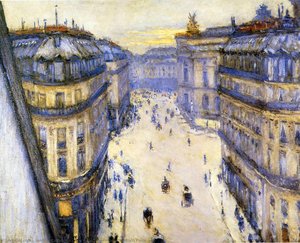
카유보트는 자신의 예술적 노력 외에도 인상주의 운동을 지원하는 데 중요한 역할을 했다. 그의 재정적 독립 덕분에 그는 모네, 르누아르, 피사로, 세잔, 드가 등을 구매할 수 있었는데, 이는 당시 공식 살롱에서 대부분 거부당한 작품이었다. 그는 단순한 수집가가 아니었다. 그는 이러한 예술가들을 적극적으로 지지하고 기존의 미술 규범에 도전하는 여러 인상주의 전시회를 조직하고 자금을 지원했다. 이러한 혁신을 육성하려는 그의 헌신은 그가 죽은 후 프랑스 국가에 유산으로 남긴 컬렉션까지 확장되었는데, 이는 처음에는 저항을 받았지만 결국 오르세 미술관의 유명한 인상주의 소장품의 초석이 되었다. 카유보트의 독특한 관점은 그의 구성을 통해 드러났다. 1880년에 그린 위에서 본 대로의 거리 (Boulevard vu d’en haut)와 같은 작품은 놀라운 현대적 감각을 보여주는데, 높은 시점을 사용하고 20세기의 사진 관점을 예상하는 역동적인 구도를 채택했다. 일본 판화와 자신의 사진 실험에 영향을 받은 이러한 혁신적인 접근 방식은 그를 진정한 선구자로 자리매김했다.유산과 재발견: 되찾은 현대 거장
그의 죽음 이후 수십 년 동안 카유보트의 작품은 상대적으로 알려지지 않았고, 인상주의의 더 유명한 인물들에게 가려졌다. 20세기 후반에 이르러서야 학문적 연구와 주요 전시회를 통해 그의 예술에 대한 포괄적인 재평가가 시작되었다. 이 재발견은 놀라운 기술적 숙련도, 지적 깊이 및 선견지명을 가진 예술가를 드러냈다. 카유보트의 그림은 단순히 현대 생활을 묘사하는 것이 아니라 도시 존재의 복잡성, 변화하는 사회 환경 및 예술과 현실 간의 진화하는 관계에 대한 심오한 성찰이다. 사실주의와 인상주의 기술을 원활하게 결합하고 혁신적인 구성을 사용하며 주변 세계를 묘사하려는 그의 흔들리지 않는 노력은 그를 19세기 미술에서 중요한 인물로 확고히 했다. 오늘날 카유보트의 작품은 독특한 관점, 뛰어난 실행력 및 지속적인 관련성으로 찬사를 받고 있는데, 이는 새로운 시대의 정신을 담아내고자 감히 한 예술가의 증거이다.주요 작품
- 바닥을 긁는 사람들 (Les Raboteurs de Parquet) (1875): 카유보트의 사실주의와 관습적인 구성을 보여주는 획기적인 작품.
- 눈 속의 지붕 (View of Rooftops (Snow)) (1878): 사진과 일본 판화에 영향을 받은 그의 높은 시점과 분위기 효과 사용을 보여준다.
- 위에서 본 대로의 거리 (Boulevard vu d’en haut) (1880): 놀라운 현대적 구성을 가진 작품.
- 파리의 우천일 (Paris Street; Rainy Day) (1877): 독특하고 생생한 방식으로 파리 생활의 활기찬 에너지를 포착한 그의 가장 유명한 작품 중 하나.
- 베지크 게임 (The Bezique Game)(1881) : 파리의 여가를 사로잡은 매혹적인 인상주의 그림.

귀스타브 카유보트
1848 - 1894 , 프랑스
주요 정보
- Artistic Movement Or Style: 사실주의, 인상주의
- Artists Or Movements Influenced By This Artist: 인상주의
- Artists Who Influenced This Artist:
- 에드가 드가
- 주세페 데 니티스
- Date Of Birth: 1848년 8월 19일
- Date Of Death: 1894년 2월 21일
- Full Name: 귀스타브 카유보트
- Nationality: 프랑스인
- Notable Artworks (List Of Titles):
- 바닥 긁는 사람들
- 눈 덮인 지붕 풍경
- 비 오는 거리의 파리
- Place Of Birth (City And Country): 프랑스 파리
관련 기사 더 보기

The Raw Truth: A Definitive Guide to the Power and Legacy of Social Realism Art
Explore the profound impact of Social Realism. Discover how masters like Courbet rejected idealism to capture the raw, socio-political truths of the working class through powerful, unvarnished art history and enduring visual critique.
테마, 스타일 및 특징별로 분류된 작품들을 만나보세요.


