

Shown: · With its frame:
 실제 크기로 보기
 보내기
보내기 공유하기
공유하기
 상세 보기
상세 보기 가이드 보기

 이미지 다운로드
 유사 작품 더 보기
 X-레이
X-레이 슬라이드 쇼 보기
 Q&A
Q&A 통계 정보
통계 정보

₩ 365765
핸드메이드 유화 복제화
작가가 직접 캔버스에 손으로 그린 유화 작품으로, 원하는 크기와 액자로 맞춤 제작해 드립니다. ( 프린트 판매로 전환 디지털 이미지 판매 채널로 전환)
Size
·표준 규격
맞춤 제작
CM
INCH
작품의 원본 비율을 그대로 유지하는 프리셋 사이즈 중에서 선택해 보세요.
Loading sizes...

가로 너비
높이
액자나 벽면 크기에 맞춰 필요한 가로와 세로 길이를 입력해 주세요. 본 작품은 수작업으로 제작되므로, 요청하신 비율에 따라 작가가 그림의 가장자리를 조금 더 넓게 그리거나 일부를 조정하여 작업할 수 있습니다. 작업 시작 전, 최종 확인을 위해 디지털 목업 이미지를 보내드립니다. 이 페이지에 표시된 이미지는 실제 결과물과 다를 수 있으며, 오직 목업 이미지만이 정확한 결과물을 보여줍니다.
 상세 보기
상세 보기Finish
·
White ₩1

Blurside ₩1

Extended ₩1

P118B ₩10

P118H ₩10

P118W ₩10

P438Z ₩10

P508JH ₩12

P508YH ₩12

P805H ₩10

P805Z ₩10

P919BZ ₩10

P919G ₩10

P919XJ ₩10

P959ZH ₩10

P968JZ ₩12

W106C ₩8

W218G ₩10

W218JH ₩8

W218Y ₩10

W307PJ ₩10

W316G ₩10

W316PJ ₩8

W316Y ₩10

W398PJ ₩8

W4111J ₩10

W500HY ₩15

W500JH ₩15

W692G ₩12

W849H ₩8

W940BG ₩15

W953PJ ₩8

H24-GOLD ₩30

H24-SILVER ₩30

H36-GOLD ₩45

H36-SILVER ₩45
Shipped in a protective tube, ready for your own framer.
Above 105 cm the frame is shipped as a kit for a professional framer — read the details.
Extras
optionalWhat do the extras include?
Examples of what can be changed: Replace face with customer photo; Add pet (e.g., replace cat with dog); Include hidden message in background; Change background landscape or elements.
After order, TopImpressionists.com team will email client for instructions and provide a mockup preview
After order, TopImpressionists.com team will email client for instructions and provide a mockup preview
전 세계 배송()은 표준 5주 대신 3~4주 내에 완료됩니다. (31 10월). 품질에는 어떠한 타협도 하지 않습니다.
보호용 바니시
캡션
동판 각인 상세 정보
This elegant plaque features the artist's name and the title of the artwork, finely engraved for a timeless presentation.
It is made from bronze with a refined, elegant finish. The text is precisely laser-engraved for a sharp and permanent result. Measuring 9x2 cm, the plaque is compact yet easy to read. It's built to be durable and scratch-resistant, offering a professional, museum-quality look. Mounting is simple thanks to the included adhesive backing.
투명 아크릴 명판 상세 정보
The plaque includes essential engraved details such as the artist's name, the title of the artwork, the date it was created, the type of media used-like oil on canvas or watercolor-a brief description of the piece, and a QR code that links to the complete artwork information.
It is crafted from clear acrylic, offering a sleek, modern appearance. The text is UV-engraved in black to ensure strong visual contrast. With a size of 10x15 cm, it ensures optimal readability. It comes equipped with two metal hooks for secure wall mounting. The plaque is designed to be weather-resistant, making it suitable for various environments, and it includes interactive features that work seamlessly with smartphone scanning.
블랙 아크릴 명판 상세 정보
This elegant plaque includes engraved information such as the artist's name, the title of the artwork, the date it was created, the type of media used (like oil on canvas or watercolor), a short description of the artwork, and a QR code for quick access to more information.
The plaque itself is made from refined black acrylic with a premium finish. The text is laser-engraved in white for high contrast and readability. Its size is 10x15 cm, designed to be easy to read. It comes with two metal hooks for professional mounting. The design is sleek and fits any interior style. It is also weather-resistant and durable, with built-in digital integration for mobile compatibility.
유리 옵션은 110cm 미만 크기에서만 선택 가능합니다.
 유리 옵션은 110cm 미만 크기에서만 선택 가능합니다.
- 전 세계 무료 특급 배송
- 고품질 린넨 캔버스
- 배송 전 과정 보험 적용
- 관세 환급 보장 서비스
- 원본 색상 일치 보장
- 제조 결함 발견 시 100일 이내 반품 가능
- 100% 환불 보장
- 다량 구매 할인 혜택


컬렉션 상세 정보
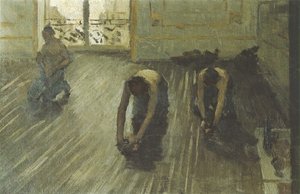
Gustave Caillebotte's 'The Floor Scrapers (study)' captures Parisian laborers with striking realism and light. Explore this iconic Impressionist work depicting urban life, showcasing Caillebotte’s unique perspective.
작가 소개
구스타브 카유보트(1848-1894): 인상주의와 사실주의를 넘나든 프랑스 거장. '비 오는 날의 거리' 등 파리 생활을 독특한 시선으로 담아낸 작품들을 만나보세요.
About the painting
The Floor Scrapers (Study) 02: A Glimpse into Parisian Labor
Gustave Caillebotte’s “The Floor Scrapers (Study) 02,” painted in 1875, isn't merely a depiction of three men diligently working; it’s a meticulously observed and subtly powerful portrait of urban life in late 19th-century Paris. This early work, often considered a pivotal piece in Caillebotte’s artistic development, offers a rare and intimate view into the lives of the city's working class – a subject largely absent from the grand narratives of the era. The painting immediately draws the eye with its stark contrast: the muted tones of the darkened room, punctuated by the bright white of the freshly sanded floorboards, create an almost photographic realism that was revolutionary for its time.
Caillebotte’s artistic journey began with a formal training in law and engineering, but it was his encounter with photography – particularly the work of Nadar – that profoundly shaped his approach to painting. He recognized the power of capturing fleeting moments and precise details, mirroring the photographic process. This influence is evident in the meticulous rendering of the men’s postures, their tools, and the textures of the wood. The composition itself feels deliberately staged, reminiscent of a photograph, with its careful attention to perspective and lighting. The figures are not idealized; they are presented as ordinary laborers, their faces obscured by shadow, emphasizing their anonymity within the bustling city.
Impressionistic Techniques and a Revolutionary Perspective
“The Floor Scrapers” exemplifies Caillebotte’s early embrace of Impressionism, though with a distinct realism that sets him apart from many of his contemporaries. He employed broken brushstrokes to capture the play of light on the wood and the men's clothing, creating a sense of movement and atmosphere. The use of complementary colors – the cool blues and greens of the shadows against the warm browns and yellows of the floor – adds depth and vibrancy to the scene. Notably, Caillebotte’s decision to depict these laborers in a darkened room, bathed in the diffused light of an unseen window, was a bold departure from traditional studio settings. This choice immediately imbued the painting with a sense of immediacy and authenticity.
Furthermore, Caillebotte's innovative perspective—a low-angle shot that emphasizes the scale of the men and their work—was groundbreaking. It forces the viewer to confront the scene directly, fostering a feeling of intimacy and engagement. The composition isn’t about glorifying labor; it’s about presenting it as a fundamental aspect of urban existence. The painting's technical mastery lies in its ability to convey both the physical reality of the work and the emotional weight of the men’s efforts.
Symbolism and Social Commentary
While seemingly straightforward, “The Floor Scrapers” carries subtle layers of symbolism. The act of scraping floors represents a repetitive, demanding task – a symbol of the daily grind endured by countless working-class individuals in Paris at the time. The absence of any discernible hierarchy or leadership among the men suggests a shared experience of labor and resilience. It’s important to note that Caillebotte was one of the first artists to depict urban proletariat, a subject rarely addressed in art during this period. This choice speaks volumes about his desire to challenge conventional artistic norms and offer a more nuanced representation of Parisian society.
The painting's historical context is crucial to understanding its significance. Paris in the 1870s was undergoing rapid industrialization, leading to significant social and economic changes. The working class faced harsh conditions, long hours, and low wages. Caillebotte’s work serves as a poignant reminder of these realities, offering a glimpse into the lives of those often overlooked by history.
A Timeless Reflection on Labor and Urban Life
“The Floor Scrapers (Study) 02” remains a powerful and evocative artwork. It's not just a depiction of three men working; it’s a meditation on labor, poverty, and the human condition. Caillebotte’s meticulous observation, innovative perspective, and subtle symbolism combine to create a work that continues to resonate with viewers today. Reproductions of this painting offer an opportunity to appreciate Caillebotte's artistic vision and gain a deeper understanding of Parisian life in the 19th century – a testament to the enduring power of art to illuminate social realities.
질의응답
"The Floor Scrapers (study) 02"의 재료와 화풍은 무엇인가요?
"The Floor Scrapers (study) 02"은(는) Acrylic On Canvas 기법을 사용하여 Impressionist Painting 양식으로 제작되었습니다.
학생들을 위한 귀스타브 카유보트의 "The Floor Scrapers (study) 02" 관련 팩트시트가 있나요?
귀스타브 카유보트의 "The Floor Scrapers (study) 02"의 가이드 페이지에서는 인쇄 가능한 두 장 분량의 학습용 팩트시트를 제공합니다. 여기에는 작품과 작품 정보표, 작가의 생애 속 시기를 보여주는 연대기, 해당 작가의 다른 작품들, 측정된 컬러 팔레트, 그리고 네 가지 스타일로 바로 복사하여 사용할 수 있는 인용 문구가 포함되어 있습니다.
"The Floor Scrapers (study) 02"에서 가장 돋보이는 색상은 무엇인가요?
"The Floor Scrapers (study) 02"에서 가장 돋보이는 색상은 Espresso (#504d40)입니다. 작품의 주된 색상은 인테리어와 작품을 조화롭게 매치할 때 유용합니다.
Quick facts and art quiz
About 귀스타브 카유보트

귀스타브 카유보트
1848 - 1894, 프랑스
작가 소개
파리의 새로운 시대: 귀스타브 카유보트의 삶과 예술
1848년 부유한 파리 가정에서 태어난 귀스타브 카유보트는 급변하는 도시의 역동적인 변화를 포착할 수 있는 독특한 위치에 있었다. 그의 아버지 마르티알 카유보트는 성공적인 섬유 사업을 상속받았고 판사로 재직하며, 귀스타브에게 경제적 안정을 제공했을 뿐만 아니라 번성하는 현대 세계를 관찰할 수 있는 시각을 선사했다. 처음에는 법학 연구에 매진하여 1868년과 1870년에 법학 학위를 취득했지만, 카유보트의 진정한 소명은 예술의 영역에 있었다. 그는 레옹 보나 밑에서 본격적인 미술 훈련을 시작하면서 동시에 사진에 깊은 관심을 갖게 되었는데, 이는 그의 예술적 비전에 심오한 영향을 미칠 새로운 매체였다. 이러한 초기 사진 원리에 대한 노출—구도, 관점 및 순간 포착—은 그의 독특한 스타일의 특징이 되었다. 카유보트는 변화를 단순히 기록하는 데 그치지 않고 그것이 제시하는 미학적 가능성에 적극적으로 참여했다.인상주의 빛으로 물든 사실주의
카유보트의 예술적 여정은 엄격한 학문적 전통에서 벗어났지만, 많은 인상주의 동료들의 순수한 시각 탐구를 완전히 수용하지는 않았다. 그는 에드가 드가와 주세페 데 니티스와 친밀감을 느끼며 현대 생활에 대한 매력을 공유했지만, 세심한 사실주의 렌즈를 통해 접근했다. 그의 초기 걸작 바닥을 긁는 사람들 (Les Raboteurs de Parquet), 1875년 살롱에서 전시되었을 때 즉시 대담하고 관습적인 화가로서의 명성을 확립했다. 이 작품은 세 명의 노동자가 나무 바닥을 꼼꼼하게 긁어내는 모습을 보여주는데, 일부 관객에게는 충격을 주었지만 다른 관객에게는 사로잡혔다. 단순한 주제—노동 계급은 고미술의 캔버스에 거의 등장하지 않았다—뿐만 아니라 구도 또한 그러했다. 잘린 듯하고 다소 당혹스러울 정도로 직접적이며 감상적인 이상화가 부족했다. 동시대 삶을 꾸밈없이 묘사하려는 이러한 노력은 철교와 같은 작품에서도 계속되었는데, 그는 빠르게 변화하는 파리의 산업 풍경을 능숙하게 포착했다. 그러나 카유보트는 인상주의의 영향에 면역이 되지 않았고 그의 팔레트는 점차 밝아졌으며 분위기 효과와 깨진 붓놀이를 실험하기 시작했는데, 이는 특히 눈으로 덮인 파리 지붕의 멋진 풍경에서 두드러졌다. 눈 속의 지붕 (View of Rooftops (Snow))과 같은 작품에서 분명하게 드러났다.후원자이자 선구자: 미술 세계를 탐색하다
카유보트는 자신의 예술적 노력 외에도 인상주의 운동을 지원하는 데 중요한 역할을 했다. 그의 재정적 독립 덕분에 그는 모네, 르누아르, 피사로, 세잔, 드가 등을 구매할 수 있었는데, 이는 당시 공식 살롱에서 대부분 거부당한 작품이었다. 그는 단순한 수집가가 아니었다. 그는 이러한 예술가들을 적극적으로 지지하고 기존의 미술 규범에 도전하는 여러 인상주의 전시회를 조직하고 자금을 지원했다. 이러한 혁신을 육성하려는 그의 헌신은 그가 죽은 후 프랑스 국가에 유산으로 남긴 컬렉션까지 확장되었는데, 이는 처음에는 저항을 받았지만 결국 오르세 미술관의 유명한 인상주의 소장품의 초석이 되었다. 카유보트의 독특한 관점은 그의 구성을 통해 드러났다. 1880년에 그린 위에서 본 대로의 거리 (Boulevard vu d’en haut)와 같은 작품은 놀라운 현대적 감각을 보여주는데, 높은 시점을 사용하고 20세기의 사진 관점을 예상하는 역동적인 구도를 채택했다. 일본 판화와 자신의 사진 실험에 영향을 받은 이러한 혁신적인 접근 방식은 그를 진정한 선구자로 자리매김했다.유산과 재발견: 되찾은 현대 거장
그의 죽음 이후 수십 년 동안 카유보트의 작품은 상대적으로 알려지지 않았고, 인상주의의 더 유명한 인물들에게 가려졌다. 20세기 후반에 이르러서야 학문적 연구와 주요 전시회를 통해 그의 예술에 대한 포괄적인 재평가가 시작되었다. 이 재발견은 놀라운 기술적 숙련도, 지적 깊이 및 선견지명을 가진 예술가를 드러냈다. 카유보트의 그림은 단순히 현대 생활을 묘사하는 것이 아니라 도시 존재의 복잡성, 변화하는 사회 환경 및 예술과 현실 간의 진화하는 관계에 대한 심오한 성찰이다. 사실주의와 인상주의 기술을 원활하게 결합하고 혁신적인 구성을 사용하며 주변 세계를 묘사하려는 그의 흔들리지 않는 노력은 그를 19세기 미술에서 중요한 인물로 확고히 했다. 오늘날 카유보트의 작품은 독특한 관점, 뛰어난 실행력 및 지속적인 관련성으로 찬사를 받고 있는데, 이는 새로운 시대의 정신을 담아내고자 감히 한 예술가의 증거이다.주요 작품
- 바닥을 긁는 사람들 (Les Raboteurs de Parquet) (1875): 카유보트의 사실주의와 관습적인 구성을 보여주는 획기적인 작품.
- 눈 속의 지붕 (View of Rooftops (Snow)) (1878): 사진과 일본 판화에 영향을 받은 그의 높은 시점과 분위기 효과 사용을 보여준다.
- 위에서 본 대로의 거리 (Boulevard vu d’en haut) (1880): 놀라운 현대적 구성을 가진 작품.
- 파리의 우천일 (Paris Street; Rainy Day) (1877): 독특하고 생생한 방식으로 파리 생활의 활기찬 에너지를 포착한 그의 가장 유명한 작품 중 하나.
- 베지크 게임 (The Bezique Game)(1881) : 파리의 여가를 사로잡은 매혹적인 인상주의 그림.
Quick facts about 귀스타브 카유보트
- Artistic Movement Or Style: 사실주의, 인상주의
- Artists Or Movements Influenced By This Artist: 인상주의
- Artists Who Influenced This Artist:
- 에드가 드가
- 주세페 데 니티스
- Date Of Birth: 1848년 8월 19일
- Date Of Death: 1894년 2월 21일
- Full Name: 귀스타브 카유보트
- Nationality: 프랑스인
- Notable Artworks (List Of Titles):
- 바닥 긁는 사람들
- 눈 덮인 지붕 풍경
- 비 오는 거리의 파리
- Place Of Birth (City And Country): 프랑스 파리
관련 작품들


테마, 스타일, 특징별로 큐레이션된 작품들을 만나보세요.


귀스타브 카유보트
The Floor Scrapers (study) 02
() ·
With its frame: · Hand-painted in oil on linen
Total