
빠른 제작과 다양한 마감 옵션을 제공하는 박물관 품질의 지클레이 또는 캔버스 프린트. ( 손으로 그린 그림 구매 이미지 구매)
작품의 원본 비율을 유지하는 미리 설정된 크기 중에서 선택하세요.

특정 프레임이나 공간에 맞춰 직접 치수를 입력하실 수 있습니다. 선택하신 사이즈가 원본 이미지의 비율과 일치하지 않을 경우, 작품을 크롭(자르기)하거나 이미지를 대칭 또는 단색 채우기로 확장하여 제작합니다. 제작 시작 전, 최종 확인을 위해 디지털 목업이 전송됩니다.
화면상의 미리보기는 실제 크롭이나 확장 상태를 반영하지 않으므로, 최종 구도는 오직 목업을 통해서만 정확하게 확인하실 수 있습니다.
맞춤 사이즈 제작도 가능하지만, 원본 비율을 유지하기 위해서는 사전 정의된 목록에서 치수를 선택하시는 것을 권장합니다.

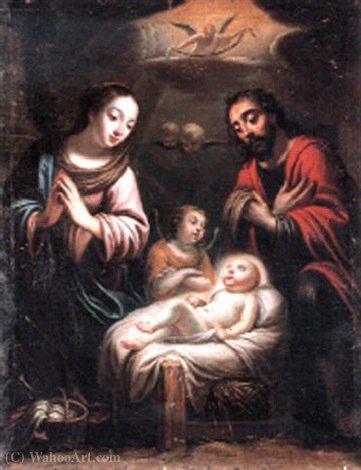
The nativity
복제본 크기
Guy François, a name perhaps less familiar than some of his contemporaries, stands as a significant figure within the vibrant artistic landscape of 16th-century France. Born in Le Puy in 1578 or 1579, he emerged from a period marked by both religious upheaval and burgeoning Renaissance ideals, shaping his work with a unique blend of Caravaggism, Bolognese classicism, and deeply personal emotion. His life was tragically cut short in 1650, leaving behind a legacy of approximately 300 paintings – a remarkable output considering the challenges he faced throughout his career.
François’s early artistic development is inextricably linked to Carlo Saraceni, a Venetian painter whose workshop in Rome became a crucial training ground. He spent several years there during the late 1610s and early 1620s, absorbing the dramatic chiaroscuro and dynamic compositions characteristic of Saraceni's style. This influence is particularly evident in his later works, where he masterfully employed strong contrasts between light and shadow to create a sense of theatricality and emotional intensity. However, François quickly developed his own distinctive voice, moving beyond mere imitation and forging a style that was both deeply rooted in tradition and remarkably original.
His return to France in 1613 marked the beginning of a prolific career, primarily focused on religious subjects – altarpieces, panel paintings, and numerous devotional images. He received commissions from churches throughout the south of France, including Bordeaux and Montpellier, demonstrating his growing reputation as a skilled and sought-after artist. Crucially, he also found patronage with David, one of the leading figures of the French court, undertaking portraits such as that of Louis-Michel le Pelletier de St Fargeau, a commission that highlights his ability to capture both the outward appearance and inner character of his subjects.
The mid-1630s witnessed a pivotal moment in François’s career: the emergence of Jean-Baptiste Isabey, a miniaturist who became his close friend and invaluable supporter. Isabey recognized François's talent early on and secured commissions for him, notably the portrait of his generous friend – a work that brought significant recognition and financial stability to the artist. This collaboration proved immensely beneficial, allowing François to dedicate himself more fully to his art and expand his circle of patrons.
The success of this portrait led to further opportunities, culminating in 1795 with the creation of *Bélisaire*, a monumental work that secured him membership in the revolutionary tribunal. This period was marked by intense political upheaval, yet François navigated the turbulent times with remarkable resilience and artistic integrity. Despite his aversion to the violence and injustice of the revolution, he continued to produce powerful and emotionally resonant paintings, reflecting the spirit of the age while retaining his own distinctive style.
The late 18th century saw a surge in demand for portraiture, fueled by the rise of the wealthy bourgeoisie and the increasing importance of social status. François capitalized on this trend, executing numerous portraits of prominent figures – from royalty and nobility to leading intellectuals and artists. His ability to capture the personality and charisma of his subjects made him one of the most sought-after court painters of his day. His salon became a hub for artistic and intellectual exchange, further enhancing his reputation and solidifying his position within the Parisian art world.
François’s paintings are characterized by their dramatic use of light and shadow, reminiscent of Caravaggio's style, but infused with a distinctly French sensibility. He employed bold colors, dynamic compositions, and expressive gestures to convey a sense of movement and emotion. His religious works often feature intense emotional scenes, depicting moments of faith, piety, and spiritual struggle. The *Holy Family With St Bruno And St Elisabeth*, for example, showcases his ability to create a deeply moving portrayal of familial devotion, while the *Saint Roch and the Angel* demonstrates his mastery of chiaroscuro and his talent for capturing the vulnerability of human figures.
His portraits are equally compelling, revealing not only the physical likeness of his subjects but also their inner character. The portrait of his friend, now housed in the Louvre, exemplifies his skill in capturing a sense of warmth and generosity. His meticulous attention to detail, combined with his expressive brushwork, created paintings that were both visually stunning and psychologically insightful.
Guy François’s contribution to French art is often overshadowed by more celebrated figures of the era, but his work deserves recognition for its originality, emotional depth, and technical skill. He was a key figure in the transition from Mannerism to Baroque painting in France, bridging the gap between these two styles and forging a unique artistic identity. His paintings continue to be admired for their dramatic intensity, expressive power, and enduring beauty.
His influence can be seen in the work of subsequent generations of French painters, and his legacy endures through the numerous works that survive today. The fact that over 300 paintings remain is a testament to his prolific output and the lasting value of his artistic vision. The works housed in institutions like the Louvre and the Musée des Beaux-Arts de Nancy offer invaluable insights into the life and art of this remarkable artist.

1939 - 1978 , Italy


최신 미술 뉴스, 특별 혜택 및 인테리어 아이디어를 가장 먼저 만나보세요.
프로젝트에 대해 알려주시면 저희 미술 전문가들이 맞춤형 아트 제안 3가지를 전달해 드립니다.
당신만을 위한 맞춤형 옵션 3가지를 무료로 추천해 드립니다!

 미리보기
미리보기
 공유하기
공유하기 공유하기
공유하기
 상세 정보
상세 정보

 다운로드
다운로드
 유사 작품
유사 작품 X-레이
X-레이 슬라이드 쇼
 더 보기
더 보기






































 유리 옵션은 110cm 미만 크기에서만 선택 가능합니다.


