작품 상세 설명
A Symphony of Color: Exploring Henri Matisse’s Untitled (1083)
Henri Matisse, born December 31, 1869, in Le Cateau-Cambrésis, France, wasn't initially destined for a life consumed by artistic expression. His early ambitions lay in law, pursued diligently in Paris after secondary school—a path abruptly altered by an unexpected illness that confined him to convalescence. This period of recuperation proved transformative; it ignited within him a passion he hadn’t known existed, sparked by the simple gift of art supplies from his mother. Far from abandoning legal pursuits entirely, Matisse embraced painting with fervor, recognizing it as a profound reconnection to his inner self and a liberation from intellectual constraints. Growing up in Bohain-en-Vermandois, amidst the grain merchants of his family, he seemed an unlikely candidate for the bohemian allure of artistic creation—yet, this initial encounter would irrevocably shape his artistic trajectory. He enrolled at the Académie Julian, honing his skills before progressing to the École Nationale des Beaux-Arts, establishing a foundation for his future achievements.
The Essence of Fauvist Expression
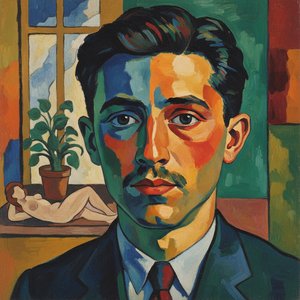
Matisse’s artistic journey culminated in the groundbreaking movement known as Fauvism—French for “wild beasts.” Rejecting academic conventions and prioritizing emotional intensity over meticulous realism, Matisse championed a radical approach to color. He believed that color should be used freely and instinctively, unburdened by representational obligations. This conviction is vividly realized in "Untitled (1083)," where hues explode across the canvas—a deliberate defiance of traditional artistic norms. The painting’s palette isn't merely decorative; it embodies Matisse’s core philosophy: color as a vehicle for conveying emotion and capturing the vibrancy of life itself.
Composition and Technique: Simplifying Form
Despite its exuberant coloration, "Untitled (1083)" maintains an understated elegance through masterful simplification. Matisse employed bold geometric shapes—primarily rectangles and squares—to construct the composition, reducing complex forms to their essential elements. This technique aligns perfectly with his broader artistic vision, prioritizing clarity of expression and conveying a sense of serene contemplation. The artist’s brushstrokes are loose and confident, layering pigment onto the canvas in rhythmic patterns that contribute to the painting's textural richness. Notice how Matisse skillfully blends colors to create subtle gradations and tonal variations—a testament to his meticulous attention to detail despite his commitment to stylistic abstraction.
Symbolism and Emotional Resonance
Beyond its formal qualities, "Untitled (1083)" resonates with profound symbolic meaning. The woman seated in the chair embodies stillness and repose, representing a harmonious balance between inner peace and outward observation. The potted plant symbolizes growth, vitality, and connection to nature—themes central to Matisse’s artistic worldview. Furthermore, the bowl positioned before her serves as an anchor for the eye, grounding the composition and emphasizing the importance of contemplation. Ultimately, the painting invites viewers to immerse themselves in a moment of quiet beauty, fostering feelings of serenity and appreciation for the simple pleasures of existence.
A Legacy of Color
Henri Matisse’s influence extends far beyond his own lifetime, shaping generations of artists who followed him. “Untitled (1083)” stands as an enduring emblem of Fauvist innovation—a celebration of color and form that continues to inspire admiration and provoke contemplation. Its vibrant hues and understated elegance encapsulate the spirit of Matisse's artistic legacy: a fearless embrace of expressive freedom and a unwavering belief in the transformative power of art. Reproductions of this masterpiece offer collectors and interior designers alike an opportunity to experience firsthand the profound beauty and emotional depth of one of the twentieth century’s most iconic artworks.