

 실제 크기로 보기
 보내기
보내기 공유하기
공유하기
 상세 보기
상세 보기 가이드 보기

 이미지 다운로드
 유사 작품 더 보기
 X-레이
X-레이 슬라이드 쇼 보기
 통계 정보
통계 정보Avatar
 Oil On Canvas
- WallArt
- Symbolism
 1916
1916- Modern
 102.0 x 128.0 cm
 Royal Scottish Academy of Art - Architecture
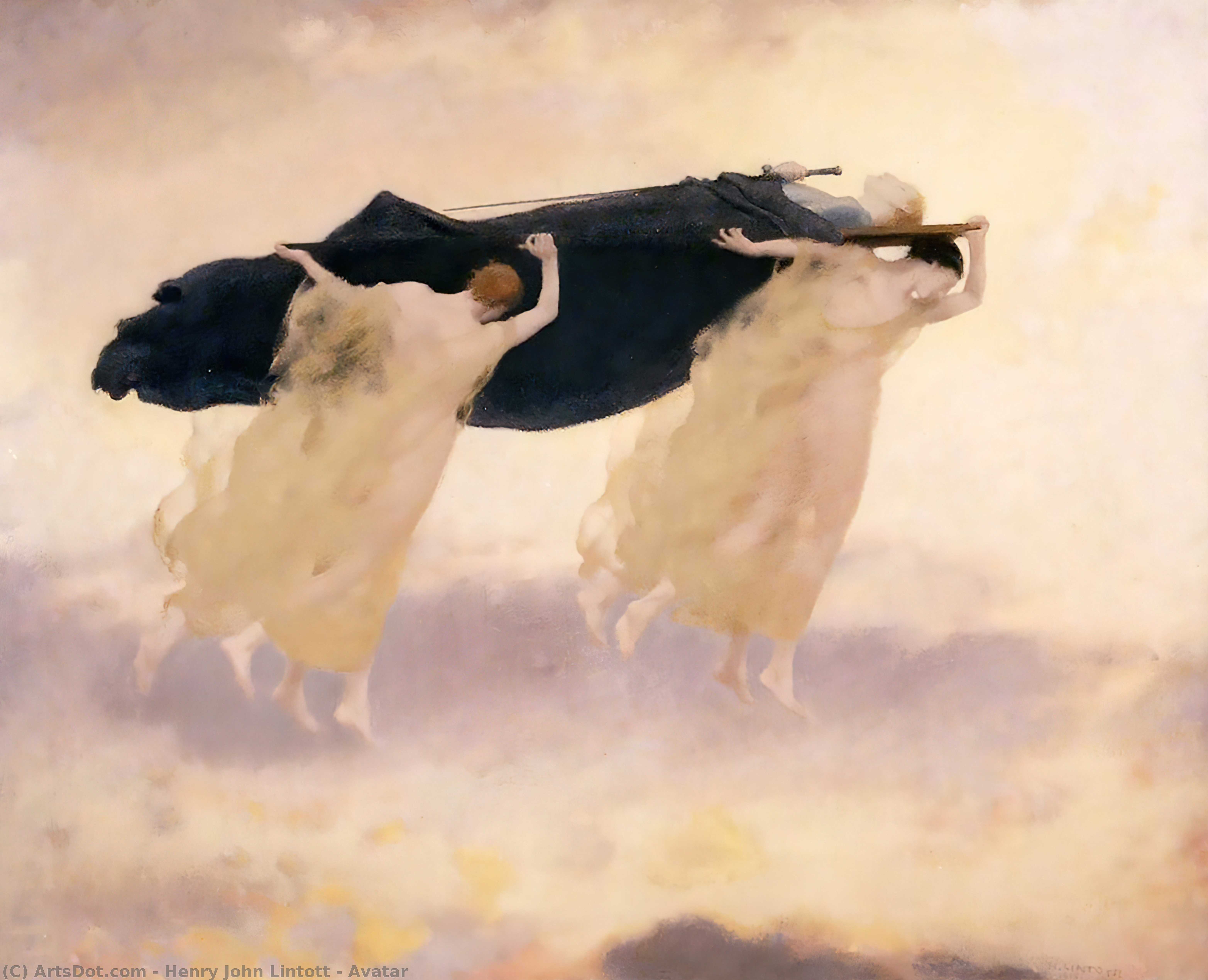
Explore 'Avatar' by Henry John Lintott – a haunting Symbolist painting of three women uniting in strength. Discover its ethereal beauty & British Impressionism at the Royal Scottish Academy.
 상세 보기
상세 보기
Discover Henry John Lintott's captivating paintings! Explore his portraits, landscapes & figure studies reflecting British Impressionism & Post-Impressionism. View available artworks and learn about this significant 20th-century artist.
이 페이지에 표시된 작품은 저작권법의 보호를 받으며, 이에 따라 동일한 복제품을 제작하거나 판매하는 것은 법으로 금지되어 있습니다. 이러한 권리 보호는 다음과 같은 국제 협약에 따라 시행됩니다. 베른 협약 또한 다음에서 명시하는 법률을 포함한 국내법에 의해 보호됩니다. 미국 저작권법 제17조.
저희는 존중을 담은 합법적인 대안으로서, 원작에서 영감을 받은 맞춤형 수제 유화 작품을 제공합니다. 저희의 숙련된 전문 화가들은 원작의 스타일, 분위기, 예술적 정수를 면밀히 연구하여, 그 자체로 독창적인 창작물이면서도 원작과 동일한 감동을 불러일으키는 새로운 작품을 만들어냅니다.
이 방식은 저작권 보호를 받는 예술 작품을 복제하거나 그대로 재현하는 것이 아니기에 저작권 규정을 완벽히 준수합니다. 대신, 이는 창의적인 재해석의 과정을 거칩니다. 즉, 원작에서 영감을 받되 원작과 동일하지 않은 새로운 회화 작품을 의미합니다.
핸드메이드 유화 복제화
작가가 직접 캔버스에 손으로 그린 유화 작품으로, 원하는 크기와 액자로 맞춤 제작해 드립니다. ( 프린트 판매로 전환 디지털 이미지 판매 채널로 전환)




P118B ₩10

P118H ₩10

P118W ₩10

P438Z ₩10

P508JH ₩12

P508YH ₩12

P805H ₩10

P805Z ₩10

P919BZ ₩10

P919G ₩10

P919XJ ₩10

P959ZH ₩10

P968JZ ₩12

W106C ₩8

W218G ₩10

W218JH ₩8

W218Y ₩10

W307PJ ₩10

W316G ₩10

W316PJ ₩8

W316Y ₩10

W398PJ ₩8

W4111J ₩10

W500HY ₩15

W500JH ₩15

W692G ₩12

W849H ₩8

W940BG ₩15

W953PJ ₩8




표준 규격
맞춤 제작
CM
INCH
작품의 원본 비율을 그대로 유지하는 프리셋 사이즈 중에서 선택해 보세요.
Loading sizes...

가로 너비
높이
액자나 벽면 크기에 맞춰 필요한 가로와 세로 길이를 입력해 주세요. 본 작품은 수작업으로 제작되므로, 요청하신 비율에 따라 작가가 그림의 가장자리를 조금 더 넓게 그리거나 일부를 조정하여 작업할 수 있습니다. 작업 시작 전, 최종 확인을 위해 디지털 목업 이미지를 보내드립니다. 이 페이지에 표시된 이미지는 실제 결과물과 다를 수 있으며, 오직 목업 이미지만이 정확한 결과물을 보여줍니다.
변경 가능한 예시: 얼굴을 고객님의 사진으로 교체, 반려동물 추가(예: 고양이를 강아지로 변경), 배경에 숨겨진 메시지 삽입, 배경 풍경 또는 요소 변경 등
주문 완료 후 TopImpressionists.com 팀에서 상세 안내를 위해 고객님께 이메일을 보내드리며, 미리보기 시안을 함께 제공해 드립니다.
주문 완료 후 TopImpressionists.com 팀에서 상세 안내를 위해 고객님께 이메일을 보내드리며, 미리보기 시안을 함께 제공해 드립니다.


 유리 옵션은 110cm 미만 크기에서만 선택 가능합니다.

Avatar
재현 매체
복제본 규격
-


총 결제 금액
₩ 436585
A Vision of Ethereal Unity
In the vast, misty corridors of art history, few works manage to bridge the gap between the tangible world and the realm of the spirit as gracefully as Henry John Lintott’s 1916 masterpiece, "Avatar." This captivating oil on canvas is not merely a painting; it is a window into a dreamscape where the boundaries of form and shadow dissolve. At its heart, the composition presents three female figures, positioned with a deliberate, rhythmic balance that guides the eye across a landscape of uncertainty. They appear to be engaged in a shared, sacred task, bearing a large, dark, boat-like object that anchors the ethereal scene. There is an undeniable sense of weight and purpose in their movement, yet they seem to glide through a hazy, atmospheric void, as if caught in a moment of suspended animation between heaven and earth.
The style of "Avatar" is a profound dialogue between Symbolism and Romanticism. Lintott eschews the sharp, clinical lines of realism in favor of soft, curvilinear forms and a palette of pale yellows, muted blues, and ghostly whites. The brushwork is loose and evocative, creating a textured surface where light does not strike objects so much as it permeates them. This technique produces a diffused, glowing effect, making the clouds appear to swirl with a life of their own. For the discerning collector or interior designer, this piece offers a sophisticated layer of depth; its lack of rigid boundaries allows it to integrate seamlessly into spaces that value atmosphere and mood, providing a focal point that invites quiet contemplation rather than demanding loud attention.
Symbolism and the Strength of Connection
Beyond its visual beauty, "Avatar" serves as a powerful allegory for human resilience and collective endeavor. The central theme is one of unity. The way the three women work in concert to carry their mysterious burden symbolizes the strength found in solidarity—the idea that even the most daunting journeys through life's shadows are made possible through cooperation. The dark, enigmatic object they carry acts as a profound symbol; it could represent the heavy responsibilities of existence, or perhaps a vessel for the soul navigating the turbulent currents of fate. This tension between the lightness of the angelic figures and the gravity of their task creates an emotional resonance that is both melancholic and deeply inspiring.
Historically, this work reflects Lintott’s position within the Scottish art scene and his exposure to the burgeoning Symbolist movements in London and Paris. As a prominent figure at the Royal Scottish Academy, Lintott was a master of capturing the struggle between light and darkness. In "Avatar," this struggle is not depicted through violent contrast, but through a subtle, atmospheric haze that suggests the ephemeral nature of life itself. To possess a reproduction of this work is to bring a piece of this historical introspection into a modern home—a reminder of the enduring power of connection and the beauty found in the pursuit of common goals.
An Invitation to the Sublime
For those seeking to curate an environment of peace, mystery, or intellectual depth, "Avatar" offers unparalleled inspiration. The painting’s shallow perspective and flattened space create an intimate experience, drawing the viewer into a world where the physical laws of gravity seem secondary to the emotional laws of the spirit. It is a piece that rewards repeated viewing, revealing new nuances in its layered glazes and soft shadows each time the light hits it. Whether placed in a grand gallery-style living room or a quiet study, this reproduction serves as a testament to the timeless allure of the sublime, making it an exquisite choice for anyone looking to infuse their surroundings with a sense of poetic grace and historical significance.
질의응답
Henry John Lintott의 "Avatar"의 저작권 상태는 어떻게 설명되나요?
Henry John Lintott의 "Avatar"은(는) 여전히 저작권의 보호를 받고 있습니다 상태입니다. 저작권 보호 기간은 작가 사후를 기준으로 산정되며, Henry John Lintott은(는) 1965년에 작고하였습니다.
Henry John Lintott의 "Avatar"의 원화는 어디에서 볼 수 있나요?
Avatar의 원작은 Royal Scottish Academy of Art - Architecture, 에든버러, United Kingdom에서 관람하실 수 있습니다.
"Avatar"의 전체적인 밝기는 어느 정도인가요?
시각적 밝기 측면에서 볼 때, Henry John Lintott의 "Avatar"은(는) brilliant 수준입니다.


작가 소개
Henry John Lintott: A Weaver of Scottish Dreams
Henry John Lintott (1877-1965) wasn’t a name that dominated the art world during his lifetime, yet within the rich tapestry of 20th-century British painting, particularly in Scotland, he remains a quietly significant figure. More than simply a painter, Lintott was an educator and a mentor, shaping the artistic trajectories of generations through his tenure at the Edinburgh College of Art. His work—a captivating blend of portraiture, landscape, and allegorical scenes—offers a glimpse into a world where observation is paramount, emotion subtly rendered, and the ethereal intertwines with the everyday.
Born in Brighton, Lintott’s artistic journey began with formal training at the local school. He then broadened his horizons, studying in London and Paris – experiences that undoubtedly exposed him to the burgeoning currents of Impressionism and Symbolism. It was a move north to Edinburgh in 1902 that proved pivotal, establishing a long and influential career within Scotland’s artistic heartland. He quickly ascended to a position of respect, becoming one of the initial staff members at the College, where he spent over four decades nurturing talent and refining his own practice.
The Language of Light and Shadow
Lintott's style is immediately recognizable—a deliberate eschewing of bold, assertive brushstrokes in favor of a meticulously layered technique. He favored soft, diffused light, often employing a muted palette dominated by blues, greens, and browns, creating an atmosphere of quiet contemplation. His landscapes aren’t merely depictions of scenery; they are imbued with a dreamlike quality, as if viewed through a hazy memory or a half-remembered vision. This is particularly evident in works like “St Bernard’s Crescent from Studio Window,” where the urban scene dissolves into a wash of atmospheric color, suggesting both familiarity and an underlying sense of mystery.
His portraits are equally compelling. Lintott avoided the conventional formality often associated with portraiture, instead capturing his subjects with a gentle intimacy. He seemed to seek not just likeness but also something deeper—a hint of personality, emotion, or inner life. The “Self Portrait,” for instance, reveals an older man reflecting on his own journey, his gaze imbued with a quiet dignity and perhaps a touch of melancholy.
Influences and Artistic Circle
Lintott’s artistic development was undoubtedly shaped by the prevailing movements of his time – Impressionism and Symbolism. However, he forged his own distinctive voice, blending these influences with a distinctly Scottish sensibility. He was part of The Society of Eight, a group of artists who shared a commitment to exploring subjective experience and challenging conventional artistic norms. This circle fostered a spirit of experimentation and collaboration, contributing significantly to the vibrant artistic scene in Edinburgh.
His influence extended far beyond his immediate colleagues. He mentored a remarkable cohort of young Scottish artists, including Anne Redpath, John Maxwell, and William MacTaggart—artists who went on to achieve considerable recognition in their own right. Lintott’s emphasis on observation, sensitivity, and the exploration of inner landscapes undoubtedly played a role in shaping their artistic visions.
Legacy and Enduring Appeal
Henry John Lintott may not have achieved widespread fame during his lifetime, but his work continues to resonate with viewers today. His paintings possess a quiet beauty and emotional depth that transcends time. They invite us to slow down, to observe closely, and to contemplate the subtle nuances of light, color, and form. The National Galleries of Scotland recognize Lintott’s importance, describing him as “a painter of portraits, landscapes and allegorical subjects,” whose method was “slow and meticulous” and his style “often soft and dream-like.”
His legacy lies not only in the works he created but also in the artists he nurtured. Lintott’s influence can be seen throughout the Scottish art landscape, a testament to his skill as an educator and his profound understanding of the power of visual language. His paintings remain a poignant reminder that true artistry often resides in the quiet moments—the subtle shifts in light, the unspoken emotions, and the enduring beauty of the everyday world.

Henry John Lintott
1877 - 1965
작가 정보 요약
- Artistic Movement Or Style: British Impressionism/Post-Impressionism
- Artists Or Movements Influenced By This Artist: ['Scottish School']
- Artists Who Influenced This Artist:
- Anne Redpath
- John Maxwell
- William MacTaggart
- Date Of Birth: 1877
- Date Of Death: 1965
- Full Name: Henry John Lintott
- Nationality: British
- Notable Artworks:
- Avatar
- Self Portrait
- St Bernard’s Crescent
- Place Of Birth: Brighton, UK
관련 기사

Henry Lamb: Reassessing Modern British Primitivism & the Poetics of Discomfort
Explore the compelling work of Henry Lamb, a key figure in British Primitivism. Discover his unsettling portraits, poignant war art & unique artistic vision. A deep dive into his life and legacy.

앙리 마티스의 걸작 25선: 색채와 감각의 혁신을 만나다 | TopImpressionists
앙리 마티스의 시대를 초월하는 걸작 25선을 만나보세요. 색채주의, 야수파를 대표하는 그의 삶과 예술 세계를 탐험하고, TopImpressionists에서 명화 복제본으로 거실 인테리어에 감동을 더하세요. 지금 바로 컬렉션을 확인하세요!

John Henry Twachtman: Atmospheric Impressionism & the American Landscape
Explore the captivating landscapes of John Henry Twachtman, a pivotal American Impressionist & Tonalist painter. Discover his artistic evolution, key works, and lasting influence on early 20th-century art.

존 싱어 사전트의 걸작 25선: 빛과 우아함으로 완성된 예술 세계 | TopImpressionists
존 싱어 사전트의 대표작 25선을 만나보세요. 인상주의 초상화부터 빛과 색채가 아름다운 유화까지, 그의 예술 세계를 탐험하고 TopImpressionists에서 고품질 아트 프린트로 거실 장식을 완성하세요. 지금 온라인 컬렉션을 확인하세요!

존 컨스터블 대표작 25선: 영국 풍경화의 거장, 자연과 감성을 담은 명화 컬렉션 | TopImpressionists
존 컨스터블 대표작 25선을 만나보세요. 영국 풍경화 거장의 자연주의 회화, 데담 밸리의 아름다움과 헤이 웨인의 정취를 담은 명화를 감상하세요. TopImpressionists에서 고품질 예술 작품 복제본을 소장하고 특별한 인테리어를 완성해보세요. 지금 바로 컬렉션을 탐험하세요!