

 실제 크기로 보기
 보내기
보내기 공유하기
공유하기
 상세 보기
상세 보기 가이드 보기

 이미지 다운로드
 유사 작품 더 보기
 X-레이
X-레이 슬라이드 쇼 보기
 통계 정보
통계 정보Edwin McMasters Stanton


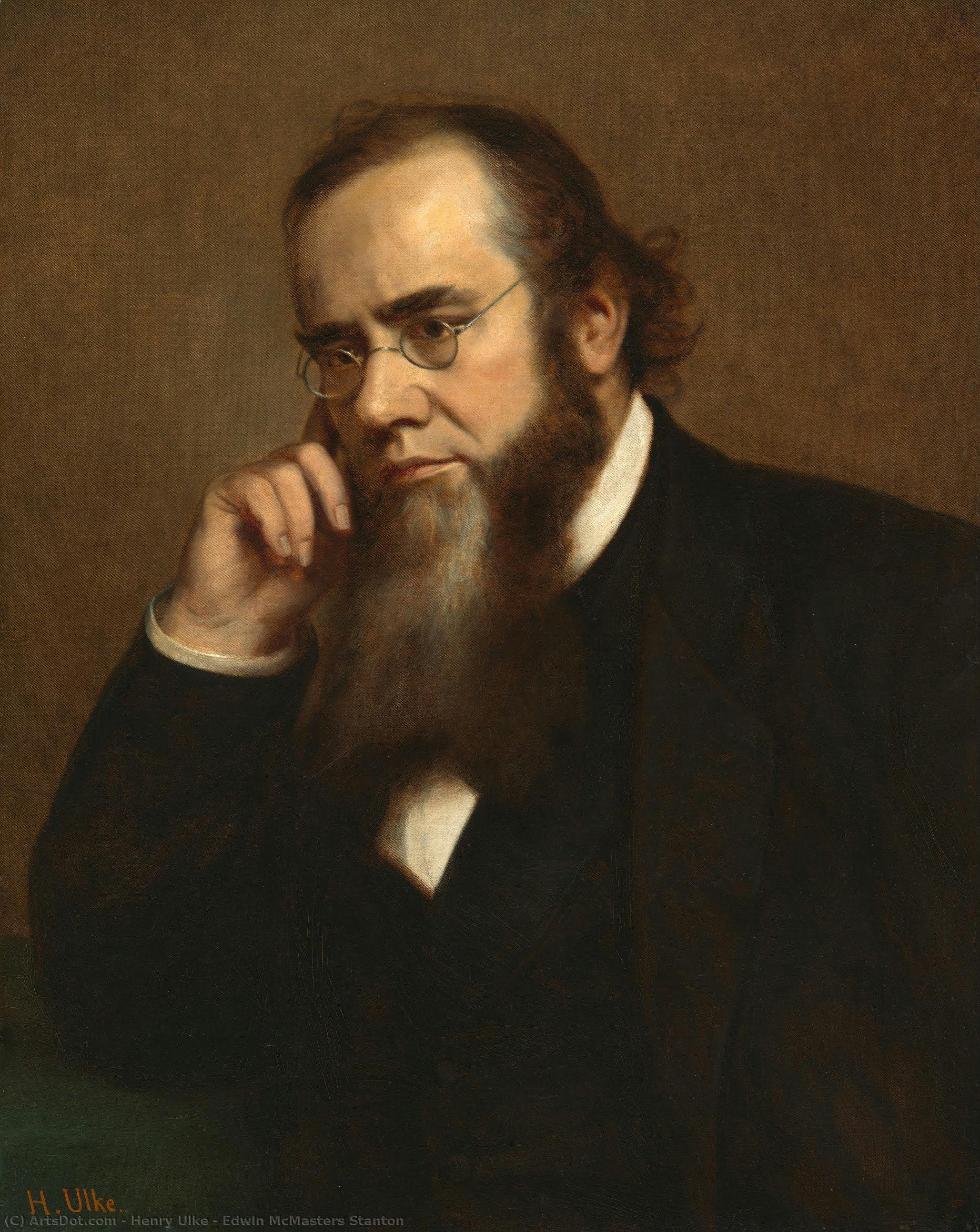
A distinguished portrait of Edwin McMasters Stanton by Henry Ulke captures the commanding presence of Lincoln's Secretary of War through masterful 19th-century realism, inviting you to bring this piece of history home.
 상세 보기
상세 보기
Henry Ulke (1821-1910) was a German-American portrait painter known as the 'Painter of Presidents.' He captured prominent figures like Lincoln & Stanton, blending realism with historical significance. Also an avid entomologist.
핸드메이드 유화 복제화
작가가 직접 캔버스에 손으로 그린 유화 작품으로, 원하는 크기와 액자로 맞춤 제작해 드립니다. ( 프린트 판매로 전환 디지털 이미지 판매 채널로 전환)




P118B ₩10

P118H ₩10

P118W ₩10

P438Z ₩10

P508JH ₩12

P508YH ₩12

P805H ₩10

P805Z ₩10

P919BZ ₩10

P919G ₩10

P919XJ ₩10

P959ZH ₩10

P968JZ ₩12

W106C ₩8

W218G ₩10

W218JH ₩8

W218Y ₩10

W307PJ ₩10

W316G ₩10

W316PJ ₩8

W316Y ₩10

W398PJ ₩8

W4111J ₩10

W500HY ₩15

W500JH ₩15

W692G ₩12

W849H ₩8

W940BG ₩15

W953PJ ₩8




표준 규격
맞춤 제작
CM
INCH
작품의 원본 비율을 그대로 유지하는 프리셋 사이즈 중에서 선택해 보세요.
Loading sizes...

가로 너비
높이
액자나 벽면 크기에 맞춰 필요한 가로와 세로 길이를 입력해 주세요. 본 작품은 수작업으로 제작되므로, 요청하신 비율에 따라 작가가 그림의 가장자리를 조금 더 넓게 그리거나 일부를 조정하여 작업할 수 있습니다. 작업 시작 전, 최종 확인을 위해 디지털 목업 이미지를 보내드립니다. 이 페이지에 표시된 이미지는 실제 결과물과 다를 수 있으며, 오직 목업 이미지만이 정확한 결과물을 보여줍니다.
변경 가능한 예시: 얼굴을 고객님의 사진으로 교체, 반려동물 추가(예: 고양이를 강아지로 변경), 배경에 숨겨진 메시지 삽입, 배경 풍경 또는 요소 변경 등
주문 완료 후 TopImpressionists.com 팀에서 상세 안내를 위해 고객님께 이메일을 보내드리며, 미리보기 시안을 함께 제공해 드립니다.
주문 완료 후 TopImpressionists.com 팀에서 상세 안내를 위해 고객님께 이메일을 보내드리며, 미리보기 시안을 함께 제공해 드립니다.


 유리 옵션은 110cm 미만 크기에서만 선택 가능합니다.

Edwin McMasters Stanton
재현 매체
복제본 규격
-


총 결제 금액
₩ 365046
A Portrait of Authority: The Legacy of Edwin McMasters Stanton
In the grand tapestry of American history, few figures loom as large or as formidable as Edwin McMasters Stanton. Captured in this 1872 masterpiece by the esteemed portraitist Henry Ulke, Stanton emerges not merely as a man, but as an institution of iron will and administrative brilliance. As the Secretary of War under President Abraham Lincoln, Stanton was the architect of Union logistics, a man whose rigorous reorganization of the war department helped steer the nation through its darkest hour. Through Ulke’s masterful brush, we encounter the statesman in his twilight years, possessing a gaze that reflects both the heavy burden of command and the unyielding intellect of a brilliant lawyer.
The painting serves as a profound psychological study, inviting the viewer to peer into the soul of a man who was instrumental in the fight against slavery and the preservation of the Union. There is an undeniable gravity in his expression; the fine lines around his eyes and the meticulous rendering of his facial hair speak to a life lived amidst the high-stakes tension of the Civil War era. For the collector, this piece offers more than just a historical record; it provides a window into the very essence of 19th-century leadership, making it an evocative centerpiece for any collection dedicated to American heritage.
Mastery of Light and Character
Henry Ulke, often celebrated as "The Painter of Presidents," employs a sophisticated technique that breathes life into this formal portrait. The artist utilizes a subtle interplay of light and shadow to sculpt the features of Stanton, creating a three-dimensional presence that commands the room. The texture of the subject's suit jacket, the crispness of his white collar, and the reflective glint on his spectacles are rendered with an exquisite attention to detail that speaks to Ulke’s academic precision. This meticulous approach ensures that every fold in the fabric and every nuance of skin tone contributes to a sense of palpable reality.
The background is intentionally understated, a muted wall that provides depth without distracting from the subject's commanding presence. This compositional choice directs all emotional energy toward Stanton himself, allowing his dignified posture and distinguished attire to resonate. The use of a darker palette in the periphery serves to push the figure forward, creating an intimate connection between the sitter and the observer. It is this technical mastery that makes a high-quality reproduction of this work so impactful; the depth of color and the richness of the shadows are preserved to inspire awe in any setting.
An Elegant Addition to Sophisticated Interiors
For interior designers and connoisseurs of fine art, this portrait offers an unparalleled opportunity to introduce a sense of timelessness and intellectual weight to a space. The somber yet dignified tones of the painting harmonize beautifully with classic decor, such as dark wood libraries, executive studies, or traditional dining rooms. It acts as a conversational anchor, sparking discussions about history, law, and the resilience of the human spirit. The artwork does not merely decorate a wall; it curates an atmosphere of prestige and historical reverence.
Whether placed in a private gallery or a grand residential hall, the portrait of Edwin McMasters Stanton brings with it an aura of stability and wisdom. It is a piece designed for those who appreciate the intersection of fine art and historical narrative—a choice for the discerning individual who seeks to surround themselves with works that possess both aesthetic beauty and profound cultural significance. To possess this reproduction is to hold a fragment of the American story, rendered with the grace and dignity that only a master like Ulke could provide.
질의응답
"Edwin McMasters Stanton" 작품은 명암 대비가 강한 편인가요?
"Edwin McMasters Stanton"의 명암 대비는 Gentle로 기록되었습니다. 대비는 밝은 부분과 어두운 부분의 차이가 얼마나 강한지를 나타냅니다.
"Edwin McMasters Stanton"은(는) Henry Ulke의 예술 활동기 중 어느 시기에 해당하나요?
Henry Ulke의 작품 활동 중 "Edwin McMasters Stanton"은(는) Mature Period 시기에 해당합니다. 이 시기는 작가의 다른 작품들과 비교해 보는 데 도움이 됩니다.
Realism 사조의 작품 "Edwin McMasters Stanton"은 어떤 감정을 전달하나요?
"Edwin McMasters Stanton"은 Realism 운동 내에서 Somber 정서를 담아내고 있습니다.
작가 소개
A Life Etched in Likeness: The Story of Henry Ulke
Henry Ulke, a name often whispered alongside the great figures he immortalized on canvas, was more than just “The Painter of Presidents.” Born Titus Ulke in 1821, his journey from German origins to becoming a celebrated portraitist in Washington D.C. is a compelling narrative of artistic dedication interwoven with an unexpected passion for the natural world. While history remembers him primarily for capturing the visages of Abraham Lincoln and Edwin Stanton, a deeper exploration reveals a man whose life was as richly detailed as the brushstrokes that defined his legacy. Ulke’s early life remains somewhat shrouded in mystery; details are scarce regarding his initial artistic training. However, it is known he immigrated to the United States, settling initially in New York before gravitating towards the political heart of the nation – Washington D.C. This move proved pivotal, placing him at the epicenter of a rapidly changing America and offering access to the very individuals who would become his most iconic subjects. He quickly established himself as a skilled portraitist, gaining favor amongst politicians and dignitaries seeking to preserve their image for posterity.The Brushstrokes of Power: Ulke’s Portraiture
Ulke's artistic style can be characterized by a meticulous realism tempered with a subtle sensitivity. He wasn’t interested in flamboyant displays of technique or abstract interpretations; instead, he focused on capturing the *essence* of his sitters – their character, intellect, and the weight of their responsibilities. His portraits weren’t merely representations of physical appearance but psychological studies rendered in oil paint. This approach is particularly evident in his depictions of Abraham Lincoln. Ulke painted several versions of the 16th President, each offering a unique glimpse into Lincoln's evolving persona during the tumultuous years of the Civil War. These were not idealized images; they showed a man burdened by immense pressure, yet radiating an inner strength and profound empathy. The portrait commissioned for the Old Executive Office Building is perhaps his most famous, showcasing Lincoln with a quiet dignity that resonates even today. Beyond Lincoln, Ulke’s portrait of Edwin Stanton, Secretary of War during the Civil War, stands as another testament to his ability to convey power and authority through subtle nuances of expression and composition. He masterfully captured Stanton's stern demeanor and unwavering resolve, creating an image that perfectly embodies the man’s crucial role in securing Union victory.Beyond the Canvas: A Hidden World of Entomology
What sets Ulke apart from many of his contemporaries is his remarkable dual life as a passionate entomologist – a collector and scholar of insects, particularly beetles. This seemingly disparate pursuit wasn't merely a hobby; it was a deeply ingrained fascination that consumed much of his free time and intellectual energy. He amassed an extraordinary collection, meticulously cataloging and studying thousands of specimens from around the globe.- A Dedicated Collector: Ulke’s home became a veritable museum of entomological wonders, attracting fellow enthusiasts and researchers.
- Scientific Contributions: He published numerous papers on his findings, contributing significantly to the field of beetle taxonomy and distribution. His collection was highly regarded within scientific circles.
- A Parallel Passion: The precision and attention to detail required in both portraiture and entomology suggest a common thread – a deep appreciation for observation and accurate representation.
Legacy and Historical Significance
Henry Ulke died in 1910, leaving behind a rich artistic legacy and an invaluable scientific collection. His portraits offer more than just historical documentation; they provide intimate glimpses into the lives of pivotal figures who shaped American history. He wasn’t simply recording appearances; he was capturing moments in time, preserving the spirit of an era on canvas. His work serves as a powerful reminder of the human cost of leadership and the enduring strength of the American ideal. The fact that his paintings continue to be studied and admired today is testament to their artistic merit and historical significance. Ulke’s story also highlights the often-overlooked passions that lie beneath the surface of public personas, revealing a man whose dedication extended far beyond the realm of art into the fascinating world of natural science. He remains a compelling figure – “The Painter of Presidents,” yes, but also a dedicated scholar, a meticulous observer, and a testament to the power of lifelong learning.
Henry Ulke
1821 - 1910
작가 정보 요약
- Full Name: Henry Ulke
- Nationality: German-American
- Date Of Birth: 1821
- Date Of Death: 1910
- Place Of Birth: Frankenstein, Silesia
- Notable Artworks: ['The Dance']
- Artistic Movement Or Style: Portraiture
- Artists Who Influenced This Artist: ['Karl Wilhelm Wach']
- Artists Or Movements Influenced By This Artist: ['Henri Matisse']
관련 기사

The Unvarnished Truth: A Cultural Journey Through the Soul of American Realism
Explore the profound beauty of American Realism. From the Ashcan School's urban grit to intimate portraits, discover how artists captured the authentic soul of a nation through unvarnished truth and masterful observation.

Capturing the Soul: A Journey Through the Emotion of Romantic Realism
Explore the profound emotion of Romantic Realism. Discover how 19th-century masters blended meticulous observation with raw human feeling to capture the soul through breathtaking oil paintings and timeless artistic legacies.