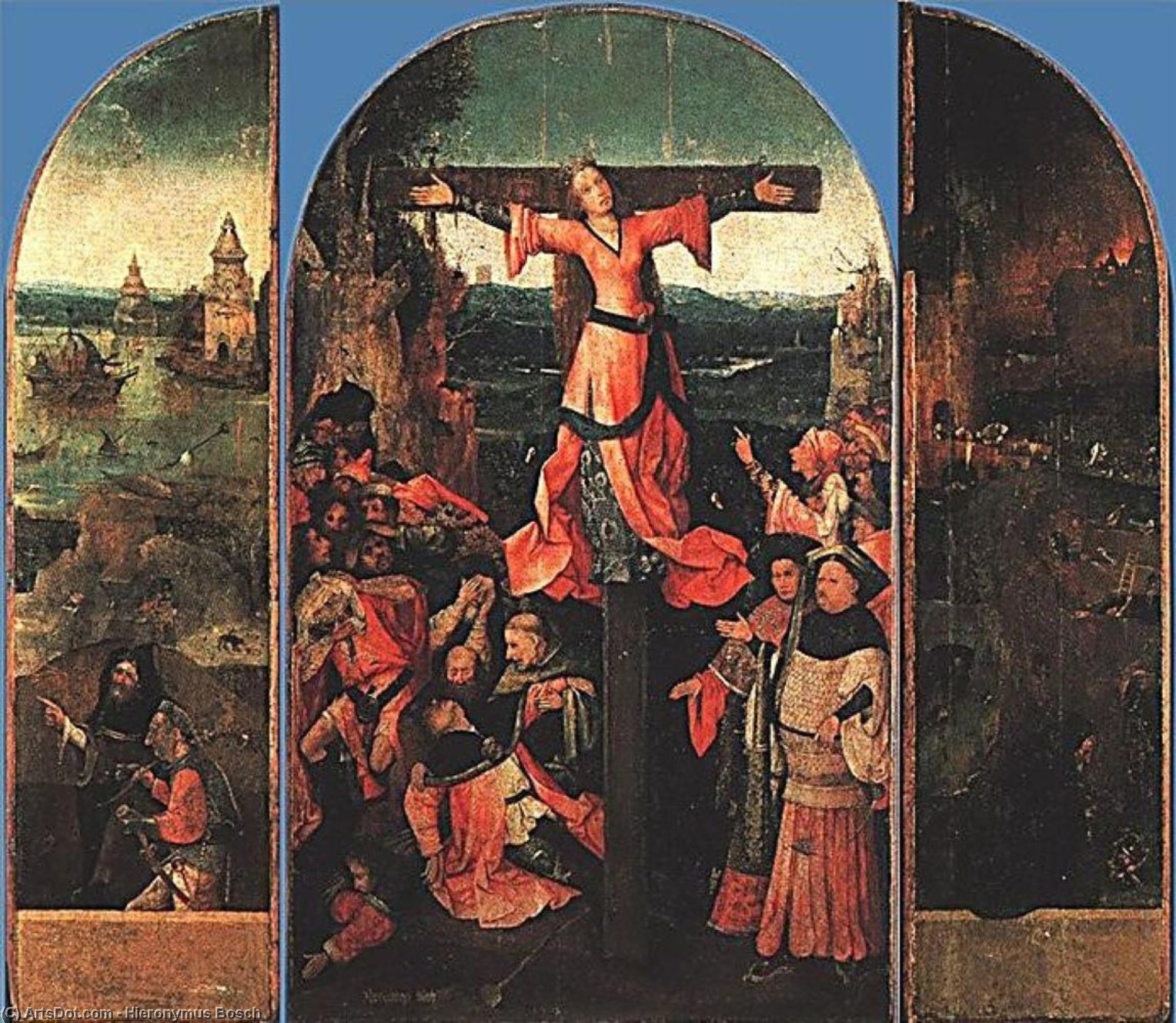
A Vision of Faith & Loss: Exploring Hieronymus Bosch’s *St. Liberata Triptych*
This remarkable triptych by Hieronymus Bosch, created in 1503, offers a compelling glimpse into the religious and artistic sensibilities of the Early Netherlandish period. More than just a depiction of faith, it's a deeply moving exploration of martyrdom, grief, and the awe-inspiring mystery of divine ascension.
Subject & Narrative
The *St. Liberata Triptych* unfolds as a narrative across its three panels. The central panel dramatically portrays the Ascension of Christ, with his figure rising heavenward amidst a swirling group of angels. Flanking this pivotal moment are scenes that contextualize the event: to the left, a landscape hinting at Jerusalem and figures reacting to the unfolding miracle; to the right, a crowd consumed by sorrow and wonder. The composition isn’t merely illustrative; it invites viewers into the emotional heart of the scene, making them witnesses to this sacred event.
Style & Technique
Bosch's distinctive style is immediately recognizable here. He masterfully blends meticulous detail with a somewhat flattened perspective – characteristic of Early Netherlandish painting. The work showcases his exceptional skill in oil painting on wood panels, evident in the rich textures and nuanced facial expressions.
Earthy tones—browns, ochres, and muted greens—dominate the palette, providing a grounded realism that is brilliantly punctuated by vibrant reds and golds reserved for Christ and key onlookers. The linear quality of the lines and geometric shapes contribute to a sense of order within the complex composition. Bosch’s technique of layering and glazing creates a subtle textural depth, adding to the artwork's visual richness.
Symbolism & Meaning
The *St. Liberata Triptych* is laden with symbolic meaning. The cross, prominently featured, represents sacrifice and redemption – central tenets of Christian belief. The figures themselves embody faith, devotion, and the spectrum of human emotion in response to divine power. While the specific iconography relating to St. Liberata requires further study, her presence suggests a focus on female martyrdom and resilience.
The very act of depicting the Ascension speaks to hope, salvation, and the promise of eternal life.
Historical Context & Artistic Legacy
Hieronymus Bosch (c. 1450-1516) remains one of the most enigmatic and influential figures in art history. Born in 's-Hertogenbosch, Netherlands, his work defied easy categorization, blending religious themes with surreal and often unsettling imagery. He profoundly impacted Northern European art, paving the way for future generations of artists. This triptych exemplifies Bosch’s unique ability to merge detailed realism with fantastical elements, creating a visual language that continues to captivate audiences today. The artwork is currently housed in the National Museum of Ancient Art in Lisbon, Portugal.
Emotional Impact & Interior Design
The *St. Liberata Triptych* evokes a powerful sense of awe, reverence, and solemnity. It’s a work that invites contemplation and encourages viewers to reflect on their own faith and mortality.
Its rich colors and intricate details make it a striking focal point for any interior space. A high-quality reproduction would be particularly well-suited for libraries, studies, or contemplative areas within the home. The triptych’s historical significance and artistic merit also position it as an exceptional investment for collectors seeking to acquire a piece of art history.
- Style: Early Netherlandish
- Artist: Hieronymus Bosch
- Date: 1503
- Medium: Oil on wood panel