

Shown: · With its frame:
 실제 크기로 보기
 보내기
보내기 공유하기
공유하기
 상세 보기
상세 보기 가이드 보기

 이미지 다운로드
 유사 작품 더 보기
 X-레이
X-레이 슬라이드 쇼 보기
 Q&A
Q&A 통계 정보
통계 정보Landscape in Mâcon
 1912
1912 33.0 x 43.0 cm
₩ 364118
핸드메이드 유화 복제화
작가가 직접 캔버스에 손으로 그린 유화 작품으로, 원하는 크기와 액자로 맞춤 제작해 드립니다. ( 프린트 판매로 전환 디지털 이미지 판매 채널로 전환)
Size
·표준 규격
맞춤 제작
CM
INCH
작품의 원본 비율을 그대로 유지하는 프리셋 사이즈 중에서 선택해 보세요.
Loading sizes...

가로 너비
높이
액자나 벽면 크기에 맞춰 필요한 가로와 세로 길이를 입력해 주세요. 본 작품은 수작업으로 제작되므로, 요청하신 비율에 따라 작가가 그림의 가장자리를 조금 더 넓게 그리거나 일부를 조정하여 작업할 수 있습니다. 작업 시작 전, 최종 확인을 위해 디지털 목업 이미지를 보내드립니다. 이 페이지에 표시된 이미지는 실제 결과물과 다를 수 있으며, 오직 목업 이미지만이 정확한 결과물을 보여줍니다.
 상세 보기
상세 보기Finish
·
White ₩1

Blurside ₩1

Extended ₩1

P118B ₩10

P118H ₩10

P118W ₩10

P438Z ₩10

P508JH ₩12

P508YH ₩12

P805H ₩10

P805Z ₩10

P919BZ ₩10

P919G ₩10

P919XJ ₩10

P959ZH ₩10

P968JZ ₩12

W106C ₩8

W218G ₩10

W218JH ₩8

W218Y ₩10

W307PJ ₩10

W316G ₩10

W316PJ ₩8

W316Y ₩10

W398PJ ₩8

W4111J ₩10

W500HY ₩15

W500JH ₩15

W692G ₩12

W849H ₩8

W940BG ₩15

W953PJ ₩8

H24-GOLD ₩30

H24-SILVER ₩30

H36-GOLD ₩45

H36-SILVER ₩45
Shipped in a protective tube, ready for your own framer.
Above 105 cm the frame is shipped as a kit for a professional framer — read the details.
Extras
optionalWhat do the extras include?
Examples of what can be changed: Replace face with customer photo; Add pet (e.g., replace cat with dog); Include hidden message in background; Change background landscape or elements.
After order, TopImpressionists.com team will email client for instructions and provide a mockup preview
After order, TopImpressionists.com team will email client for instructions and provide a mockup preview
전 세계 배송()은 표준 5주 대신 3~4주 내에 완료됩니다. (29 10월). 품질에는 어떠한 타협도 하지 않습니다.
보호용 바니시
캡션
동판 각인 상세 정보
This elegant plaque features the artist's name and the title of the artwork, finely engraved for a timeless presentation.
It is made from bronze with a refined, elegant finish. The text is precisely laser-engraved for a sharp and permanent result. Measuring 9x2 cm, the plaque is compact yet easy to read. It's built to be durable and scratch-resistant, offering a professional, museum-quality look. Mounting is simple thanks to the included adhesive backing.
투명 아크릴 명판 상세 정보
The plaque includes essential engraved details such as the artist's name, the title of the artwork, the date it was created, the type of media used-like oil on canvas or watercolor-a brief description of the piece, and a QR code that links to the complete artwork information.
It is crafted from clear acrylic, offering a sleek, modern appearance. The text is UV-engraved in black to ensure strong visual contrast. With a size of 10x15 cm, it ensures optimal readability. It comes equipped with two metal hooks for secure wall mounting. The plaque is designed to be weather-resistant, making it suitable for various environments, and it includes interactive features that work seamlessly with smartphone scanning.
블랙 아크릴 명판 상세 정보
This elegant plaque includes engraved information such as the artist's name, the title of the artwork, the date it was created, the type of media used (like oil on canvas or watercolor), a short description of the artwork, and a QR code for quick access to more information.
The plaque itself is made from refined black acrylic with a premium finish. The text is laser-engraved in white for high contrast and readability. Its size is 10x15 cm, designed to be easy to read. It comes with two metal hooks for professional mounting. The design is sleek and fits any interior style. It is also weather-resistant and durable, with built-in digital integration for mobile compatibility.
유리 옵션은 110cm 미만 크기에서만 선택 가능합니다.
 유리 옵션은 110cm 미만 크기에서만 선택 가능합니다.
- 전 세계 무료 특급 배송
- 고품질 린넨 캔버스
- 배송 전 과정 보험 적용
- 관세 환급 보장 서비스
- 원본 색상 일치 보장
- 제조 결함 발견 시 100일 이내 반품 가능
- 100% 환불 보장
- 다량 구매 할인 혜택


작가 소개
Explore the Pointillist works of Hippolyte Petitjean (1854-1929), a French painter known for his landscapes, portraits & innovative color techniques.
About the painting
Quick facts and art quiz
About Hippolyte Petitjean

Hippolyte Petitjean
1854 - 1929, France
작가 소개
The Luminous Legacy of Hippolyte Petitjean
In the golden twilight of the nineteenth century, a period defined by radical shifts in perception and the pursuit of pure light, Hippolyte Petitjean emerged as a vital architect of color. Born in the quiet surroundings of Mâcon, France, in 1854, his journey from a provincial student to a central figure in the Neo-Impressionist movement is a testament to the transformative power of artistic vision. His early training began at the age of thirteen in his hometown, but it was the move to Paris and the prestigious École des Beaux-Arts that would fundamentally reshape his destiny. Under the tutelage of academic masters such as Alexandre Cabanel and Pierre Puvis de Chavannes, Petitjean mastered the rigorous foundations of classical technique, yet his spirit yearned for a more modern, scientific exploration of the visible world.
The trajectory of Petitjean’s career underwent a profound metamorphosis in 1884, following a fateful encounter with Georges Seurat. This meeting was not merely a social introduction but an artistic awakening. Inspired by Seurat’s revolutionary theories on optical mixing, Petitjean abandoned the traditional blending of pigments in favor of Pointillism. He embraced the meticulous application of tiny, distinct dots of pure color, a method designed to let the viewer's eye perform the work of synthesis. This transition from the academic traditions of his mentors to the vibrant, shimmering surfaces of Neo-Impressionism allowed him to capture a sense of luminosity that felt almost supernatural, turning landscapes and portraits into vibrating tapestries of light.
A Mastery of Light and Form
Petitjean’s oeuvre is characterized by a remarkable versatility that refused to be confined to a single stylistic prison. While he is most celebrated for his Pointillist precision, his hand was capable of great fluidity. By 1894, he began to move away from the rigid dotting technique, integrating more feathery, expressive strokes into his compositions. This evolution allowed him to bridge the gap between the scientific rigor of Seurat and the more emotive, atmospheric qualities of Impressionism. His landscapes, particularly those capturing the rugged beauty of Normandy and Brittany, serve as profound meditations on the interplay of atmosphere and earth, where the sea and sky seem to dissolve into a haze of pure pigment.
Beyond the landscape, Petitjean’s portraits stand as some of his most intimate achievements. In these works, he utilized his mastery of color theory to imbue skin tones with a subtle psychological depth. He did not merely seek to replicate a likeness; rather, he sought to capture the very essence of his subjects through the careful orchestration of light and shadow. His ability to layer pigment to achieve an unparalleled realism—where a face seems to glow from within—demonstrates a sophisticated understanding of how color affects human perception. This dedication to the emotional resonance of color ensured that even his most technical experiments remained deeply human.
Historical Significance and Artistic Endurance
The significance of Hippolyte Petitjean lies in his role as a bridge between eras. He was an artist who could navigate the strictures of the Salon while simultaneously pushing the boundaries of the avant-garde. His participation in the Salon des Indépendants and exhibitions across Europe—from Brussels to Berlin—cemented his reputation as a significant voice in the international art scene. Even as he experimented with decorative watercolours later in life, returning to widely spaced rounded spots of pure color, he remained faithful to the core principle that light is not merely something that falls upon an object, but something that resides within the very fabric of color itself.
Today, the legacy of Petitjean continues to resonate through the collections of prestigious institutions such as the National Gallery of Art and the Musée d’Art Moderne in Paris. His work serves as a vital chapter in the story of modern art, reminding us of a time when painters dared to deconstruct reality into its most fundamental elements: dots, light, and emotion. To look upon a Petitjean painting is to witness the triumph of scientific observation married to poetic intuition, an enduring testament to the beauty found in the meticulous assembly of a thousand tiny fragments.
작가 정보 요약
- Full Name: Hippolyte Petitjean
- Nationality: French
- Date Of Birth: 1854
- Date Of Death: 1929
- Place Of Birth: Mâcon, France
- Notable Artworks:
- Pont Neuf
- Woman in a Garden
- In the Park
- Artistic Movement Or Style: Pointillism


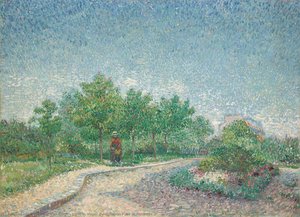
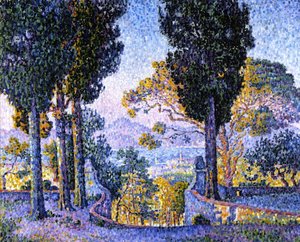


Landscape in Mâcon
·