
온라인 미리보기보다 훨씬 뛰어난 품질의 고해상도 디지털 이미지를 구매해 보세요.
각 파일은 사내 전문가가 고급 도구와 숙련된 수동 리터칭 기술을 사용하여 세심하게 준비합니다. 우리는 모든 이미지가 탁월한 선명도, 정확한 색상 재현력, 그리고 미세한 디테일까지 완벽하게 갖추도록 보장합니다.
최종 파일은 전문적인 편집 및 인쇄 환경에서 즉시 사용할 수 있도록 최적화되어 72시간 이내에 이메일로 발송됩니다. 이는 세계적인 디자인 스튜디오, 출판사 및 갤러리가 신뢰하는 것과 동일한 품질입니다.
개인 소장 및 전시, 인쇄, 창작 프로젝트를 위한 고해상도 파일을 다운로드하세요. ( 프린트 주문으로 전환 수제 페인팅으로 전환하기)
TopImpressionists.com를 선택하시면 단순히 이미지를 받는 것을 넘어, 정밀한 보정 과정을 거친 전문적인 디지털 예술 작품을 만나보실 수 있습니다. 모든 작품에는 만족 보장 서비스가 함께 제공되며, 주문 시 다음과 같은 사항들이 자동으로 포함됩니다:

주문 후 72시간 이내에 고해상도 디지털 이미지 파일이 이메일로 발송되며, 즉시 사용하실 수 있습니다.

귀하의 작품은 고급 AI 도구와 수동 편집 과정을 거쳐 전문적으로 최적화되며, 이를 통해 디테일과 선명도, 색상의 정확도를 극대화합니다.

파일을 실수로 삭제하거나 분실하셨나요? 걱정 마세요. 언제든 무료로 다시 보내드립니다.

관세나 부가세, 배송비 부담 없이 작품을 즉시 감상하세요 - 디지털 다운로드는 언제나 면세 혜택이 적용됩니다.

전문적인 도구와 색상 관리 시스템을 통해 디지털 이미지가 원본의 색상을 최대한 정확하게 구현하도록 보장합니다.

구매하신 디지털 이미지에 만족하지 못하실 경우, 60일 이내에 수정 또는 100% 환불을 진행해 드립니다 - 어떠한 문의도 필요 없습니다.

만족하지 못하셨나요? 디지털 파일을 수령하신 후 60일 이내라면 별도의 이유를 밝힐 필요 없이 전액 환불해 드립니다.

이미지 3매 구매 시 10% 할인 - 5매 구매 시 15% 할인 - 10매 이상 구매 시 20% 할인. 크리에이티브 프로젝트, 갤러리, 에이전시에 매우 유용합니다.
In the quiet intersection of spiritual devotion and masterful craftsmanship lies the work of Hiragushi Denchū, a sculptor whose hands breathed life into the very essence of Japanese wood. Born in 1872 within the scenic Okayama Prefecture, Denchū’s journey was one of profound transformation, moving from the humble beginnings of an apprentice in Osaka’s doll-making workshops to the prestigious heights of an Imperial Artist. His early years were shaped by the rhythmic precision of carving and the vibrant colors of traditional artistry, yet it was his ability to transcend mere decoration that would eventually define his place in the pantheon of Japanese masters. Denchū did not merely carve wood; he sought to capture the ephemeral breath of the divine and the enduring dignity of the human spirit.
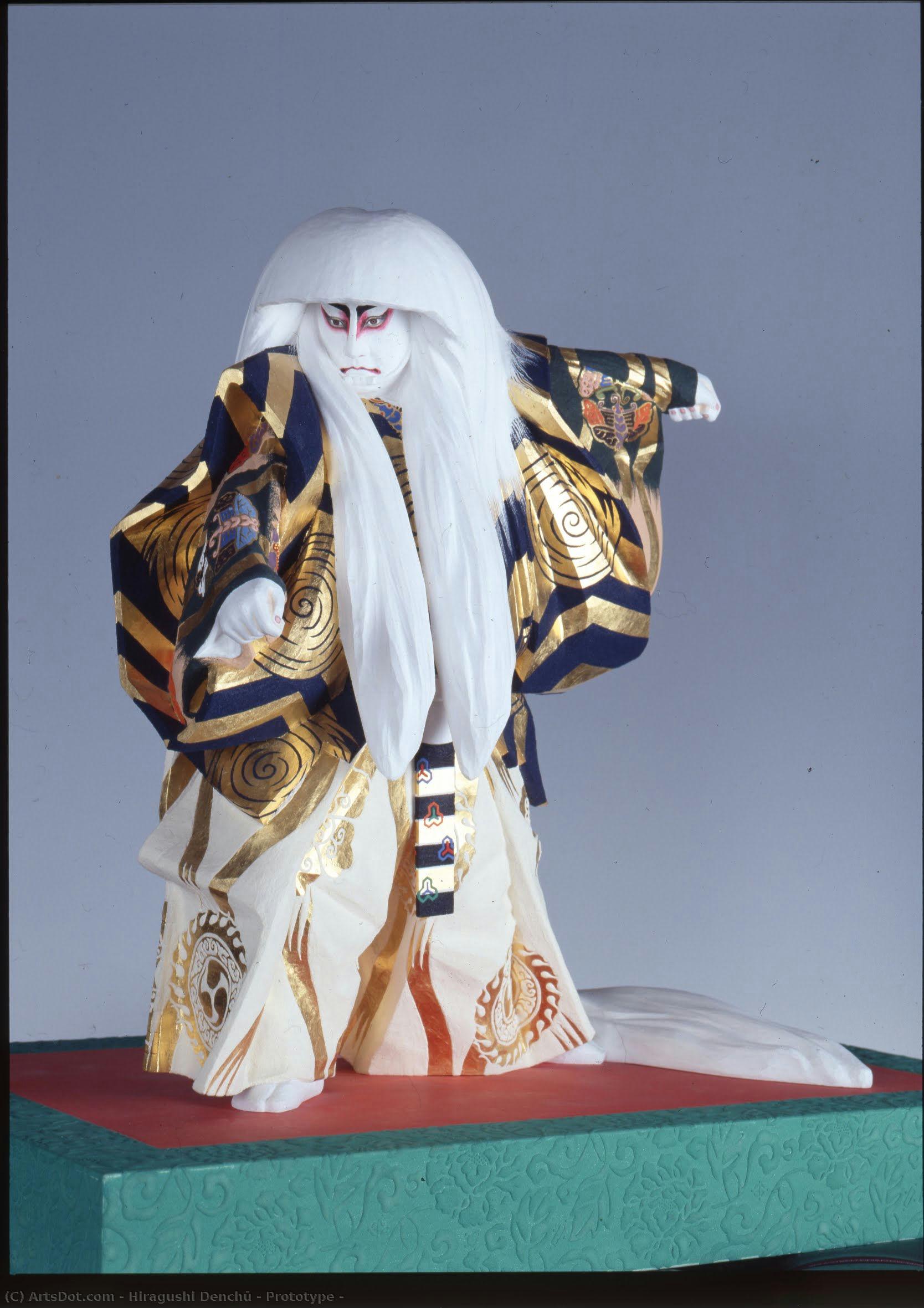
The foundation of Denchū’s aesthetic was deeply rooted in the rich soil of Buddhist philosophy. His training under the esteemed Kōun Takamura at Tokyo’s Imperial Art Academy provided him with a rigorous technical discipline, yet his heart remained tethered to the ancient traditions of his lineage. He became a master of polychrome wood sculpture, a technique that required an extraordinary patience to meticulously carve cedar wood before applying layers of vibrant, luminous pigments. This marriage of texture and color allowed him to create works that possessed a startling realism, where the grain of the wood seemed to pulse with the warmth of living flesh or the terrifying energy of a deity.
To encounter a Denchū sculpture is to witness a moment of frozen emotion. His repertoire spanned the celestial and the terrestrial, moving seamlessly between the wrathful power of Buddhist iconography and the tender vulnerability of human portraiture. In his celebrated piece “Tenshō,” the viewer is confronted by a deity of immense spiritual fervor, characterized by a dramatic pose and a halo of flames that seems to flicker even in the stillness of a museum gallery. Conversely, his work "Old Mother of Heian" offers a profound study in serenity, capturing the weathered grace of age with such sensitivity that the inanimate wood takes on a palpable, breathing presence.
His technical prowess was matched only by his commitment to the evolution of Japanese sculpture. As a founding member of the Nihon Chōkoku Kai (Japan Sculpture Society) in 1907, he stood at the forefront of a movement that sought to elevate sculpture from a decorative craft to a high art form capable of expressing modern complexities. This period of his life was marked by an intense exploration of how traditional materials could serve new, emotive narratives, ensuring that the ancient art of woodcarving remained relevant in a rapidly changing Japan.
The significance of Denchū’s contribution to Japanese culture is etched into the very institutions that honor him. His career was punctuated by some of the highest accolades a Japanese artist could receive, including his appointment as an Imperial Household Artist in 1944. The nation recognized his immense cultural value through several prestigious designations:
Even in his final years, Denchū continued to leave his mark upon the sacred landscape of Japan. One of his most enduring legacies can be found at the Kaminarimon Gate of Tokyo's Sensō-ji Temple, where his masterful carving of a pair of dragon gods serves as a guardian for the temple’s entrance. Through this work, Denchū achieved a rare feat: he bridged the gap between the individual artist and the collective spiritual consciousness of a people. His sculptures remain not just objects of beauty, but vessels of reverence, reminding every observer of the profound sanctity found within the natural world.

1872 - 1979 , Japan


최신 미술 뉴스, 특별 혜택 및 인테리어 아이디어를 가장 먼저 만나보세요.
프로젝트에 대해 알려주시면 저희 미술 전문가들이 맞춤형 아트 제안 3가지를 전달해 드립니다.
당신만을 위한 맞춤형 옵션 3가지를 무료로 추천해 드립니다!

 미리보기
미리보기
 공유하기
공유하기 공유하기
공유하기
 상세 정보
상세 정보

 다운로드
다운로드
 유사 작품
유사 작품 X-레이
X-레이 슬라이드 쇼

 더 보기
더 보기