
빠른 제작과 다양한 마감 옵션을 제공하는 박물관 품질의 지클레이 또는 캔버스 프린트. ( 손으로 그린 그림 구매 이미지 구매)
작품의 원본 비율을 유지하는 미리 설정된 크기 중에서 선택하세요.

특정 프레임이나 공간에 맞춰 직접 치수를 입력하실 수 있습니다. 선택하신 사이즈가 원본 이미지의 비율과 일치하지 않을 경우, 작품을 크롭(자르기)하거나 이미지를 대칭 또는 단색 채우기로 확장하여 제작합니다. 제작 시작 전, 최종 확인을 위해 디지털 목업이 전송됩니다.
화면상의 미리보기는 실제 크롭이나 확장 상태를 반영하지 않으므로, 최종 구도는 오직 목업을 통해서만 정확하게 확인하실 수 있습니다.
맞춤 사이즈 제작도 가능하지만, 원본 비율을 유지하기 위해서는 사전 정의된 목록에서 치수를 선택하시는 것을 권장합니다.

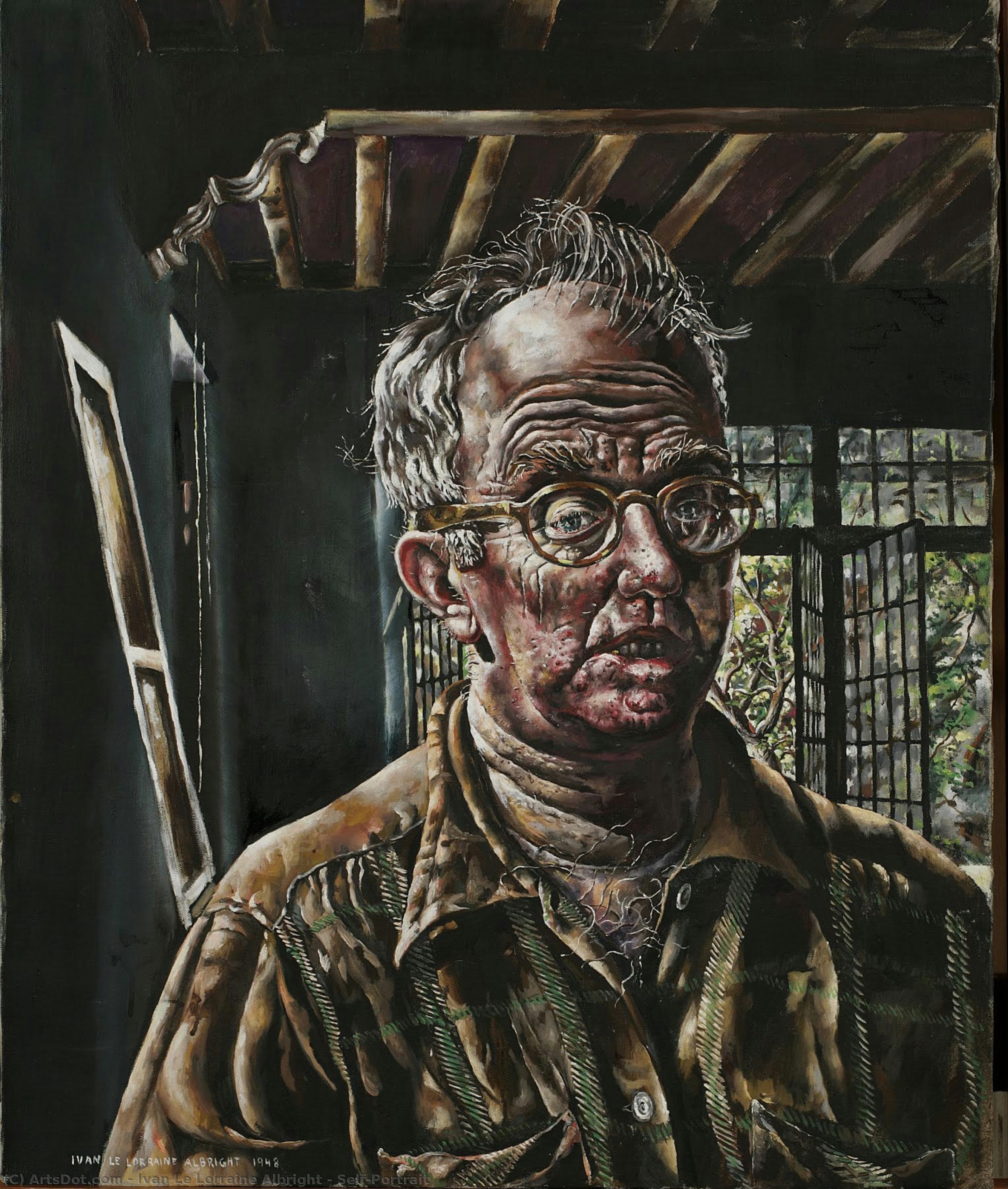
Self-Portrait
복제본 크기
In the annals of American art, few names evoke as much profound unease and breathtaking admiration as Ivan Le Lorraine Albright. An American master of Magic Realism, Albright did not merely paint subjects; he interrogated them, peeling back the layers of time to reveal the inevitable processes of decay and mortality beneath. Born in 1897 in North Harvey, Illinois, to a family with deep roots in craftsmanship—his father, Adam Emory Albright, was a landscape painter descended from master gunsmiths—Ivan’s life was shaped by a duality of precision and profound psychological depth. Alongside his identical twin brother, Malvin, Ivan navigated a childhood defined by an inseparable bond, eventually finding his true calling at the Art Institute of Chicago. While a mere coin flip determined that he would pursue painting rather than sculpture, the decision would lead to the creation of some of the most meticulously executed works in the history of the medium.
Albright’s artistic evolution was far from linear, shaped by a series of disparate experiences that infused his work with a haunting, clinical intensity. His brief studies in architecture at the University of Illinois and his time performing medical drawings for a hospital in Nantes, France, during World War I, left an indelible mark on his psyche. These early encounters with the structural anatomy of buildings and the fragile, morbid realities of the human body provided the foundation for his later obsession with physical deterioration. After a brief, unfulfilling foray into the worlds of advertising and architecture, Albright retreated from the encroaching tides of commercialism to dedicate himself entirely to the canvas. It was during the 1930s that his signature, painstaking technique truly crystallized—a method so rigorous it often required years of labor to complete a single piece.
To witness an Albright painting is to enter a world where every pore, wrinkle, and speck of dust is rendered with an almost supernatural clarity. His process was one of extreme discipline and obsessive devotion. He did not simply paint; he constructed his visions through a labyrinthine series of preparatory steps:
This hyper-detailed approach allowed Albright to transcend traditional realism, moving into a realm where the physical world feels both more real and more surreal than life itself. By focusing on the microscopic details of decay, he was able to highlight the complex relationships between objects and their environments, creating a sense of stillness that is simultaneously vibrant and deathly.
While his influences can be traced back to the dramatic chiaroscuro of Rembrandt and the elongated, spiritual intensity of El Greco, Albright’s work remains entirely singular. He carved out a niche within American Realism that refused to look away from the uncomfortable truths of existence. His character studies and self-portraits serve as profound meditations on the human condition, capturing the psychological weight of time passing. Through his mastery of light and shadow, he transformed the grotesque into something sublime, forcing the viewer to confront the beauty found within the ephemeral and the decaying.
Today, Ivan Le Lorraine Albright is remembered not just as a painter of remarkable skill, but as a visionary who used the tools of extreme realism to explore the depths of Magic Realism. His legacy persists in the way we perceive the passage of time—reminding us that beneath the surface of all things, there is a complex, beautiful, and inevitable transformation occurring. His works remain enduring landmarks of 20th-century art, standing as monuments to the power of patience, precision, and the courage to look closely at the shadows.

1897 - 1983 , United States of America


최신 미술 뉴스, 특별 혜택 및 인테리어 아이디어를 가장 먼저 만나보세요.
프로젝트에 대해 알려주시면 저희 미술 전문가들이 맞춤형 아트 제안 3가지를 전달해 드립니다.
당신만을 위한 맞춤형 옵션 3가지를 무료로 추천해 드립니다!

 미리보기
미리보기
 공유하기
공유하기 공유하기
공유하기
 상세 정보
상세 정보

 다운로드
다운로드
 유사 작품
유사 작품 X-레이
X-레이 슬라이드 쇼
 더 보기
더 보기






































 유리 옵션은 110cm 미만 크기에서만 선택 가능합니다.


