


 실제 크기로 보기
 보내기
보내기 공유하기
공유하기
 상세 보기
상세 보기 가이드 보기

 이미지 다운로드
 유사 작품 더 보기
 X-레이
X-레이 슬라이드 쇼 보기
 통계 정보
통계 정보Melrose


Experience J.M.W. Turner's 'Melrose': A breathtaking landscape capturing the Scottish Borders’ beauty with atmospheric light and evocative detail. Explore its romantic style & historical significance.
 상세 보기
상세 보기
낭만주의 회화의 선구자 J.M.W. 터너(1775-1851)의 매혹적인 세계를 탐험해 보세요. 그의 표현력 넘치는 풍경화, 격동적인 해양 풍경, 그리고 인상주의에 미친 영향을 발견할 수 있습니다. 이 영국 거장의 작품을 감상하고 그의 삶에 대해 알아보세요.
핸드메이드 유화 복제화
작가가 직접 캔버스에 손으로 그린 유화 작품으로, 원하는 크기와 액자로 맞춤 제작해 드립니다. ( 프린트 판매로 전환 디지털 이미지 판매 채널로 전환)




P118B ₩10

P118H ₩10

P118W ₩10

P438Z ₩10

P508JH ₩12

P508YH ₩12

P805H ₩10

P805Z ₩10

P919BZ ₩10

P919G ₩10

P919XJ ₩10

P959ZH ₩10

P968JZ ₩12

W106C ₩8

W218G ₩10

W218JH ₩8

W218Y ₩10

W307PJ ₩10

W316G ₩10

W316PJ ₩8

W316Y ₩10

W398PJ ₩8

W4111J ₩10

W500HY ₩15

W500JH ₩15

W692G ₩12

W849H ₩8

W940BG ₩15

W953PJ ₩8




표준 규격
맞춤 제작
CM
INCH
작품의 원본 비율을 그대로 유지하는 프리셋 사이즈 중에서 선택해 보세요.
Loading sizes...

가로 너비
높이
액자나 벽면 크기에 맞춰 필요한 가로와 세로 길이를 입력해 주세요. 본 작품은 수작업으로 제작되므로, 요청하신 비율에 따라 작가가 그림의 가장자리를 조금 더 넓게 그리거나 일부를 조정하여 작업할 수 있습니다. 작업 시작 전, 최종 확인을 위해 디지털 목업 이미지를 보내드립니다. 이 페이지에 표시된 이미지는 실제 결과물과 다를 수 있으며, 오직 목업 이미지만이 정확한 결과물을 보여줍니다.
변경 가능한 예시: 얼굴을 고객님의 사진으로 교체, 반려동물 추가(예: 고양이를 강아지로 변경), 배경에 숨겨진 메시지 삽입, 배경 풍경 또는 요소 변경 등
주문 완료 후 TopImpressionists.com 팀에서 상세 안내를 위해 고객님께 이메일을 보내드리며, 미리보기 시안을 함께 제공해 드립니다.
주문 완료 후 TopImpressionists.com 팀에서 상세 안내를 위해 고객님께 이메일을 보내드리며, 미리보기 시안을 함께 제공해 드립니다.


 유리 옵션은 110cm 미만 크기에서만 선택 가능합니다.

Melrose
재현 매체
복제본 규격
-


총 결제 금액
₩ 432562
Melrose: A Vision of Light and Landscape by J.M.W. Turner
J.M.W. Turner’s “Melrose,” painted in 1831, isn't merely a depiction of a Scottish landscape; it’s an immersive experience—a fleeting moment captured on canvas where light, atmosphere, and the sublime intertwine. The painting transports us to the rolling hills and verdant valleys surrounding Melrose Abbey in the Borders region, rendered not with precise detail but with Turner’s signature blend of emotion and evocative color. It's a work that speaks volumes about his revolutionary approach to landscape art, moving beyond topographical accuracy towards an exploration of feeling and the transient beauty of nature.
Turner’s style at this period is characterized by its loose, expressive brushwork—a deliberate departure from the rigid conventions of academic painting. He employs a technique that prioritizes capturing the *impression* of light and color rather than meticulously recreating every element. Notice how the broad strokes of ochre, brown, and gray dominate the foreground, suggesting the earth and vegetation while allowing the sky to bleed into the landscape. The river, a ribbon of shimmering blues and greens, flows with an almost liquid grace, reflecting the diffused sunlight above. This deliberate blurring of edges and forms is central to Turner’s Romantic vision—a world where nature reigns supreme and human perception is secondary.
A Historical Context: Romanticism and the Sublime
“Melrose” firmly resides within the heart of the Romantic movement, a period defined by its emphasis on emotion, imagination, and the power of nature. The Romantics rejected the Enlightenment’s focus on reason and logic, instead celebrating the individual experience and the awe-inspiring grandeur of the natural world. Turner was deeply influenced by this shift, seeking to capture not just what he *saw*, but what he *felt* in response to the landscape. The concept of the “sublime”—a feeling of overwhelming beauty mixed with a sense of terror or insignificance—is powerfully evoked here. The vastness of the hills and sky, combined with the hazy atmosphere, creates an effect that is both captivating and slightly unsettling.
Interestingly, this painting was created during a period when Turner embarked on extensive travels throughout Europe, particularly in Italy and Switzerland. These journeys profoundly shaped his artistic vision, exposing him to new light conditions and inspiring him to experiment with different techniques. The influence of the Italian landscapes—particularly their dramatic lighting effects—can be seen in “Melrose,” contributing to its atmospheric intensity.
Symbolism and Emotional Resonance
Beyond its purely visual qualities, "Melrose" is rich in symbolic meaning. The distant town, barely discernible through the haze, represents human settlement and industry, dwarfed by the overwhelming power of nature. The river, a symbol of life and movement, flows relentlessly onward, suggesting the passage of time and the impermanence of all things. The prominent mountain on the left side acts as a vertical anchor, grounding the composition while simultaneously emphasizing the vastness of the scene.
Perhaps most powerfully, “Melrose” evokes a sense of tranquility and contemplation. The muted colors, soft lighting, and loose brushwork create an atmosphere of serenity—a reminder of the beauty and restorative power of nature. It’s a painting that invites us to slow down, breathe deeply, and lose ourselves in the moment, mirroring Turner's own desire to capture fleeting experiences of light and color.
Technical Details & Reproduction Considerations
Turner employed watercolor on paper for this work, utilizing layering techniques and delicate washes to achieve his characteristic atmospheric effects. The visible brushstrokes contribute to the painting’s sense of movement and energy, while the subtle blending of colors creates a luminous quality. Reproductions, particularly high-quality prints, strive to capture these nuances—the interplay of light and shadow, the texture of the paper, and the overall feeling of atmosphere. When selecting a reproduction, consider the medium – archival inks on fine art paper will best preserve the painting’s delicate colors and details for years to come.
Size: Unknown
Date: 1831
질의응답
J.M.W. 터너의 "Melrose"의 색채는 작품의 감정과 어떻게 연결되나요?
J.M.W. 터너의 "Melrose"은(는) Neutrals 색조의 팔레트와 Melancholic 분위기가 조화를 이룹니다.
J.M.W. 터너의 "Melrose"의 정서적 분위기는 어떠한가요?
J.M.W. 터너의 "Melrose"에 기록된 정서적 톤은 Melancholic입니다. 이는 작품이 표현하는 감정을 요약한 것입니다.
J.M.W. 터너의 "Melrose"은(는) 세로형, 가로형 또는 정사각형 구도인가요?
"Melrose"의 형식은 Landscape입니다. 이는 작품 복제본을 배치할 공간을 계획할 때 유용합니다.
작가 소개
빛으로 그려낸 생애: J.M.W. 터너의 세계
세상에 J.M.W. 터너로 알려진 조셉 몰로드 윌리엄 터너는 단순한 화가 그 이상이었습니다. 그는 풍경화의 정의를 다시 내리고 현대 추상 미술의 길을 닦은 선구자였습니다. 1775년 런던 코벤트 가든의 메이든 레인에서 이발사이와 가발 제작자의 아들로 태어난 그의 시작은 소박했습니다. 하지만 어린 시절부터 그의 안에는 놀라운 재능이 피어나고 있었습니다. 불과 14세의 나이에 왕립 아카데렉시에 입학한 그는 1년 만에 첫 작품을 전시하기에 이르렀습니다. 이러한 초기 약속은 단순한 기술적 숙련도에 그치지 않았습니다. 그것은 훗날 그의 비범한 경력을 상징하게 될 빛과 색채, 그리고 대기에 대한 타고난 이해를 암시하고 있었습니다. 그는 건축 제도사로서의 실무 경험을 통해 예술적 교육을 보완하며 원근법과 구도 능력을 연마했는데, 이 기술들은 정교한 지형도적 묘사와 광활하고 감성적인 풍경을 모두 구현해 내는 데 매우 귀중한 자산이 되었습니다. 터너의 초기 삶은 타고난 재능과 예술적 탁월함을 향한 끊임없는 추구가 동력이 된, 자신의 공예에 대한 헌신으로 점철되어 있었습니다.낭만주의의 폭풍: 양식과 영향
터너는 낭만주의 시대가 절정에 달했을 때 등장했지만, 단순히 그 관습을 따르는 추종자에 머물지 않았습니다. 그는 다양한 원천으로부터 영향을 흡수했습니다. 클로드 로랭이나 알베르트 카이프 같은 네덜란드 거장들에게서는 빛나는 풍경을, 리처드 윌슨과 같은 화가들에게서는 자연에 대한 시적인 접근 방식을 배웠습니다. 그러나 터너는 단순히 모방하는 데 그치지 않고, 이러한 영향들을 완전히 새로운 무언가로 합성해 냈습니다. 그의 작품은 표현력이 풍부한 색채 사용이 특징이며, 종종 대담한 대비와 생생한 색조를 사용하여 감정과 분위기를 전달합니다. 그는 자연의 힘과 드라마에 매료되었습니다. 휘몰아치는 바다, 타오르는 일몰, 소용돌이치는 폭풍은 그의 그림에서 반복되는 모티프가 되었습니다. 그는 단순히 눈에 보이는 것을 묘사하는 데 관심이 없었습니다. 그는 장소의 '느낌', 즉 자연 세계가 불러일으키는 숭고한 경외감을 포착하고자 했습니다. 이러한 추구는 점점 더 거친 붓터치로 이어졌고, 형태를 색채와 빛의 물결 속으로 녹여내는 실험을 가능케 했습니다. 이는 수십 년 후 등장할 인상주의 운동을 예견하는 기법이었습니다. 1840년부터 그의 작품은 풍경화를 새로운 비평적 찬사의 단계로 끌어올린 존 러스킨의 지지 덕분에 상당한 인정을 받게 되되었습니다.다작의 유산: 터너가 남긴 방대한 업적
터너가 남긴 예술적 결과물의 양은 경이로운 수준입니다. 그는 550점 이상의 유화, 약 2,000점의 수채화, 그리고 무려 30,000점에 달하는 종이 작업물을 만들어냈습니다. 이러한 다작은 단순히 양적인 문제가 아니었습니다. 그것은 다양한 주제와 기법, 양식을 향한 그의 지칠 줄 모르는 탐구 정신을 반영합니다. 그의 회화는 영국 풍경의 정교한 지형적 묘사부터 극적인 역사적 장면, 그리고 감성을 자극하는 해양화에 이르기까지 그 범위가 매우 넓습니다. 그는 전원적인 장면의 평온함과 휘몰아치는 폭풍의 공포스러운 힘을 모두 포착해 내는 데 능숙했습니다. “비미외 요새(Fort Vimieux)”와 같은 작품은 대기 효과를 묘사하는 그의 숙련도를 잘 보여줍니다. 소용돌이치는 구름, 부서지는 파도, 그리고 강렬한 빛은 모두 드라마틱한 분위기와 숭고한 아름다움을 만들어냅기 위해 기여합니다. 이와 유사하게 “캄파냐의 장면(Scene in the Campagna)”은 섬세한 붓터치와 빛나는 색채로 이탈리아 시골의 따스함과 평온함을 포착하는 그의 능력을 보여줍니다. 회화 외에도 터너는 숙련된 판화가였으며, 에칭과 석판화를 통해 자신의 예술적 비전을 더욱 널리 전파했습니다.기이함과 기억: 걸작 뒤에 숨겨진 인간
터너의 개인적인 삶은 그의 예술만큼이나 복잡하고 수수께끼 같았습니다. 그는 매우 사적인 성향을 유지하며 은둔 생활을 즐겼고, 종종 사교 모임을 피하며 작업실의 고독이나 탁 트인 길 위에서의 시간을 선호했습니다. 그는 동료 화가의 아내였던 사라 단비와의 사이에서 에벨리나와 조지아나라는 두 딸을 두었지만, 그들과는 거리를 둔 관계를 유지했습니다. 그의 말년은 점점 더 심해지는 기이함과 쇠약해지는 건강으로 특징지어집니다. 1829년 아버지가 사망한 후, 그는 점점 더 우울하고 내성적으로 변했으며, 궁핍한 생활을 하며 외모를 돌보지 않기도 했습니다. 그는 사람들의 인식을 피하기 위해 “부스 씨(Mr. Booth)”라는 가명을 사용하기도 했고, 인구 조사 기간에 추적을 피하고자 템스강으로 배를 타고 나가는 기행을 저지르기도 했습니다. 이러한 기이함에도 불구하고, 혹은 어쩌면 바로 그 때문인지, 터너는 영국에서 가장 사랑받는 예술가 중 한 명으로 남아 있습니다. 그의 마지막 시절은 첼시에서 보냈으며, 1851년 12월 19일 76세의 나이로 세상을 떠났습니다. 그의 영원한 유산에 대한 합당한 경의로서, 그는 다른 영국의 저명인사들과 함께 세인트 폴 대성당에 안치되었습니다. 이는 예술과 문화에 미친 그의 깊은 영향력을 증명하는 것입니다. 그의 작품은 전 세계 예술가들에게 계속해서 영감을 주고 관객들을 매료시키며, J.M.W. 터너의 빛이 앞으로도 수 세대 동안 계속해서 빛날 것임을 보장하고 있습니다.
J.M.W. 터너
1775 - 1851
작가 정보 요약
- Artistic Movement Or Style: 낭만주의
- Artists Or Movements Influenced By This Artist:
- 인상주의
- 추상 예술
- Artists Who Influenced This Artist:
- 존 로버트 코젠스
- 리처드 윌슨
- Date Of Birth: 1775년 4월 23일
- Date Of Death: 1851년 12월 19일
- Full Name: 조셉 말로드 윌리엄 터너
- Nationality: 영국
- Notable Artworks:
- 비미외 요새
- 캄파냐의 풍경
- Place Of Birth: 영국 런던
관련 기사

Capturing the Soul: The Emotional Magic and Sublime Grandeur of Romantic Landscape Painting
Explore the profound emotional depth of Romantic landscape painting. Discover how masters like Friedrich and Turner captured the sublime through light, shadow, and nature's power in this expert art history retrospective for discerning collectors.
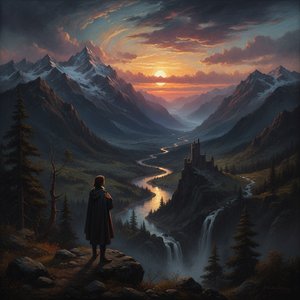
Capturing the Soul: The Emotional Majesty and Sublime Power of Romantic Landscape Painting
Explore the profound emotional depth of Romantic landscape painting. Discover how masters like Turner and Friedrich captured the sublime power of nature through intuition and imagination in this expert art history retrospective.