
빠른 제작과 다양한 마감 옵션을 제공하는 박물관 품질의 지클레이 또는 캔버스 프린트. ( 손으로 그린 그림 구매 이미지 구매)
작품의 원본 비율을 유지하는 미리 설정된 크기 중에서 선택하세요.

특정 프레임이나 공간에 맞춰 직접 치수를 입력하실 수 있습니다. 선택하신 사이즈가 원본 이미지의 비율과 일치하지 않을 경우, 작품을 크롭(자르기)하거나 이미지를 대칭 또는 단색 채우기로 확장하여 제작합니다. 제작 시작 전, 최종 확인을 위해 디지털 목업이 전송됩니다.
화면상의 미리보기는 실제 크롭이나 확장 상태를 반영하지 않으므로, 최종 구도는 오직 목업을 통해서만 정확하게 확인하실 수 있습니다.
맞춤 사이즈 제작도 가능하지만, 원본 비율을 유지하기 위해서는 사전 정의된 목록에서 치수를 선택하시는 것을 권장합니다.

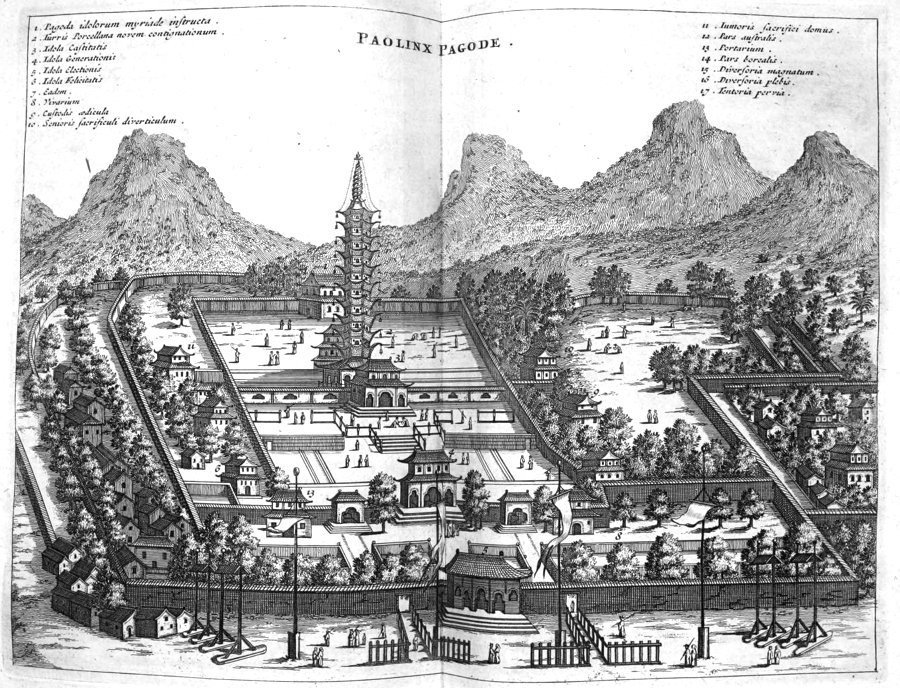
Paolinx pagode
복제본 크기
In the golden age of Dutch exploration, where the boundaries of the known world were being redrawn by every intrepid voyage, Jacob van Meurs (1619–1680) emerged as a master of visual precision. Born in Arnhem, Netherlands, into a family deeply rooted in the printing traditions of the era, his early life was shaped by the rhythmic press of ink and the meticulous demands of typography. This heritage provided him with more than just technical skill; it instilled a profound understanding of how information could be captured, preserved, and disseminated through the medium of print. As the son of a printer, Van Meurs was uniquely positioned at the intersection of art and intellect, a place where the burgeoning scientific revolution met the exquisite craftsmanship of the Dutch Baroque.
Van Meurs’s career was defined by a rare synthesis of artistic elegance and scientific rigor. While many of his contemporaries sought fame through the dramatic shadows of portraiture or the grand narratives of mythology, Van Meurs turned his gaze toward the earth and the heavens. He became a pivotal figure in Dutch cartography, utilizing the medium of engraving to translate complex geographical and astronomical data into accessible, beautiful imagery. His work was not merely decorative; it served as a vital tool for the era's most profound thinkers. Through his skilled hands, the abstract theories of luminaries such as Nicolaus Copernicus and Johannes Kepler were transformed into compelling visual diagrams, allowing the revolutionary concepts of heliocentrism and planetary motion to permeate the European consciousness.
The true magnitude of Van Meurs’s contribution lies in his ability to document the expanding horizons of the seventeenth century. His most monumental achievement, the ambitious atlas known as “The New World,” stands as a testament to his technical mastery and his role in the age of discovery. Commissioned by powerful figures such as William III of Orange and Philip II of Spain, this work was an extraordinary feat of engraving that brought the distant Americas into the European imagination. By incorporating findings from legendary expeditions led by explorers like Willem Janszoon Tasman, Van Meuts created maps that were both works of art and essential navigational records, capturing the rugged beauty and the mysterious topography of newly encountered lands.
Beyond the vast expanses of his maps, Van Meurs’s portfolio reveals a fascination with the specificities of the world—from the architectural dignity of historic structures like the Kruis Kerk to the vibrant, imagined streets of distant locales such as Nanking. His engravings often captured a sense of wonder and meticulous detail that bridged the gap between reality and the exotic. This versatility allowed him to move seamlessly between scientific illustration and topographical storytelling, ensuring that his prints remained relevant to both the scholar in the study and the merchant in the port. Through his work, the era's thirst for knowledge found its most enduring visual language.
The historical significance of Jacob van Meurs extends far beyond the borders of the Netherlands. He represents a period when art served as the primary vehicle for scientific communication, acting as the lens through which humanity viewed its place in the universe. His life and work remind us that the progress of science is inextricably linked to the power of visual representation. Today, his engravings remain vital artifacts of a time when every new line etched into a copper plate could potentially change the way the world was understood, leaving an indelible mark on the history of both art and exploration.

1619 - 1680 , Netherlands


최신 미술 뉴스, 특별 혜택 및 인테리어 아이디어를 가장 먼저 만나보세요.
프로젝트에 대해 알려주시면 저희 미술 전문가들이 맞춤형 아트 제안 3가지를 전달해 드립니다.
당신만을 위한 맞춤형 옵션 3가지를 무료로 추천해 드립니다!

 미리보기
미리보기
 공유하기
공유하기 공유하기
공유하기
 상세 정보
상세 정보

 다운로드
다운로드
 유사 작품
유사 작품 X-레이
X-레이 슬라이드 쇼
 더 보기
더 보기






































 유리 옵션은 110cm 미만 크기에서만 선택 가능합니다.


