

 미리보기
미리보기
 공유하기
공유하기 공유하기
공유하기
 상세 정보
상세 정보 가이드 보기

 다운로드
다운로드
 유사 작품 더 보기
 X-레이
X-레이 슬라이드 쇼 보기
 질의응답
질의응답 통계 정보
통계 정보The Violet Note

- 18.0 x 26.0 cm


 더 보기
더 보기
지클레 / 아트 프린트
빠른 제작과 다양한 마감 옵션을 제공하는 박물관 수준의 지클레이 및 캔버스 프린트. ( 수작업 채색 복제본 주문하기 디지털 이미지로 전환)




P118B ₩10

P118H ₩10

P118W ₩10

P438Z ₩10

P508JH ₩12

P508YH ₩12

P805H ₩10

P805Z ₩10

P919BZ ₩10

P919G ₩10

P919XJ ₩10

P959ZH ₩10

P968JZ ₩12

W106C ₩8

W218G ₩10

W218JH ₩8

W218Y ₩10

W307PJ ₩10

W316G ₩10

W316PJ ₩8

W316Y ₩10

W398PJ ₩8

W4111J ₩10

W500HY ₩15

W500JH ₩15

W692G ₩12

W849H ₩8

W940BG ₩15

W953PJ ₩8




표준 규격
맞춤형
CM
INCH
작품의 원본 비율을 그대로 유지하는 프리셋 사이즈 중에서 선택해 보세요.
Loading sizes...

가로 너비
세로 길이
액자나 벽면 크기에 맞춰 필요한 가로와 세로 길이를 입력해 주세요. 프린트는 원본 이미지보다 크게 제작할 수 없으며 오직 자르는 것만 가능하므로, 비율이 다른 사이즈를 선택할 경우 이미지의 일부가 잘려 나갈 수 있습니다. 인쇄 작업에 들어가기 전, 최종 확인을 위해 디지털 목업을 보내드립니다. 이 페이지에 표시된 이미지는 실제 잘리는 영역을 나타내지 않으며, 오직 목업을 통해서만 정확한 확인이 가능합니다.


 유리 옵션은 110cm 미만 크기에서만 선택 가능합니다.

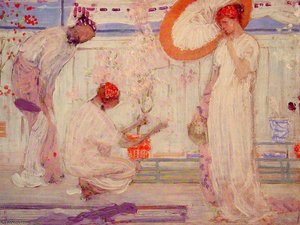
The Violet Note
지클레 / 아트 프린트
복제본 크기
-


최종 결제 금액
₩ 93712
A Moment of Quiet Anticipation: Unpacking “The Violet Note”
James Abbott McNeill Whistler’s "The Violet Note," painted in 1886, isn't a grand statement of narrative or dramatic action; it’s a carefully constructed tableau of quiet contemplation and the subtle poetry of everyday life. This intimate portrait captures a woman, her back turned to the viewer, engaged in the seemingly simple act of preparing for travel – a moment frozen in time that speaks volumes about Whistler’s core aesthetic philosophy: “art for art’s sake.” The painting immediately draws us in with its muted palette dominated by blues and greens, creating an atmosphere of subdued elegance and a sense of veiled mystery. It's a deliberate departure from the prevailing Victorian obsession with grand historical scenes or emotionally charged portraits, reflecting Whistler’s commitment to capturing the essence of beauty through form, color, and light rather than storytelling.
The Language of Form and Color: Whistler’s Aesthetic Vision
Whistler was deeply influenced by Japanese prints – particularly *ukiyo-e* – which emphasized flattened perspectives, bold outlines, and a focus on decorative elements. This influence is evident in the painting's composition; the figures are rendered with a sense of detachment, almost as if viewed through a slightly removed lens. The use of color is equally deliberate. Whistler favored a technique he called “tonal harmony,” prioritizing subtle gradations of tone over bright, saturated hues. Notice how the violet – hinted at in the title and subtly reflected in the arrangement of objects – acts as a unifying element, grounding the scene and lending it an air of sophisticated restraint. The careful placement of each object—the vase, the potted plant, the books—contributes to a carefully balanced visual rhythm, suggesting a considered aesthetic rather than a spontaneous one.
Symbolism in the Details: A Journey Within
Beyond its formal qualities, “The Violet Note” is rich with symbolic potential. The woman’s posture, leaning on her suitcase, immediately evokes travel and departure – but it's not a joyous or celebratory departure. There’s a hint of melancholy in her stance, suggesting perhaps a bittersweet farewell or the quiet solitude of a journey undertaken alone. The suitcase itself, placed squarely on the floor, is a potent symbol of both practicality and vulnerability. The books, stacked neatly together, could represent knowledge, experience, or even a longing for intellectual stimulation during her travels. Even the vase with its single bloom – a violet, no doubt – speaks to beauty, fragility, and the transient nature of life. Whistler wasn’t simply depicting a scene; he was layering it with subtle suggestions and inviting the viewer to project their own interpretations onto the canvas.
Historical Context: The Rise of Aestheticism
“The Violet Note” emerged during a pivotal moment in art history – the height of the Aesthetic movement. Whistler, along with figures like Oscar Wilde, rejected the didactic and moralistic tendencies of much 19th-century art, arguing that art should exist solely for its own beauty and pleasure. This philosophy challenged the established conventions of the time, leading to considerable controversy and criticism. Whistler’s work was often dismissed as “mere decoration,” but his insistence on prioritizing formal qualities over narrative content paved the way for modernism and profoundly influenced subsequent generations of artists. Understanding this context illuminates why "The Violet Note" is not a painting about *what* is happening, but rather about *how* it's being seen – a testament to Whistler’s dedication to capturing the essence of visual experience.
Bringing “The Violet Note” Home: A Reproduction for Your Space
TopImpressionists.com offers meticulously crafted hand-painted reproductions of "The Violet Note," allowing you to bring this evocative masterpiece into your own home or office. Our skilled artisans replicate Whistler’s tonal harmony and subtle details with exceptional precision, ensuring that the painting's atmosphere and symbolic depth are faithfully preserved. Whether you appreciate Whistler’s pioneering aestheticism or simply admire its quiet beauty, a reproduction of “The Violet Note” is a timeless addition to any collection – a reminder of the power of art to evoke emotion and inspire contemplation.
질의응답
제임스 애벗 맥닐 휘슬러의 "The Violet Note"은(는) Aestheticism and Symbolism를 작가의 모국과 어떻게 연결하고 있나요?
"The Violet Note"은 미국 출신의 제임스 애벗 맥닐 휘슬러가 Aestheticism and Symbolism 운동의 흐름 속에서 제작한 작품입니다. 작가의 출신 배경은 이 작품을 미국 예술가들이 선보인 Aestheticism and Symbolism 양식과 연결해 줍니다.
"The Violet Note"의 주제가 제임스 애벗 맥닐 휘슬러 작가의 평소 작업 세계와 어떤 연관이 있나요?
제임스 애벗 맥닐 휘슬러의 작품 세계를 관통하는 주요 주제에는 aestheticism, european avant-garde, sensibility, mood, atmosphere, travel, preparation, journey가 포함되어 있으며, "The Violet Note"은 특히 woman, travel, packing, suitcase, vase, books, anticipation에 초점을 맞추고 있습니다.
"The Violet Note"에 대한 가이드는 어디에서 확인할 수 있나요?
제임스 애벗 맥닐 휘슬러의 "The Violet Note"에 대한 학습 가이드 페이지를 이용하실 수 있습니다. 이 페이지는 학생들과 수업용으로 제작된, 인쇄 가능한 작품 정보 시트를 제공합니다.
유사한 작품들



작가 정보
제임스 애벗 맥닐 위슬러: 아름다움을 향한 고독한 여정
제임스 애벗 맥닐 위슬러(James Abbott McNeill Whistler, 1834-1903)는 미국 태생으로 영국에서 주로 활동하며, 19세기 미술계에 깊은 흔적을 남긴 화가이자 판화가입니다. 그는 단순한 재현을 거부하고 ‘예술은 예술을 위해 존재한다’라는 미학주의를 옹호하며, 당시의 도덕적이고 사회적인 메시지를 담은 그림들에 대한 반발로 등장했습니다. 위슬러는 끊임없이 변화하는 환경 속에서 자신의 예술 세계를 구축해 나갔으며, 그의 삶과 작품은 아름다움을 향한 고독하고도 열정적인 여정을 보여줍니다. 어린 시절, 그는 미국 로웰에서 태어나 아버지의 직책으로 인해 러시아 상트페테르부르크로 이주하며 그림에 대한 재능을 일찍 발견했습니다. 서부군사학교에서의 짧은 군 생활과 지질조사 업무는 그의 예술적 열정을 꺾지 못했고, 결국 그는 파리로 건너가 세바스티앙 부레에게 그림 기법을 연마하며 본격적인 화가의 길을 걷게 됩니다.파리에서의 성장과 독창적인 스타일의 탄생
1850년대 파리는 다양한 예술 사조가 공존하는 역동적인 도시였습니다. 위슬러는 이곳에서 프랑스 사실주의와 바비종파 화가들의 영향을 받았지만, 단순한 모방에 머무르지 않고 자신만의 독특한 스타일을 구축해 나갔습니다. 그는 색채의 대비보다는 섬세한 명암과 분위기를 중시하며, 빛과 그림자의 조화를 통해 화면 전체에 몽환적인 느낌을 부여했습니다. 이러한 그의 시도는 곧 ‘톤(tone)’이라는 새로운 화풍으로 발전되었고, 이는 위슬러를 대표하는 특징이 되었습니다. 그는 자연을 있는 그대로 재현하기보다는 순간의 감정과 인상을 포착하여 그림 속에 담아내고자 했습니다. 특히, 템스 강변의 풍경을 소재로 한 ‘노크턴(Nocturne)’ 연작은 그의 독창적인 예술 세계를 가장 잘 보여주는 작품들입니다. 노크턴은 밤의 정적과 고요함을 표현하며, 음악에서 영감을 받은 조화로운 색채와 섬세한 붓질이 돋보입니다.‘예술은 예술을 위해’ : 미학주의 선언과 논쟁
위슬러는 자신의 작품에 ‘어레인지먼트(Arrangement)’라는 제목을 붙이며, 그림을 단순히 보이는 것을 재현하는 것이 아니라 색채와 형태의 조화로운 구성이라는 점을 강조했습니다. 이러한 그의 예술관은 당시 미술계에 큰 파장을 일으켰습니다. 특히, 그는 1878년 존 러스킨과의 명예훼손 소송에서 승소했지만, 막대한 변호사 비용으로 인해 경제적인 어려움을 겪게 됩니다. 이 사건은 위슬러를 더욱 대중의 시선으로부터 멀어지게 만들었지만, 동시에 그의 예술적 신념을 더욱 확고하게 다지는 계기가 되었습니다. 그는 ‘예술은 예술을 위해 존재한다’라는 미학주의를 옹호하며, 그림에 도덕적인 의미나 사회적인 메시지를 담는 것을 거부했습니다. 이러한 그의 태도는 당시 미술계의 주류였던 사실주의와 강렬한 대조를 이루었지만, 이후 현대 미술 발전에 큰 영향을 미쳤습니다.영향과 유산: 현대미술의 선구자
위슬러는 일본 판화(우키요에)로부터 많은 영감을 얻어 그의 작품에 동양적인 요소들을 적극적으로 활용했습니다. 간결하고 절제된 구도, 평면적인 표현 방식, 그리고 독특한 색채 감각은 그의 그림에 새로운 활력을 불어넣었습니다. 또한, 그는 초상화에서도 전통적인 재현 방식을 벗어나 모델의 개성보다는 화면 전체의 조형적인 아름다움을 추구했습니다. 대표작인 ‘회색과 흑인의 배치 제1번 (위슬러의 어머니)’는 그의 이러한 예술관을 잘 보여주는 작품입니다. 이 그림은 단순한 가족 초상화를 넘어, 색채와 형태의 조화로운 구성으로 이루어진 걸작으로 평가받고 있습니다. 위슬러는 생전에 많은 논쟁과 비판에 직면했지만, 그의 독창적인 예술 세계는 후대 화가들에게 큰 영향을 미쳤습니다. 그는 현대 미술의 선구자로서, 형식주의와 추상미술 발전에 중요한 역할을 담당했으며, 오늘날까지도 그의 작품은 전 세계적으로 사랑받고 있습니다.- 주요 작품: 더 포지(The Forge), 찰스 랭 프리어의 초상화, 갈색과 금빛: 코니 길크리스트, 회색과 흑인의 배치 제1번 (위슬러의 어머니), 노크턴: 떨어지는 로켓.
- 영향을 받은 예술가: 벨라스케스.

제임스 애벗 맥닐 휘슬러
1834 - 1903 , 미국
작가 정보 요약
- Artistic Movement Or Style: 환상주의, 미학주의
- Artists Or Movements Influenced By This Artist:
- 미학 운동
- 근대 미술
- Artists Who Influenced This Artist:
- 벨라스케스
- 일본 판화
- Date Of Birth: 1834년 7월 10일
- Date Of Death: 1903년 7월 17일
- Full Name: 제임스 애벗 맥닐 위슬러
- Nationality: 미국 국적
- Notable Artworks:
- 회색과 흑의 배열 제1번(위슬러의 어머니)
- 검정과 금빛의 야경 - 떨어지는 로켓
- 단조로운 화로
- 孔雀室
- Place Of Birth (City And Country): 미국 로웰
관련 콘텐츠

Azure Visions: Exploring Representations of the Blue Dress in Western Art History
Explore the rich history of the blue dress in Western art! Discover its symbolism, from Renaissance masterpieces to modern interpretations by artists like Martin & Schiele. Uncover cultural meanings and artistic techniques.

폴 세잔 명작 25선: 시대를 초월하는 예술과 공간의 미학 | TopImpressionists
폴 세잔의 시대를 초월하는 명작 25점을 만나보세요. 인상주의를 넘어 후기 인상주의를 개척한 화가의 예술 세계와 정물화, 풍경화 속 숨겨진 이야기를 TopImpressionists에서 감상하세요. 고품질 아트 프린트와 캔버스 액자로 공간에 예술을 더해보세요! 지금 바로 컬렉션을 탐험하세요.

제임스 애벗 맥닐 휘슬러 최고 걸작 25선: 예술의 정수, 공간에 스며드는 아름다움
제임스 애벗 맥닐 휘슬러의 최고 걸작 25선을 만나보세요. 야간 풍경부터 아랑미술관 소장품까지, 예술가의 삶과 작품 세계를 탐험합니다. 색채와 분위기가 완벽한 조화를 이루는 그림들을 TopImpressionists.com에서 감상하고 특별한 공간을 완성하세요.
The Allure of Azure: Exploring the Symbolic & Aesthetic Depths of Blue in Art History
Explore the rich history of blue in art! Discover its symbolism, from ancient pigments to modern masterpieces by Kandinsky & Seurat. Uncover the psychological impact and cultural meanings behind this captivating hue.

Slate Blue Masterpieces: 10 Iconic Paintings & Timeless Home Decor Ideas
Immerse yourself in the captivating world of slate blue! Explore 10 iconic paintings by Monet, Van Gogh & Renoir. Discover their stories, techniques & find museum-quality art reproductions for your home at .


