
빠른 제작과 다양한 마감 옵션을 제공하는 박물관 품질의 지클레이 또는 캔버스 프린트. ( 손으로 그린 그림 구매 이미지 구매)





























작품의 원본 비율을 유지하는 미리 설정된 크기 중에서 선택하세요.

특정 프레임이나 공간에 맞춰 직접 치수를 입력하실 수 있습니다. 선택하신 사이즈가 원본 이미지의 비율과 일치하지 않을 경우, 작품을 크롭(자르기)하거나 이미지를 대칭 또는 단색 채우기로 확장하여 제작합니다. 제작 시작 전, 최종 확인을 위해 디지털 목업이 전송됩니다.
화면상의 미리보기는 실제 크롭이나 확장 상태를 반영하지 않으므로, 최종 구도는 오직 목업을 통해서만 정확하게 확인하실 수 있습니다.
맞춤 사이즈 제작도 가능하지만, 원본 비율을 유지하기 위해서는 사전 정의된 목록에서 치수를 선택하시는 것을 권장합니다.

Hop-Frog's Revenge
복제본 크기
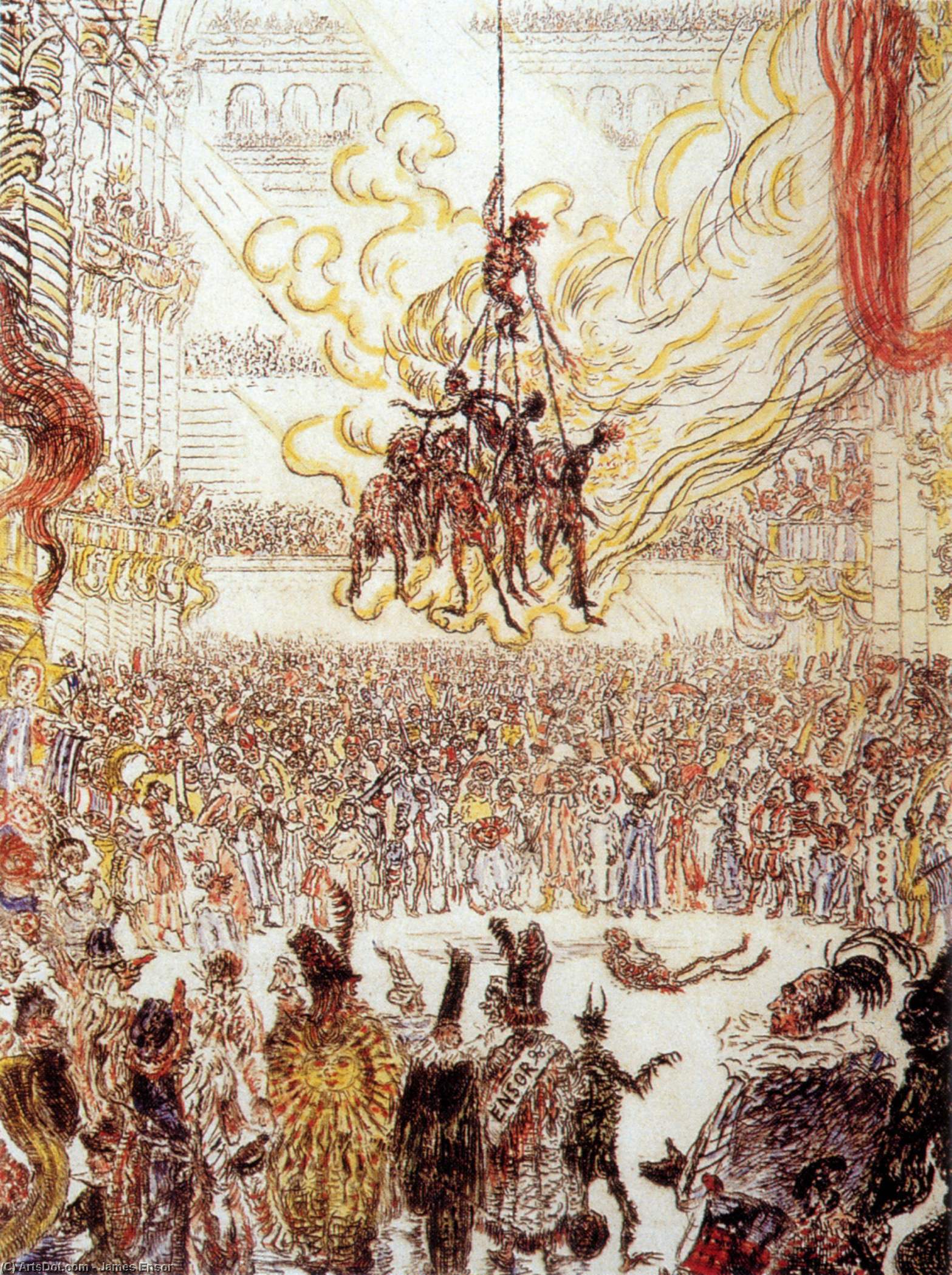
James Ensor’s “Hop-Frog’s Revenge” (La Vengeance de Hop-Frog), painted in 1896, isn't merely a depiction of a Poe story; it’s an immersive plunge into the grotesque heart of human cruelty and theatrical excess. The painting, now meticulously reproduced on hand-painted canvases by TopImpressionists.com, immediately confronts the viewer with a scene of shocking spectacle – a man dangling from chains before a captivated, yet horrified, audience. This isn't a polite portrait; it’s a carefully constructed nightmare rendered in Ensor’s signature style: a jarring blend of realism and surrealism, populated by masked figures and unsettling details that linger long after the initial viewing.
Ensor, born in Ostend, Belgium, in 1860, possessed an innate fascination with disguise and the hidden anxieties beneath societal facades. His childhood spent amidst the vibrant chaos of his parents’ souvenir shop – a repository of carnival masks, exotic objects, and theatrical props – profoundly shaped his artistic vision. This early exposure to the world of performance, illusion, and the unsettling beauty of the macabre is powerfully evident in “Hop-Frog.” The painting feels less like a straightforward illustration and more like a stage set itself, brimming with unspoken drama and simmering resentment.
The story upon which Ensor based his work, Edgar Allan Poe’s chilling tale of revenge, centers on a dwarf jester named Hop-Frog who, after years of being subjected to relentless mockery and abuse by the king and his court, orchestrates a spectacularly brutal retribution. Ensor doesn't shy away from the story’s darkest elements; instead, he amplifies them with his characteristic use of symbolism and distorted perspective. The central figure, suspended in chains, embodies not just Hop-Frog’s suffering but also the vulnerability of those subjected to unchecked power. The audience, a diverse collection of masked figures, represents the complicit masses – those who revel in spectacle while remaining blind to injustice.
The meticulous detail with which Ensor renders each face is particularly striking. Each mask—a grotesque caricature of human expression—suggests hidden identities and concealed emotions. The vibrant colors, a hallmark of Ensor’s palette, contribute to the painting's unsettling atmosphere. Crimson reds dominate, symbolizing blood and violence, while contrasting blues and greens hint at decay and corruption. This deliberate use of color elevates the scene beyond mere narrative illustration, transforming it into a potent visual metaphor for societal ills.
“Hop-Frog’s Revenge” is executed primarily through etching and drypoint with additions of colored pencil and watercolor. This technique lends the image a remarkable depth and texture, capturing both the sharp lines of the figures and the subtle nuances of light and shadow. The use of drypoint creates a distinctive tonal range, adding to the painting's dramatic effect. The composition itself is carefully orchestrated – the diagonal thrust of the hanging figure draws the eye directly to the center of the scene, while the surrounding crowd serves as a visual vortex, pulling the viewer into the unfolding drama.
Beyond its immediate depiction of revenge, “Hop-Frog” operates on multiple symbolic levels. The masquerade ball represents the hypocrisy and superficiality of courtly life, where appearances are carefully constructed to conceal darker realities. The burning figures symbolize the destruction of those who abuse their power, while Hop-Frog’s torch serves as a potent emblem of retribution. Ensor's work is a scathing critique of authority, social injustice, and the dangers of unchecked ambition – themes that resonate powerfully even today.
TopImpressionists.com offers exquisite hand-painted reproductions of “Hop-Frog’s Revenge,” allowing you to experience the full impact of Ensor's masterful vision in a timeless and captivating work of art. Bring this unsettling masterpiece into your home or office – a reminder that even within the most elaborate theatrical displays, the shadows of cruelty and injustice often lurk beneath the surface.
James Sidney Edouard, Baron Ensor (Ostend, 13 April 1860 – 19 November 1949) was a Belgian painter and printmaker who stands as one of the most influential figures in the development of Expressionism and Surrealism. Born into an English father and Belgian mother amidst the vibrant atmosphere of Ostend’s annual Carnival—a formative experience that profoundly shaped his artistic vision—Ensor embarked on a lifelong journey to explore the darker recesses of human psychology and challenge conventional aesthetic standards.
From a young age, Ensor demonstrated an innate talent for drawing and painting, nurtured by local instructors and fueled by an unwavering fascination with observation. His formative years were spent studying at the College of the Blessed Virgin in Ostend, where he honed his skills alongside fellow artists like Fernand Khnopff and Theo Van Rysselberghe—artists who would later become associated with the influential *Les XX* group.
Ensor’s artistic trajectory took a decisive turn in the late 1880s as he abandoned academic realism for a bold embrace of grotesque expressionism. Influenced by Rembrandt, Francisco Goya, and Japanese woodcuts—artists who championed emotional intensity and unsettling imagery—he began to populate his canvases with disturbing tableaux featuring skeletons battling over a hanged man, masks embodying hidden identities, and allegorical figures confronting existential anxieties.
Among Ensor’s most celebrated works are *The Scandalized Masks* (1883), which captures the pervasive influence of disguise and social critique; *Skeletons Fighting over a Hanged Man* (1891), a haunting meditation on mortality and decay; and *Christ's Entry into Brussels* (1888–89)—a monumental painting that satirizes religious hypocrisy with unflinching boldness. Recurring throughout Ensor’s oeuvre are explorations of death, social injustice, psychological torment, and the boundless potential for imaginative distortion—themes that continue to resonate powerfully with audiences today.
James Ensor's uncompromising artistic vision irrevocably altered the course of modern art. Rejecting academic conventions and embracing subjective experience, he paved the way for subsequent generations of artists who dared to confront uncomfortable truths and challenge established norms. His pioneering use of grotesque imagery—coupled with his masterful manipulation of color and line—established a distinctive stylistic vocabulary that profoundly impacted Expressionist painters like Edvard Munch and Ernst Ludwig Kirchner—artists who similarly sought to convey inner turmoil and psychological complexity.

1860 - 1949 , 벨기에

제임스 애벗 맥닐 휘슬러의 최고 걸작 25선을 만나보세요. 야간 풍경부터 아랑미술관 소장품까지, 예술가의 삶과 작품 세계를 탐험합니다. 색채와 분위기가 완벽한 조화를 이루는 그림들을 TopImpressionists.com에서 감상하고 특별한 공간을 완성하세요.

Explore the unsettling yet captivating world of James Ensor, a pioneer of Expressionism. Discover his satirical masterpieces, symbolic imagery & lasting influence on modern art. High-quality reproductions available at TopImpressionists.

Explore 25 iconic Sir Alfred Munnings paintings! Discover the beauty of British Impressionism, equine art & rural England. Find museum-quality reproductions and elevate your home decor with TopImpressionists. Explore the full collection online.
Embark on a profound journey through the world's most iconic mask artworks. Explore the spiritual depth, intricate craftsmanship, and rich cultural heritage of global traditions, from Chhau to Gomira, in this expert-led exploration of ancestral artistry and symbolic beauty.

Explore the captivating landscapes of James Stark (1794-1859), a leading Norwich School painter. Discover his Dutch Master influences, critical acclaim, and enduring legacy in contemporary realism. Art collecting insights & investment potential.


최신 미술 뉴스, 특별 혜택 및 인테리어 아이디어를 가장 먼저 만나보세요.
프로젝트에 대해 알려주시면 저희 미술 전문가들이 맞춤형 아트 제안 3가지를 전달해 드립니다.
당신만을 위한 맞춤형 옵션 3가지를 무료로 추천해 드립니다!

 미리보기
미리보기
 공유하기
공유하기 공유하기
공유하기
 상세 정보
상세 정보

 다운로드
다운로드
 유사 작품
유사 작품 X-레이
X-레이 슬라이드 쇼

 더 보기
더 보기









 유리 옵션은 110cm 미만 크기에서만 선택 가능합니다.


