





























작품의 원본 비율을 유지하는 미리 설정된 크기 중에서 선택하세요.

특정 프레임이나 공간에 맞도록 직접 크기를 입력할 수 있습니다. 선택하신 크기가 원본 이미지의 비율과 일치하지 않는 경우, 작품을 자르거나 추가적인 손으로 그린 요소를 사용하여 그림을 확장합니다. 제작 시작 전 승인을 위해 디지털 목업을 보내드립니다.
화면 미리 보기는 실제 자르기 또는 확장을 반영하지 않습니다. 최종 구성은 목업을 통해서만 정확하게 확인하실 수 있습니다.
맞춤 크기 제작도 가능하지만, 원본 비율을 유지하기 위해 사전 정의된 목록에서 크기를 선택하시는 것을 권장합니다.

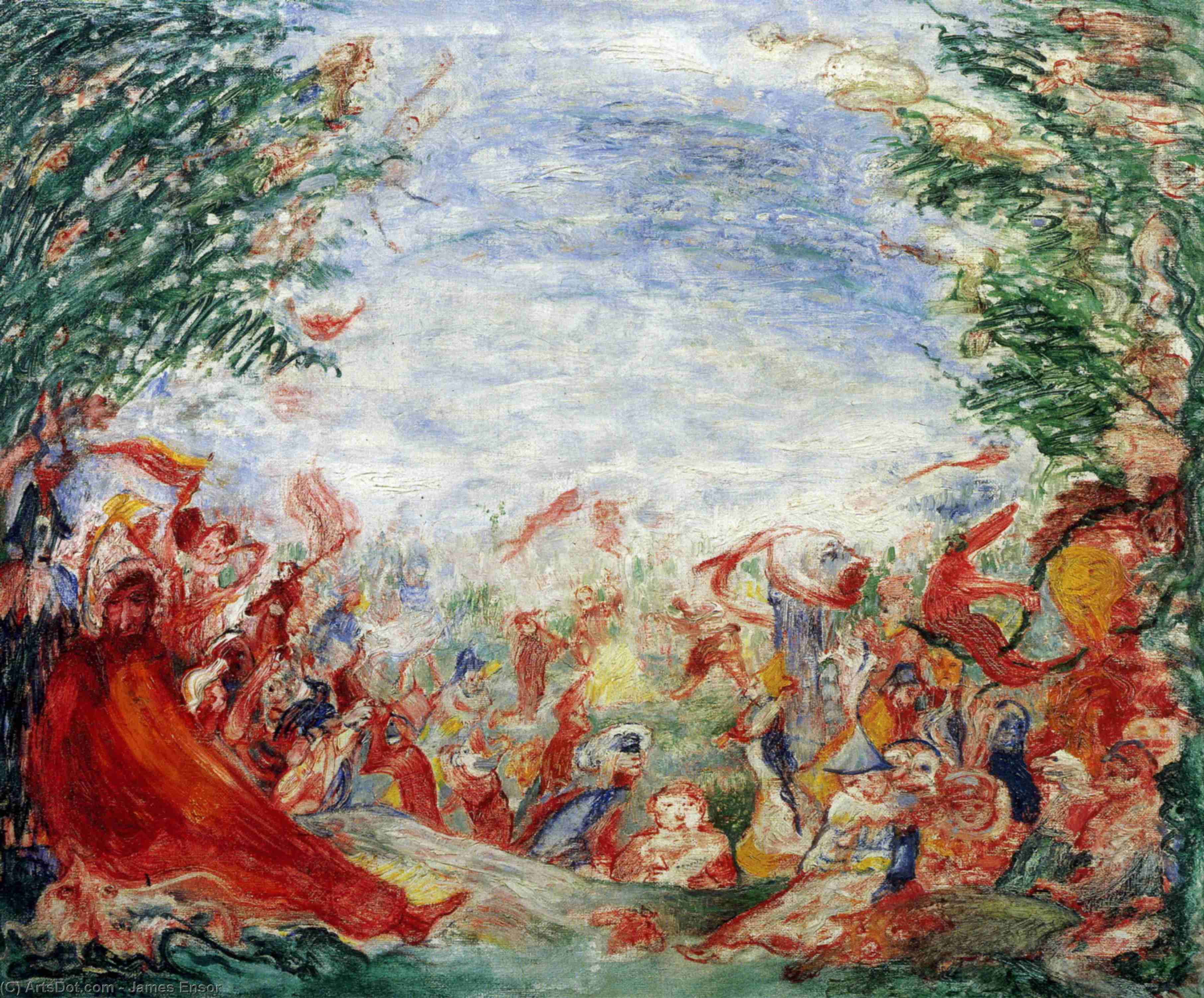
Saint Antoine Turlupine
복제본 크기
James Ensor’s “Saint Antoine Turlupine” stands as a monumental achievement in late 19th-century Symbolist art, offering much more than a mere depiction of a seaside gathering. Painted around 1886, this evocative oil on canvas captures the profound anxieties and social contradictions inherent in Belgian life during a period of transition. At first glance, the viewer is met with a densely populated outdoor scene, a bustling crowd gathered under the open sky, yet beneath this surface of leisure lies an unsettling psychological depth. Ensor masterfully orchestrates a composition where architectural elements—such as a wall adorned with a clock—and objects like umbrellas serve as potent symbols for the relentless passage of time and the weight of societal pressures.
The painting’s atmosphere is thick with a sense of mystery and hidden truths. As an expert in the Symbolist movement, Ensor moved away from the fleeting light of Impressionism to explore the darker, more permanent inner states of the human psyche. This is achieved through his use of masks, a recurring motif in his oeuvre that represents the duality of identity and the concealment of true emotions behind social facades. For collectors and enthusiasts of fine art, this piece offers a window into the artist's ability to transform a public promenade into a stage for contemplating mortality, isolation, and the inherent hypocrisy of the human condition.
Technically, “Saint Antoine Turlupine” is a triumph of expressive texture. Ensor utilized thick impasto brushstrokes to create a surface that feels physically alive, lending a visceral intensity to the crowded scene. This tactile quality ensures that the painting commands attention in any space, providing a rich, sculptural dimension that catches the light and invites close inspection. The palette is a sophisticated study in contrast; Ensor employs muted, earthy tones that ground the composition, only to puncturing them with sudden, dramatic splashes of crimson and ochre.
This deliberate use of color mirrors the psychological landscape of the work—the tension between the mundane reality of a seaside day and the underlying emotional turbulence. For interior designers seeking to introduce a focal point of profound character, this painting provides an unparalleled sense of drama. The interplay of light and shadow within the heavy paint layers creates a dynamic energy that can anchor a room, offering both a historical narrative and a sophisticated aesthetic presence.
To possess or display a reproduction of such a significant work is to invite a dialogue between the past and the present. Ensor’s ability to evoke profound emotional responses—ranging from curiosity to a haunting sense of unease—makes this piece an extraordinary choice for those who value art that challenges and inspires. It is not merely a decorative object but a narrative journey through the shadows of the Belgian soul.
Whether you are an art historian drawn to its Symbolist roots, a collector seeking a masterpiece of psychological realism, or a designer looking for a piece with deep emotional resonance, “Saint Antoine Turlupine” offers a timeless allure. It remains a captivating testament to Ensor's genius, reminding us that even in the most crowded spaces, the most profound truths are often found beneath the surface.
James Sidney Edouard, Baron Ensor (Ostend, 13 April 1860 – 19 November 1949) was a Belgian painter and printmaker who stands as one of the most influential figures in the development of Expressionism and Surrealism. Born into an English father and Belgian mother amidst the vibrant atmosphere of Ostend’s annual Carnival—a formative experience that profoundly shaped his artistic vision—Ensor embarked on a lifelong journey to explore the darker recesses of human psychology and challenge conventional aesthetic standards.
From a young age, Ensor demonstrated an innate talent for drawing and painting, nurtured by local instructors and fueled by an unwavering fascination with observation. His formative years were spent studying at the College of the Blessed Virgin in Ostend, where he honed his skills alongside fellow artists like Fernand Khnopff and Theo Van Rysselberghe—artists who would later become associated with the influential *Les XX* group.
Ensor’s artistic trajectory took a decisive turn in the late 1880s as he abandoned academic realism for a bold embrace of grotesque expressionism. Influenced by Rembrandt, Francisco Goya, and Japanese woodcuts—artists who championed emotional intensity and unsettling imagery—he began to populate his canvases with disturbing tableaux featuring skeletons battling over a hanged man, masks embodying hidden identities, and allegorical figures confronting existential anxieties.
Among Ensor’s most celebrated works are *The Scandalized Masks* (1883), which captures the pervasive influence of disguise and social critique; *Skeletons Fighting over a Hanged Man* (1891), a haunting meditation on mortality and decay; and *Christ's Entry into Brussels* (1888–89)—a monumental painting that satirizes religious hypocrisy with unflinching boldness. Recurring throughout Ensor’s oeuvre are explorations of death, social injustice, psychological torment, and the boundless potential for imaginative distortion—themes that continue to resonate powerfully with audiences today.
James Ensor's uncompromising artistic vision irrevocably altered the course of modern art. Rejecting academic conventions and embracing subjective experience, he paved the way for subsequent generations of artists who dared to confront uncomfortable truths and challenge established norms. His pioneering use of grotesque imagery—coupled with his masterful manipulation of color and line—established a distinctive stylistic vocabulary that profoundly impacted Expressionist painters like Edvard Munch and Ernst Ludwig Kirchner—artists who similarly sought to convey inner turmoil and psychological complexity.

1860 - 1949 , 벨기에

Discover the enchanting alchemy of Impressionism. Explore how the mastery of oil on canvas, through glazing and impasto, captures eternal light and emotion. Perfect for lovers of Monet and Van Gogh seeking the profound depth of hand-painted fine art.


최신 미술 뉴스, 특별 혜택 및 인테리어 아이디어를 가장 먼저 만나보세요.
프로젝트에 대해 알려주시면 저희 미술 전문가들이 맞춤형 아트 제안 3가지를 전달해 드립니다.
당신만을 위한 맞춤형 옵션 3가지를 무료로 추천해 드립니다!

 미리보기
미리보기
 프린트 구매
 공유하기
공유하기 공유하기
공유하기
 상세 정보
상세 정보

 다운로드
다운로드
 유사 작품
유사 작품 X-레이
X-레이 슬라이드 쇼

 더 보기
더 보기









 유리 옵션은 110cm 미만 크기에서만 선택 가능합니다.


