아틀리에 — 전 세계 무료 배송 — 배송 기간 2~6주
사진으로 그림 만들기 위시리스트 장바구니
프린트 주문으로 전환 프린트 주문으로 전환이미지로 전환 이미지로 전환 공유하기공유하기
상세 정보상세 정보 즐겨찾기에 추가 즐겨찾기에 추가 다운로드다운로드 유사 작품유사 작품 슬라이드 쇼슬라이드 쇼

departure, voyage, arrival

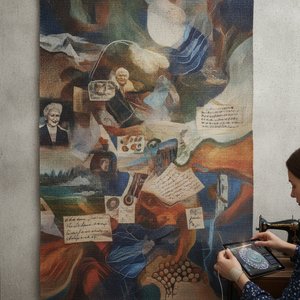
A captivating tapestry featuring a woman with fruit amidst birds and cats by renowned textile artist Jane Kidd captures the intricate beauty of nature and craft, inviting you to explore this exquisite contemporary masterpiece.

Discover Jane Kidd's stunning hand-woven tapestries exploring material culture & the handmade. Canadian textile artist known for vibrant patterns & historical themes.

수제 유화 복제품

원하는 크기와 액자로 주문 제작되는, 작가들이 직접 캔버스에 손으로 그린 유화 작품입니다. (프린트 주문으로 전환 프린트 주문으로 전환이미지로 전환 이미지로 전환)

Standard
custom
CM
INCH

작품의 원본 비율을 유지하는 미리 설정된 크기 중에서 선택하세요.

가로 너비
세로 길이

특정 프레임이나 공간에 맞도록 직접 크기를 입력할 수 있습니다. 선택하신 크기가 원본 이미지의 비율과 일치하지 않는 경우, 작품을 자르거나 추가적인 손으로 그린 요소를 사용하여 그림을 확장합니다. 제작 시작 전 승인을 위해 디지털 목업을 보내드립니다.
화면 미리 보기는 실제 자르기 또는 확장을 반영하지 않습니다. 최종 구성은 목업을 통해서만 정확하게 확인하실 수 있습니다.
맞춤 크기 제작도 가능하지만, 원본 비율을 유지하기 위해 사전 정의된 목록에서 크기를 선택하시는 것을 권장합니다.

변경 가능한 예시: 얼굴을 고객의 사진으로 교체, 반려동물 추가(예: 고양이를 강아지로 변경), 배경에 숨겨진 메시지 삽입, 배경 풍경 또는 요소 변경 등
주문 후 TopImpressionists.com 팀에서 상세 안내를 위해 고객님께 이메일을 보내드리며, 미리보기 시안을 제공해 드립니다.

전 세계 배송()은 표준 5주 대신 3~4주 내에 완료됩니다. (11 8월). 품질에는 어떠한 타협도 하지 않습니다.

why_choose_icon
전 세계 무료 특급 배송
why_choose_icon
프리미엄 린넨 캔버스
why_choose_icon
전체 배송 보험 보장
why_choose_icon
관세 환불 보장
why_choose_icon
실제 색상 일치 보장
why_choose_icon
60일 이내 반품 정책 (제조 결함 시)
why_choose_icon
100% 환불 보장
why_choose_icon
다량 구매 할인 혜택

총 합계 금액

$ 269

reproduction

departure, voyage, arrival

재현 기법

복제본 크기

-

최종 결제 금액

$ 269

작품 정보 요약

  • Dimensions: 129 x 154 cm
  • Year: 2001
  • Artist: Jane Kidd
  • Notable elements or techniques: Hand-woven wool tapestry
  • Subject or theme: Nature, culture, and technology

작품 상세 설명

A Tapestry of Life and Connection

In the evocative work "departure, voyage, arrival," created in 2001 by the esteemed Canadian textile artist Jane Kidd, we are invited into a meticulously woven narrative that transcends the boundaries between fine art and traditional craft. This piece serves as a profound meditation on the interconnectedness of all living things, presenting a visual poem where the organic and the symbolic intertwine. At first glance, the viewer is drawn into a rich, textured landscape—a tapestry that feels less like a static object and more like a living, breathing ecosystem. The composition masterfully balances human presence with the natural world, featuring figures, animals, and botanical elements that seem to emerge from a shared, rhythmic existence.

The subject matter of this masterpiece is both intimate and expansive. Within its intricate weave, one encounters a woman cradling fruit, a gesture that speaks to the fundamental relationship between humanity and the sustenance provided by the earth. The presence of a cat, a bird, and an apple introduces a layer of domesticity and natural cycle, suggesting themes of nourishment, growth, and the inevitable transitions of life—the very essence of its title. Through the careful arrangement of these elements, Kidd explores how our perception of nature is mediated through culture and science, creating a scene that feels both ancient in its storytelling and contemporary in its conceptual depth.


The Mastery of Thread and Texture

As a practitioner who famously bridges the gap between "craft" and "art," Jane Kidd utilizes the medium of hand-woven wool to achieve a level of detail that rivals fine painting. The technique employed in "departure, voyage, arrival" is nothing short of extraordinary; each thread is a deliberate choice, contributing to a tactile surface that invites the eye to wander through its complex topography. The way light interacts with the varying textures of the wool creates a sense of depth and movement, making the figures and flora appear to shift as one moves around the piece.

For the discerning collector or interior designer, this work offers an unparalleled sensory experience. The structural integrity of the weave provides a sense of permanence and weight, while the soft, organic nature of the wool lends a warmth that is essential for creating sophisticated, soulful interiors. This is not merely a decorative object; it is a technical marvel that showcases the "intimate hands-on experience" Kidd so passionately defends. The ability to translate complex imagery—ranging from botanical precision to atmospheric depth—into the medium of textile is what elevates this piece into the realm of high fine art.


Symbolism and Emotional Resonance

Beyond its physical beauty, the artwork carries a heavy emotional resonance that speaks to the universal human experience. The title itself suggests a journey—a cycle of leaving, traveling, and reaching a destination. This movement is mirrored in the symbolic interplay of the elements within the tapestry. The fruit represents the harvest and the fruits of labor, while the animals act as companions and witnesses to the passage of time. There is a quiet, contemplative stillness within the work, yet it is charged with the energy of biological processes and the subtle tensions of our changing environment.

For those seeking to adorn a space with art that inspires deep thought and emotional tranquility, this reproduction offers a window into a world of profound meaning. It serves as a centerpiece that can anchor a room, providing both a focal point for conversation and a source of meditative calm. To possess such a piece is to hold a fragment of a larger story about our place in the cosmos—a story of arrival, of finding home, and of the beautiful, complex voyage of life itself.


작가 약력

Francesco Clemente: A Weaver of Dreams and Myth

Francesco Clemente, born in Naples in 1952, is a figure whose artistic journey has been one of constant exploration – a restless seeking between the ancient traditions of his Italian homeland and the vibrant, often challenging currents of contemporary art. His life, marked by periods spent in India and New York City, has profoundly shaped his visual language, resulting in a body of work that feels both deeply rooted and strikingly original. Early influences included the architectural studies he pursued at the Sapienza University of Rome, a foundation that unexpectedly led him to collaborate with fellow artists like Luigi Ontani and Alighiero Boetti, immersing him within the burgeoning scene of Transavanguardia – a movement rejecting formalist constraints in favor of figurative representation and symbolic storytelling. This period, particularly his travels to Afghanistan with Boetti, proved pivotal, fueling a fascination with mythology, spirituality, and the raw energy of human experience.

The Alchemy of Technique: From Drawing to Fresco

Clemente’s artistic practice is characterized by an astonishing versatility, moving seamlessly between diverse media. Initially establishing himself through intimate ink drawings – often capturing fragments of dreams and childhood recollections – he quickly expanded his repertoire to encompass collage, fresco, graphics, and sculpture. His early work demonstrated a remarkable control over line and texture, utilizing the inherent qualities of each medium to create layered narratives. The influence of Italian Renaissance techniques is palpable in his frescoes, particularly those executed in India, where he spent considerable time studying traditional mural painting methods. This engagement with ancient practices isn’t simply an homage; it's a deliberate dialogue – Clemente employs these established forms as a springboard for his own unique visual vocabulary. His mastery extends to the use of color, often employing muted palettes punctuated by bursts of vibrant hues, creating a sense of both serenity and intensity.

Transavanguardia and Beyond: A Journey Through Symbolism

Clemente’s association with Transavanguardia solidified his position as a key figure in the 1980s Italian art scene. This movement represented a deliberate rejection of conceptual art's dominance, returning to figurative painting and embracing a broader range of subject matter – from religious iconography and classical mythology to contemporary social issues. His work during this period is often characterized by a dreamlike quality, populated with enigmatic figures and symbolic imagery drawn from diverse cultural sources. The influence of Cy Twombly, who lived in Rome during this time, is evident in Clemente’s exploration of gesture and the expressive power of line. However, he never fully embraced the rigid structures of Arte Povera, maintaining a more fluid and personal approach to his art. His work consistently resists easy categorization, oscillating between abstraction and representation, inviting viewers to engage in their own interpretations.

Global Influences: India and New York

Clemente’s artistic development has been inextricably linked to his travels and encounters with different cultures. His extended periods in India profoundly impacted his work, introducing him to Hindu mythology, spirituality, and the rich visual traditions of Indian art. The vibrant colors, intricate patterns, and symbolic imagery of India became integral components of his artistic language. Conversely, his time in New York City exposed him to a wider range of contemporary influences, including Pop Art and Minimalism, which he absorbed and reinterpreted through his own unique lens. This synthesis – the blending of Eastern mysticism with Western modernity – is perhaps the defining characteristic of Clemente’s oeuvre.

Legacy and Recognition

Francesco Clemente's work has been exhibited extensively throughout the world, including major museums such as The Metropolitan Museum of Art, The Aldrich Contemporary Art Museum, and numerous international institutions. His retrospective at the San Jose Museum of Art in 2007 garnered critical acclaim, solidifying his position as a leading contemporary artist. His pieces are held in prominent collections globally, reflecting the enduring appeal of his evocative imagery and masterful technique. Clemente continues to work prolifically, exploring new avenues of expression while remaining true to the core principles that have shaped his artistic vision – a commitment to symbolism, mythology, and the exploration of the human condition. His art serves as a testament to the power of cultural exchange and the enduring relevance of traditional forms in a rapidly changing world.
jane kidd

jane kidd

1952 - , Canada

주요 정보

  • Artistic Movement Or Style: Transavanguardia
  • Artists Or Movements Influenced By This Artist: [None]
  • Artists Who Influenced This Artist:
    • Cy Twombly
    • Alighiero Boetti
  • Date Of Birth: March 23, 1952
  • Full Name: Francesco Clemente
  • Nationality: Italian
  • Notable Artworks: [None]
  • Place Of Birth: Naples, Italy
© TopImpressionists.com — All Rights Reserved  ·  100% 수작업 페인팅 · 만족 보장 · 전 세계 무료 배송
VISA MASTERCARD