


 실제 크기로 보기
 보내기
보내기 공유하기
공유하기
 상세 보기
상세 보기 가이드 보기

 이미지 다운로드
 유사 작품 더 보기
 X-레이
X-레이 슬라이드 쇼 보기
 통계 정보
통계 정보Acanthostega


A captivating black & white drawing of Acanthostega, a prehistoric fish-like creature swimming above another, showcasing intricate fins and tail details by Jane Kim.
 상세 보기
상세 보기
An American painter and science illustrator known for large-scale conservation murals like the Wall of Birds, Jane Kim blends scientific detail with vibrant advocacy to invite you into a thriving natural world.
지클레 / 아트 프린트
빠른 제작과 다양한 마감 옵션을 선택할 수 있는 박물관 수준의 지클레이 및 캔버스 프린트. ( 수작업 채색 복제본 주문하기 디지털 이미지 판매 채널로 전환)




P118B ₩10

P118H ₩10

P118W ₩10

P438Z ₩10

P508JH ₩12

P508YH ₩12

P805H ₩10

P805Z ₩10

P919BZ ₩10

P919G ₩10

P919XJ ₩10

P959ZH ₩10

P968JZ ₩12

W106C ₩8

W218G ₩10

W218JH ₩8

W218Y ₩10

W307PJ ₩10

W316G ₩10

W316PJ ₩8

W316Y ₩10

W398PJ ₩8

W4111J ₩10

W500HY ₩15

W500JH ₩15

W692G ₩12

W849H ₩8

W940BG ₩15

W953PJ ₩8




표준 규격
맞춤 제작
CM
INCH
작품의 원본 비율을 그대로 유지하는 프리셋 사이즈 중에서 선택해 보세요.
Loading sizes...

가로 너비
높이
특정 프레임이나 공간에 맞춰 직접 치수를 입력하실 수 있습니다. 선택하신 사이즈가 원본 이미지의 비율과 일치하지 않을 경우, 작품을 크롭(자르기)하거나 이미지를 대칭 또는 단색 채우기로 확장하여 제작합니다. 제작 시작 전, 최종 확인을 위해 디지털 목업이 전송됩니다.
화면상의 미리보기는 실제 크롭이나 확장 상태를 반영하지 않으므로, 최종 구도는 오직 목업을 통해서만 정확하게 확인하실 수 있습니다.
맞춤 사이즈 제작도 가능하지만, 원본 비율을 유지하기 위해서는 사전 정의된 목록에서 치수를 선택하시는 것을 권장합니다.


 유리 옵션은 110cm 미만 크기에서만 선택 가능합니다.

Acanthostega
지클레 / 아트 프린트
복제본 규격
-


총 결제 금액
₩ 94426
The Silent Witness: Jane Kim’s “Acanthostega”
Jane Kim's "Acanthostega" isn’t merely a depiction of a fish; it’s an evocative portal into the distant past, a frozen moment in the evolutionary drama that birthed our own terrestrial existence. The painting, rendered with meticulous detail and a restrained palette of blacks, whites, and subtle grays, captures a creature – Acanthostega gunnari – that lived approximately 365 million years ago during the Famennian age of the Late Devonian period. This remarkable specimen represents one of the earliest known tetrapods, those elusive ancestors from which all land vertebrates ultimately descended. Kim’s work transcends simple representation, instead offering a profound meditation on transition and the slow, incremental steps that led to our dominance on land.
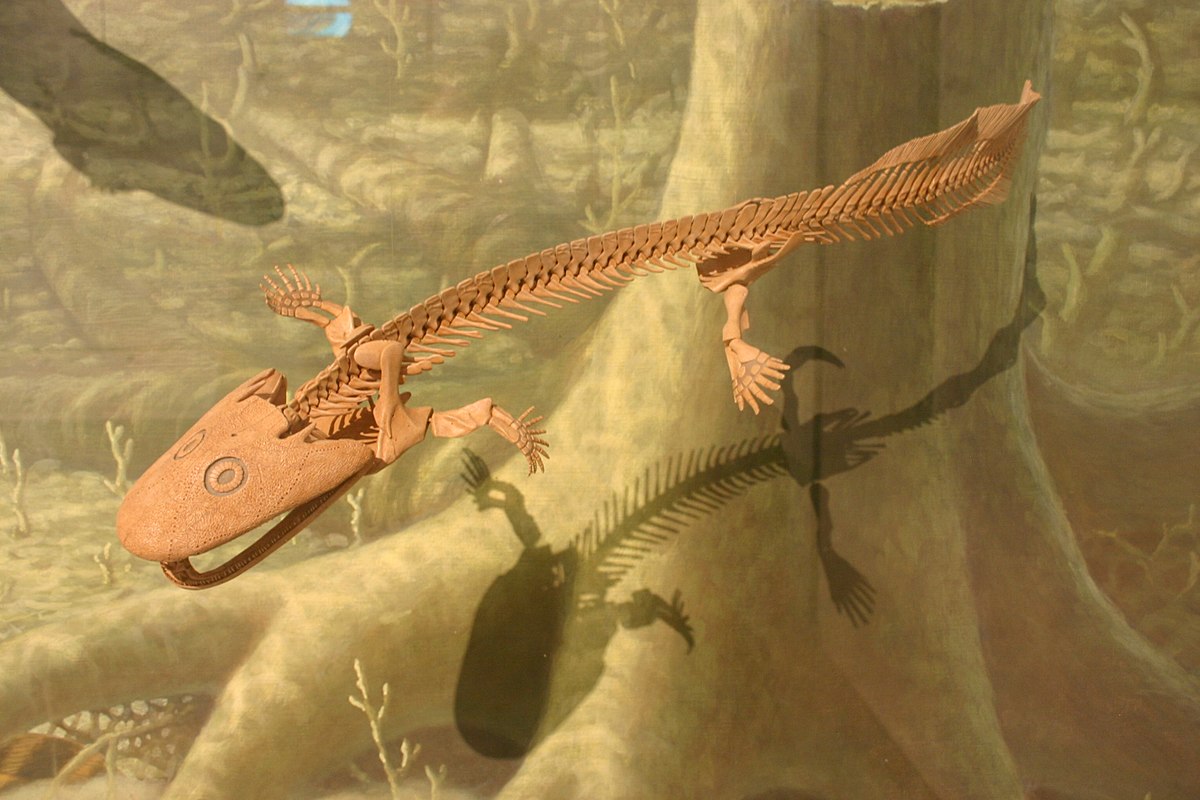
An Aquatic Ancestor: Morphology and Paleobiology
The painting meticulously portrays Acanthostega’s unique anatomy, a fascinating blend of fish-like and amphibian characteristics. Notice the elongated body, reminiscent of a lobe-finned fish, yet coupled with eight digits on each hand – a crucial evolutionary step towards limb development. The webbing connecting these digits suggests an adaptation for paddling through shallow waters, likely inhabiting weed-choked swamps teeming with life. Jennifer Clack’s extensive research into this species reveals that Acanthostega wasn't a fully terrestrial animal; its shoulder structure and limited ability to bend its elbows indicate it primarily inhabited aquatic environments. The painting subtly conveys this duality – a creature poised on the brink of land, yet firmly rooted in the water.
Kim’s artistic choices are informed by paleontological understanding. She doesn't shy away from depicting the fish-like features—the prominent gills, the streamlined form—but simultaneously highlights the nascent limb structure, hinting at the potential for future locomotion. This delicate balance between familiarity and transformation is central to the artwork’s power.
Symbolism of Transition: Crowns and the Dawn of Potential
Beyond its anatomical accuracy, “Acanthostega” resonates with symbolic weight. The prominent crown adorning the fish's head – a motif frequently employed by Kim – represents not just royalty but also potential and nascent power. It’s a visual metaphor for the evolutionary leap from aquatic to terrestrial life, suggesting that even in this ancient creature, the seeds of future dominance were already being sown. The careful rendering of the scales and fins evokes a sense of vulnerability and fragility, while the crown subtly asserts an inherent strength – a promise of what was yet to come.
Ink Dwell’s Legacy: A Masterful Reproduction
Jane Kim's work, as exemplified by “Acanthostega,” is a testament to her skill and dedication. Her meticulous attention to detail, combined with a deep understanding of paleontology and artistic expression, results in images that are both scientifically accurate and emotionally resonant. TopImpressionists offers high-quality reproductions of this captivating piece, allowing art lovers to bring this pivotal moment in evolutionary history into their homes or offices. Each reproduction is crafted with the same care and precision as the original, ensuring a faithful representation of Kim’s artistic vision – a silent witness to the dawn of limbs and the unfolding story of life on Earth.
관련 기사

The Soul of the Line: Discovering the Timeless Beauty and Emotional Depth of Graphite Art
Explore the profound beauty of graphite art. From the alchemy of carbon to the emotional depth of monochrome landscapes, discover how master artists use the eloquent line to capture light and soul in timeless pencil drawings.

