A Life Immersed in Light and Shadow: The World of Jean-Baptiste Robie
Born in Brussels in 1821, Jean-Baptiste Robie embarked on a journey that would weave together the meticulous detail of still life painting with the vibrant allure of distant lands. His beginnings were humble; his father, a blacksmith, instilled a practical sensibility that contrasted sharply with the artistic inclinations blossoming within young Jean-Baptiste. This early exposure to craft and labor, however, may have subtly informed his later work—a certain solidity and groundedness present even in his most delicate floral arrangements. Initially self-taught, Robie’s talent soon drew the encouragement of fellow artist Théodore Fourmois, who guided him toward formal training at the prestigious Académie Royale des Beaux-Arts in Brussels. There, under the tutelage of Balthazar-François Tasson (later Tasson-Snel), he honed his skills and began to establish himself within the Belgian art community.
From Blossoms to Eastern Visions: The Evolution of an Artistic Style
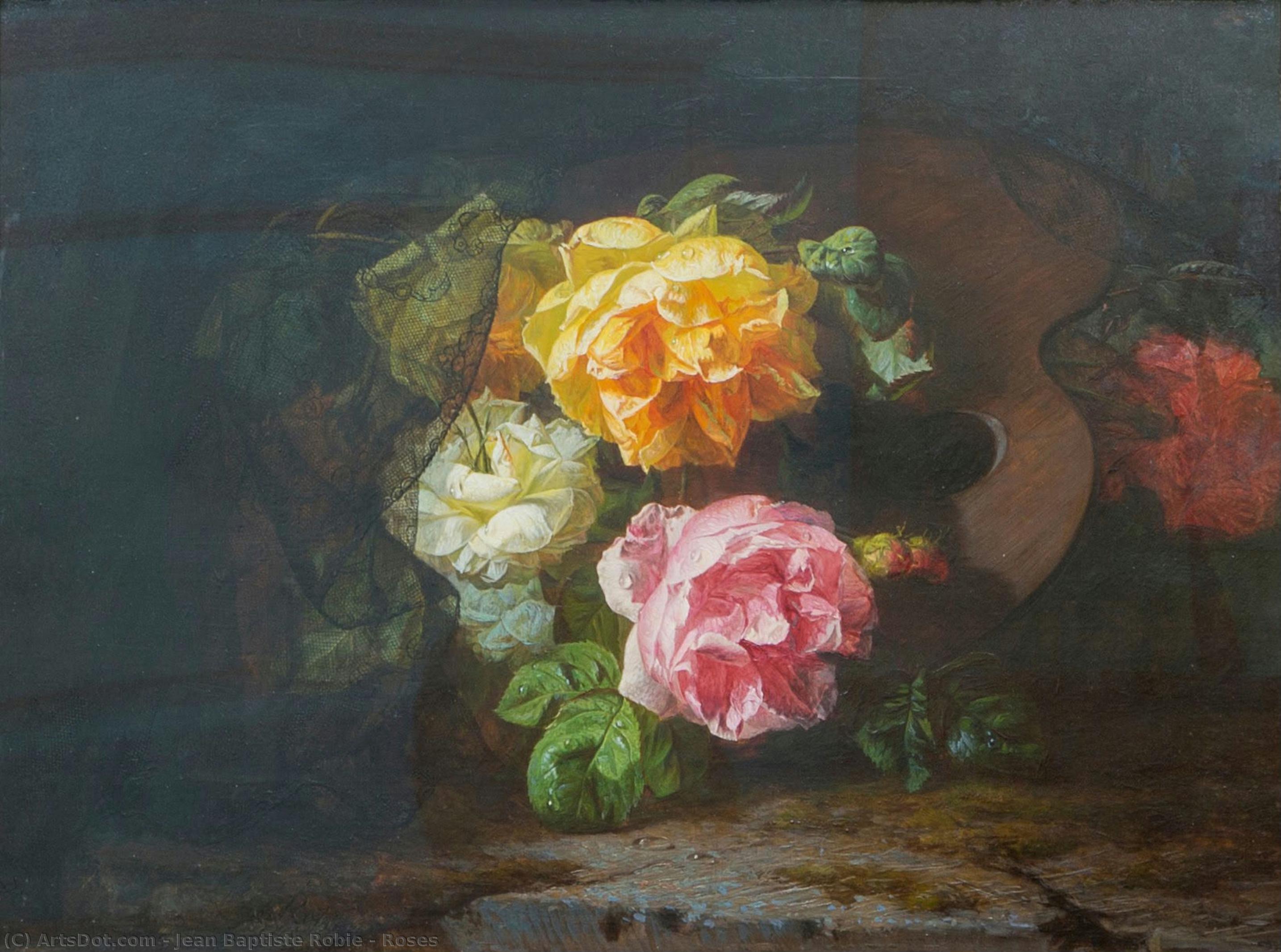
Robie’s career initially flourished with exquisitely rendered flower paintings. He quickly gained recognition for capturing not merely the *appearance* of blossoms, but their very essence—the velvety texture of petals, the luminous quality of light filtering through delicate forms. These early still lifes weren't simply botanical studies; they were celebrations of beauty and transience, imbued with a Romantic sensibility that emphasized emotion and imagination. However, Robie’s artistic spirit was restless. He yearned to explore beyond the confines of the studio, and this desire led him on extensive travels that would profoundly alter his artistic trajectory. Venturing as far as India, he immersed himself in different cultures, landscapes, and ways of life. This exposure ignited a passion for depicting exotic Oriental scenes—vibrant depictions of Eastern life filled with rich detail and evocative atmosphere. His style, while rooted in Romanticism’s emphasis on emotion and the beauty of nature, also demonstrated a keen eye for realism, reflecting his meticulous observation skills honed through years of still life painting. He documented these travels not only through paint but also through numerous travel books, blending artistic observation with literary expression—a testament to his multifaceted talent.
Recognition and Legacy: A Voice Within the 19th-Century Belgian Art Scene
Throughout his career, Robie actively sought recognition for his work, regularly exhibiting at both the Brussels Salon from 1843 to 1875 and the prestigious Paris Salon. These exhibitions provided a platform to showcase his evolving style and connect with a wider audience. His paintings were consistently praised for their technical skill, vibrant colors, and ability to evoke a specific mood or atmosphere. While perhaps not as widely celebrated during his lifetime as some of his contemporaries, Robie’s contributions to 19th-century Belgian art are significant. He successfully bridged the gap between traditional still life techniques and exotic subject matter, creating a unique body of work that continues to captivate viewers today. His most celebrated achievements remain his flower paintings—admired for their exquisite detail and luminous quality—but his Oriental scenes offer a fascinating glimpse into the cultures he encountered during his travels, providing valuable historical and artistic insights.
A Reflection of an Era: Historical Significance
Jean-Baptiste Robie’s artistic journey is deeply intertwined with the broader trends of 19th-century art. The rise of Romanticism, with its emphasis on emotion and individualism, provided a fertile ground for his early floral studies. Simultaneously, the growing interest in travel, exploration, and cultural exchange fueled his later fascination with Oriental scenes. His combination of painting and writing exemplifies a multifaceted talent—a commitment to exploring the world through both visual and literary means.
- Romantic Influences: The emphasis on emotion, imagination, and the beauty of nature.
- Realist Techniques: A keen eye for detail and accurate representation in his depictions.
- Travel & Exploration: The impact of journeys to India and beyond on his subject matter and artistic vision.
Today, Robie’s paintings are appreciated not only for their aesthetic beauty but also for their historical significance—offering a window into a bygone era of artistic exploration and cultural exchange. His work stands as a testament to the power of art to transcend boundaries and connect us with different worlds and perspectives.
His legacy endures, inviting viewers to lose themselves in the luminous details of his blossoms and the exotic allure of his Eastern visions.

 손으로 그린 그림 구매





 미리보기
미리보기
 공유하기
공유하기 공유하기
공유하기
 상세 정보
상세 정보

 다운로드
다운로드
 유사 작품
유사 작품 X-레이
X-레이 슬라이드 쇼

 더 보기
더 보기






































 유리 옵션은 110cm 미만 크기에서만 선택 가능합니다.


