


 실제 크기로 보기
 보내기
보내기 공유하기
공유하기
 상세 보기
상세 보기 가이드 보기

 이미지 다운로드
 유사 작품 더 보기
 X-레이
X-레이 슬라이드 쇼 보기
 통계 정보
통계 정보이브닝 드레스


 상세 보기
상세 보기
이 페이지에 표시된 작품은 저작권법의 보호를 받으며, 이에 따라 동일한 복제품을 제작하거나 판매하는 것은 법으로 금지되어 있습니다. 이러한 권리 보호는 다음과 같은 국제 협약에 따라 시행됩니다. 베른 협약 또한 다음에서 명시하는 법률을 포함한 국내법에 의해 보호됩니다. 미국 저작권법 제17조.
이 방식은 저작권 보호를 받는 예술 작품을 복제하거나 그대로 재현하는 것이 아니기에 저작권 규정을 완벽히 준수합니다. 대신, 이는 창의적인 재해석의 과정을 거칩니다. 즉, 원작에서 영감을 받되 원작과 동일하지 않은 새로운 회화 작품을 의미합니다.
지클레 / 아트 프린트
빠른 제작과 다양한 마감 옵션을 선택할 수 있는 박물관 수준의 지클레이 및 캔버스 프린트. ( 수작업 채색 복제본 주문하기 디지털 이미지 판매 채널로 전환)




P118B ₩10

P118H ₩10

P118W ₩10

P438Z ₩10

P508JH ₩12

P508YH ₩12

P805H ₩10

P805Z ₩10

P919BZ ₩10

P919G ₩10

P919XJ ₩10

P959ZH ₩10

P968JZ ₩12

W106C ₩8

W218G ₩10

W218JH ₩8

W218Y ₩10

W307PJ ₩10

W316G ₩10

W316PJ ₩8

W316Y ₩10

W398PJ ₩8

W4111J ₩10

W500HY ₩15

W500JH ₩15

W692G ₩12

W849H ₩8

W940BG ₩15

W953PJ ₩8




표준 규격
맞춤 제작
CM
INCH
작품의 원본 비율을 그대로 유지하는 프리셋 사이즈 중에서 선택해 보세요.
Loading sizes...

가로 너비
높이
액자나 벽면 크기에 맞춰 필요한 가로와 세로 길이를 입력해 주세요. 프린트는 원본 이미지보다 크게 제작할 수 없으며 오직 자르는 것만 가능하므로, 비율이 다른 사이즈를 선택할 경우 이미지의 일부가 잘려 나갈 수 있습니다. 인쇄 작업에 들어가기 전, 최종 확인을 위해 디지털 목업을 보내드립니다. 이 페이지에 표시된 이미지는 실제 잘리는 영역을 나타내지 않으며, 오직 목업을 통해서만 정확한 확인이 가능합니다.


 유리 옵션은 110cm 미만 크기에서만 선택 가능합니다.

이브닝 드레스
지클레 / 아트 프린트
복제본 규격
-


총 결제 금액
₩ 93455
Jean Dessès의 황금빛 꿈결 같은 드레스 이야기
드레스는 단순한 옷이 아닙니다. 그것은 예술가의 영혼이 담긴 작품이며, 시간과 문화의 흐름 속에서 아름다움을 표현하는 매개체입니다. 특히 프랑스 장식가 Jean Dessès의 작품들은 고대 이집트 신화와 그리스 로마 예술의 조화를 이루며 독특한 감동을 선사합니다. 그는 1904년 알렉산드리아에서 태어나 법학 공부를 하던 중 패션 디자인에 매료되어 파리에 기반을 두었으며, Maison Dessès는 그의 눈부신 재능과 열정을 반영하는 공간이었습니다.- 탄생과 초기 영향력: Jean Dessès는 그리스 문화의 전통 속에서 성장하며 고대 이집트 예술에 대한 깊은 애정을 키웠습니다. 그는 특히 이집트 신화 속의 여신들과 왕족들의 화려한 의상에서 영감을 얻어 드레스 디자인에 독특한 스타일을 구축했습니다. 그의 작품들은 고대 이집트의 황금빛 색감과 장식 기법을 활용하여 보는 이에게 깊은 감동과 상상력을 자극합니다.
- 마이센 드세스 설립과 패션 세계 진출: 제1차 세계 대전 이후 Dessès는 유럽을 여행하며 다양한 예술적 트렌드를 흡수하고 자신의 기술을 연마했습니다. 그는 특히 프랑스 파리에서 Maison Dessès를 설립하여 패션 업계의 새로운 지평을 열었습니다. 그의 드레스 디자인은 당시 왕족과 유명 인사들에게 큰 인기를 얻으며 패션 역사에 길이 남았습니다.
- 영감을 불어넣는 이집트 신화와 그리스 로마 예술: Dessès는 고대 이집트 신화 속의 여신들과 왕족들의 화려한 의상에서 영감을 받아 드레스 디자인에 황금빛 색감과 장식 기법을 적극적으로 활용했습니다. 그는 특히 이집트 신화 속의 아케나톤 왕조의 건축 양식을 모방하여 드레스 디자인에 독특한 아름다움을 더했습니다. 또한 그리스 로마 예술에서 영감을 얻은 그는 드레스 디자인에 다양한 패턴과 색상을 사용하여 보는 이에게 시각적인 즐거움을 선사합니다.
- 영원한 아름다움의 추구: Jean Dessès는 패션 디자이너로서 끊임없이 새로운 스타일을 탐구하고 혁신하며 영원한 아름다움을 추구했습니다. 그의 드레스 디자인은 시간이 지나도 변함없는 매력을 유지하며 패션 역사에 중요한 위치를 차지합니다. 그는 특히 1940년대와 1950년대의 프랑스 패션계를 이끌며 독특한 스타일과 예술적 감각으로 많은 사랑을 받았습니다.
- 오늘날의 영향력: Jean Dessès는 현대 패션 디자인에 지대한 영향을 미쳤으며, 그의 드레스 디자인은 여전히 많은 디자이너들에게 영감을 주고 있습니다. 특히 Naomi Campbell와 Renée Zellweger 등 유명 배우들이 그의 드레스를 입고 등장하며 그의 작품은 전 세계적으로 명성을 얻었습니다. 그는 또한 고품질 아트 리프로ডাক션으로 제공되는 Jean Dessès의 드레스는 오늘날 패션 애호가들에게 꾸준히 사랑받고 있습니다.
질의응답
Jean Dimitre Verginie의 "이브닝 드레스"은 밝은 분위기의 작품인가요, 아니면 어두운 분위기의 작품인가요?
시각적 밝기 측면에서 볼 때, Jean Dimitre Verginie의 "이브닝 드레스"은(는) 찬란한 수준입니다.
Jean Dimitre Verginie의 "이브닝 드레스"에서 예술 사조와 시대상은 어떻게 맞닿아 있나요?
"이브닝 드레스"은(는) Glamorous Vintage Fashion 사조에 속하며, 작가는 Modern 시대에 활동했습니다.
Jean Dimitre Verginie의 "이브닝 드레스"의 재료는 무엇인가요?
Jean Dimitre Verginie은(는) "이브닝 드레스" 작품에 캔버스에 아크릴 물감 기법을 사용했습니다. 이 기법은 원작의 재료적 특성을 잘 보여줍니다.
작가 소개
The Architect of Ethereal Elegance
In the golden era of Parisian haute couture, few names whispered of as much romance and historical grandeur as Jean Dessès. Born Jean Dimitre Verginie in 1904 amidst the cosmopolitan splendor of Alexandria, Egypt, his very identity was a tapestry of cultural richness. Raised within the Greek Orthodox community, his early years were steeped in the intricate textures and decorative arts of his heritage. While he initially sought a path through the rigorous study of law, the siren call of the Parisian ateliers proved irresistible. By 1925, he had abandoned the courtroom for the atelier of Madame Jane, beginning a transformative apprenticeship that would eventually lead to the establishment of his own legendary house, Maison Dessès, in 1937.
Dessès possessed a rare, visionary ability to bridge the gap between the ancient world and modern glamour. His designs were never merely garments; they were wearable echoes of antiquity. He drew profound inspiration from the majestic silhouettes of Egyptian mythology and the fluid, sculptural grace of Grecian drapery. This dual fascination allowed him to manipulate fabrics like chiffon, mousseline, and satin silk into breathtaking evening gowns that seemed to possess a life of their own. To wear a Dessès creation was to drape oneself in the dignity of a pharaoh or the ethereal beauty of a goddess, making him a pioneer of a style that felt both timeless and avant-garde.
A Legacy Woven in Silk and Royalty
The ascent of Maison Dessès marked a period where fashion became an art form of unparalleled sophistication. As a master of drape and texture, Dessès’ technical prowess was matched only by his eye for dramatic flair. His studio served as a crucible of talent; notably, the legendary Valentino once worked under his guidance, inheriting a shared passion for the dramatic, elegant ball gown. His craftsmanship was characterized by an almost sculptural precision, using fabric manipulation to create silhouettes that commanded attention in the most prestigious salons of Europe.
The true testament to his genius lay in his illustrious clientele, a roster of women who defined the elegance of the mid-20th century. His designs graced the shoulders of royalty and high society, including:
- The Queen and Royal Princesses of Greece, most notably designing the wedding gown for Princess Sophia.
- The Duchess Windsor, a symbol of international style and intrigue.
- Athina Livanos, the celebrated socialite and wife of Aristotle Onassis.
- Elsa Maxwell, the legendary hostess and tastemaker.
Beyond the runway, Dessès was an astute entrepreneur who understood the expanding reach of fashion. He launched a diffusion line in America during the 1950s and introduced a range of perfumes and silk scarf designs, ensuring that the essence of his aesthetic could be shared far beyond the exclusive confines of Avenue Matignon. Though his couture house eventually closed in 1960, his influence endured through his freelance work in Greece and the enduring revival of his vintage aesthetic in later decades. Jean Dessès remains a singular figure—a designer who did not just follow trends, but instead resurrected the splendor of the past to clothe the icons of the present.

Jean Dimitre Verginie
1904 - 1970 , Egypt
작가 정보 요약
- Full Name: Jean Dessès
- Nationality: Greek Egyptian
- Date Of Birth: 1904
- Date Of Death: 1970
- Place Of Birth: Alexandria, Egypt
- Notable Artworks:
- Evening Dress
- Evening gown in deep blue satin silk
- Two-piece Red Evening Dress
- Artistic Movement Or Style: Glamorous vintage fashion
- Artists Who Influenced This Artist:
- Greek robes
- Egyptian robes
- Artists Or Movements Influenced By This Artist:
- Valentino
- Guy Laroche
관련 기사

Cristóbal Balenciaga: Deconstructing Haute Couture's Architectural Legacy
Explore the revolutionary world of Cristóbal Balenciaga, the 'couturier's couturier'. Discover his architectural designs, lasting influence on haute couture, and guide to collecting rare pieces. A connoisseur’s resource.

The Lens of Luxury: A Visual Journey Through the Evolution and Artistry of Fashion Photography
Embark on a visual journey through the evolution of fashion photography. Discover how masters like Gianfranco Ferré blended geometry, surrealism, and texture to redefine high-fashion art for collectors and connoisseurs of luxury imagery.

Gianfranco Ferré: Deconstructing Haute Couture – A Legacy of Architectural Form
Explore the revolutionary world of Gianfranco Ferré, 'the architect of fashion.' Discover his architectural approach to haute couture, iconic Dior designs, and lasting influence on luxury style. A deep dive for collectors & enthusiasts.
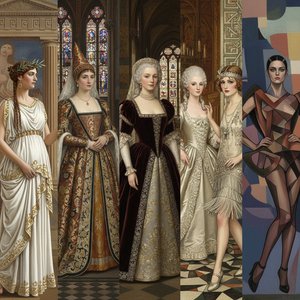
Style Through the Ages: Iconic Artworks That Defined the Evolution of Fashion Design
Explore the breathtaking intersection of fine art and high fashion. Discover how iconic masterpieces from Art Deco to Impressionism have shaped the world of luxury couture and timeless design in this curated visual journey.

Style on Canvas: The Timeless Allure of Fashion Illustration Artworks
Discover the exquisite world of fashion illustration art. From Art Deco elegance to bespoke oil reproductions, explore how timeless sartorial beauty transforms luxury interiors through masterfully crafted canvas works and curated historical masterpieces.