작가 소개
The Enigmatic Master of Baroque Galicia: Johann Georg Pinsel
Johann Georg Pinsel, a name whispered with reverence among art historians and devout admirers alike, remains one of the most compelling yet elusive figures of 18th-century European sculpture. Active in Eastern Galicia – a region encompassing parts of modern-day Ukraine and Poland – Pinsel’s work embodies a unique fusion of Western Baroque exuberance and deeply felt religious emotion. His life, shrouded in historical ambiguity, adds to the mystique surrounding his breathtaking creations. Discovered relatively late by scholar Jan Bołoz Antoniewicz in 1923, Pinsel's story began to unfold through fragmented records and, most powerfully, through the astonishing artistry of his sculptures themselves. Born between 1715 and 1725, likely in Buchach, he left behind a legacy that continues to captivate and inspire, despite the scarcity of concrete biographical details. What we do know is pieced together from parish registers unearthed in 1993, revealing a marriage to Marianna Elżbieta née Majewska in 1751 and the birth of two sons, Bernard and Antoni.
Patronage, Collaboration, and Artistic Flourishing
Pinsel’s ascent as a sculptor was inextricably linked to the patronage of Mikołaj Bazyli Potocki, a wealthy Polish aristocrat with discerning taste. Settling in Buchach, Pinsel quickly established himself as a favored artist within Potocki's circle. This relationship provided him not only with financial security but also access to significant commissions that would define his career. Crucially, Pinsel was not working in isolation. His close collaboration with architect Bernard Meretyn proved pivotal. Together, they formed a dynamic artistic partnership, transforming the architectural and sculptural landscape of Galicia. Meretyn’s designs provided the framework for Pinsel's dramatic compositions, while Pinsel’s sculptures infused these spaces with an unparalleled sense of spiritual intensity. This synergy is particularly evident in projects like the Buchach Town Hall (1750s) and the Trinitarian Church (1756-1757), where architecture and sculpture coalesce into a unified expression of Baroque grandeur. He also mentored Maciej Polejowski, passing on his skills to another generation of sculptors.
A Distinctive Style: Emotion Carved in Wood
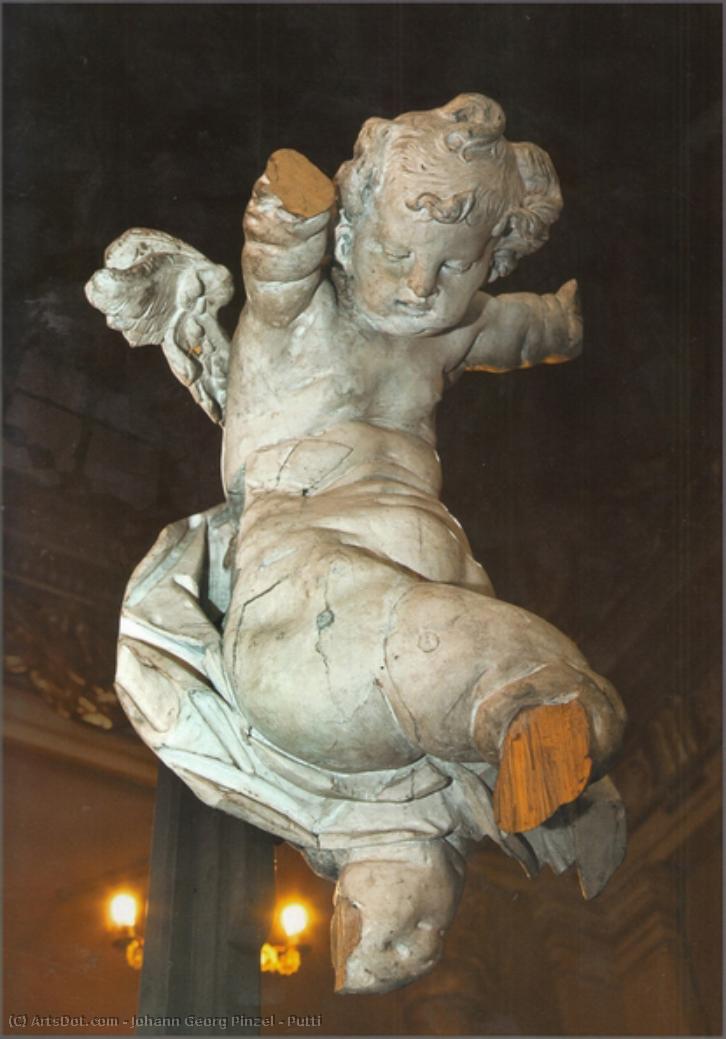
Pinsel’s sculptures are instantly recognizable for their extraordinary emotional depth and dynamic movement. Working primarily in limewood – a soft, easily carved wood – he possessed an exceptional ability to imbue his figures with life and pathos. Unlike the often-static representations prevalent in earlier Baroque art, Pinsel's characters writhe with anguish, ecstasy, or profound contemplation. His mastery of drapery is particularly noteworthy; flowing robes seem to defy gravity, accentuating the emotional turmoil within. The sculptures are not merely decorative elements but rather powerful vehicles for religious storytelling. Works like “Road to Emmaus” exemplify this characteristic intensity, capturing the moment of revelation with a raw and visceral energy. Another striking example is "Samson tearing the lion's mouth", where the dynamic struggle between man and beast is rendered with breathtaking realism and dramatic flair. The gilded surfaces and intricate detailing further enhance the sculptures’ opulent beauty, reflecting the Rococo aesthetic that flourished alongside Baroque traditions.
Themes of Faith and Historical Context
The vast majority of Pinsel's oeuvre revolves around religious themes, particularly scenes from the Bible and the lives of saints. His work reflects the strong Catholic faith prevalent in Eastern Galicia during the 18th century. However, his interpretations are far from conventional. He imbued traditional subjects with a uniquely personal vision, emphasizing human suffering, divine grace, and the complexities of spiritual experience. The political landscape of the Polish-Lithuanian Commonwealth also played a role in shaping Pinsel’s artistic environment. As a sculptor working under Polish patronage in a region marked by cultural diversity, he navigated a complex interplay of influences – blending Western European styles with local traditions and sensibilities. His sculptures served not only as expressions of religious devotion but also as symbols of aristocratic power and cultural identity.
Legacy and Enduring Significance
Despite his prolific output, Pinsel’s life ended relatively early, between September 16, 1761, and October 24, 1762, likely in Buchach. Tragically, many of his sculptural complexes suffered damage or destruction over the centuries due to war, neglect, and changing political circumstances. Nevertheless, a significant number of his works have survived, offering invaluable insights into his artistic genius. Today, Pinsel is celebrated as a key figure in Ukrainian cultural heritage – a master sculptor who bridged Eastern and Western European traditions. His sculptures continue to inspire awe and reverence, reminding us of the power of art to transcend time and evoke profound emotional responses. The rediscovery of his work has sparked renewed interest in Baroque sculpture and its enduring legacy, solidifying Pinsel’s place as one of the most important artists of the 18th century. His influence can be seen in subsequent generations of sculptors, and his unique style continues to captivate audiences worldwide.

 프린트 구매





 미리보기
미리보기
 공유하기
공유하기 공유하기
공유하기
 상세 정보
상세 정보

 다운로드
다운로드
 유사 작품
유사 작품 X-레이
X-레이 슬라이드 쇼

 더 보기
더 보기