

 실제 크기로 보기
 보내기
보내기 공유하기
공유하기
 상세 보기
상세 보기 가이드 보기

 이미지 다운로드
 유사 작품 더 보기
 X-레이
X-레이 슬라이드 쇼 보기
 통계 정보
통계 정보Sheep
 1835
1835 20.0 x 30.0 cm
 더 헤프워스 웨이크필드
 상세 보기
상세 보기
이 페이지에 표시된 작품은 저작권법의 보호를 받으며, 이에 따라 동일한 복제품을 제작하거나 판매하는 것은 법으로 금지되어 있습니다. 이러한 권리 보호는 다음과 같은 국제 협약에 따라 시행됩니다. 베른 협약 또한 다음에서 명시하는 법률을 포함한 국내법에 의해 보호됩니다. 미국 저작권법 제17조.
이 방식은 저작권 보호를 받는 예술 작품을 복제하거나 그대로 재현하는 것이 아니기에 저작권 규정을 완벽히 준수합니다. 대신, 이는 창의적인 재해석의 과정을 거칩니다. 즉, 원작에서 영감을 받되 원작과 동일하지 않은 새로운 회화 작품을 의미합니다.
지클레 / 아트 프린트
빠른 제작과 다양한 마감 옵션을 선택할 수 있는 박물관 수준의 지클레이 및 캔버스 프린트. ( 수작업 채색 복제본 주문하기 디지털 이미지 판매 채널로 전환)




































표준 규격
맞춤 제작
CM
INCH
작품의 원본 비율을 그대로 유지하는 프리셋 사이즈 중에서 선택해 보세요.
Loading sizes...

가로 너비
높이
액자나 벽면 크기에 맞춰 필요한 가로와 세로 길이를 입력해 주세요. 프린트는 원본 이미지보다 크게 제작할 수 없으며 오직 자르는 것만 가능하므로, 비율이 다른 사이즈를 선택할 경우 이미지의 일부가 잘려 나갈 수 있습니다. 인쇄 작업에 들어가기 전, 최종 확인을 위해 디지털 목업을 보내드립니다. 이 페이지에 표시된 이미지는 실제 잘리는 영역을 나타내지 않으며, 오직 목업을 통해서만 정확한 확인이 가능합니다.


 유리 옵션은 110cm 미만 크기에서만 선택 가능합니다.

Sheep
지클레 / 아트 프린트
복제본 규격
-


총 결제 금액
₩ 94169
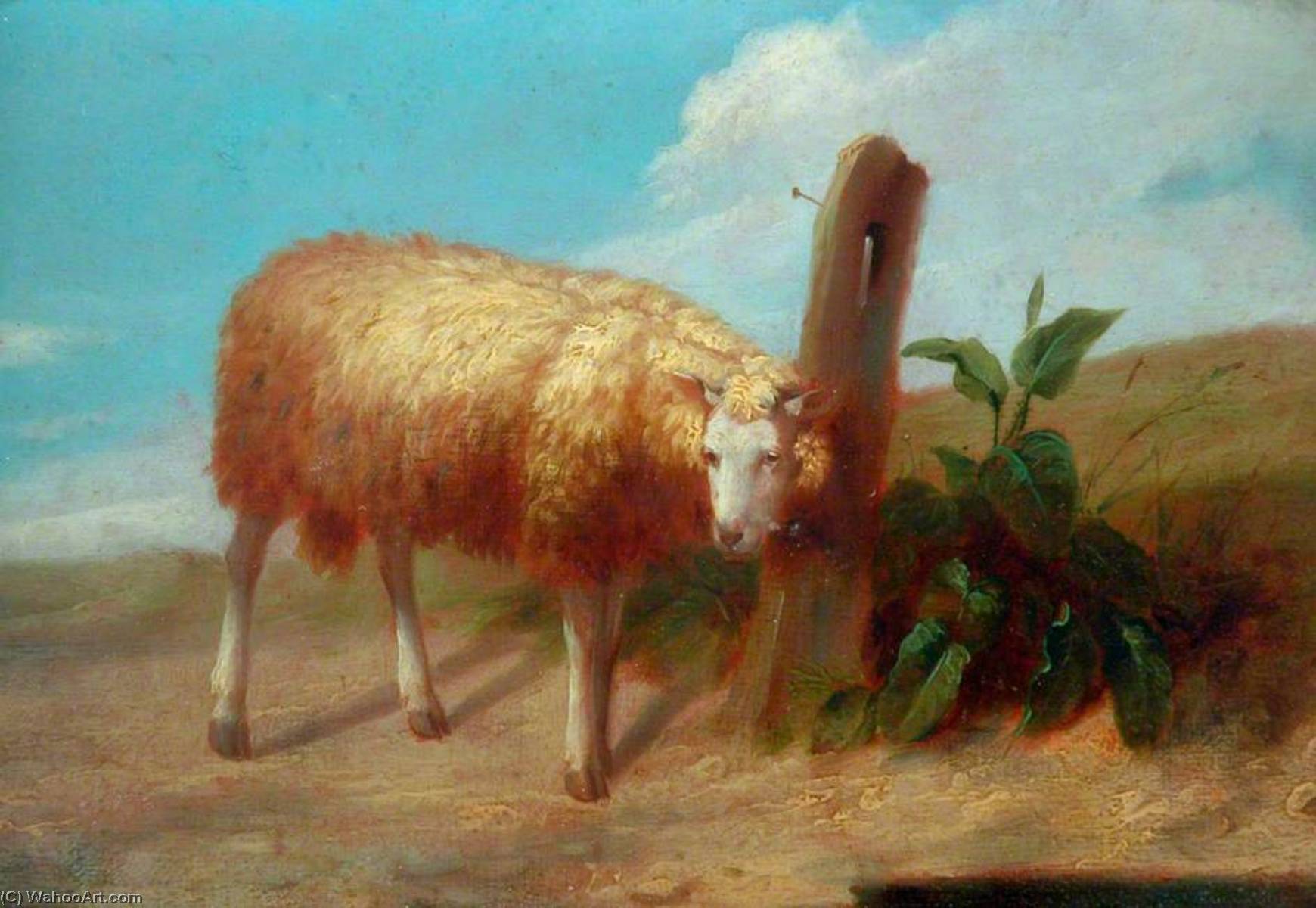
The painting Sheep by John N Rhodes is a masterpiece that showcases the artist's ability to capture the serene beauty of rural life. Created in 1835, this oil on canvas piece measures 20 x 30 cm and is currently housed at The Hepworth Wakefield museum in Wakefield, United Kingdom.
To discover more about the artist and his works, visit Discovering the Masterpieces of The Hepworth Wakefield Museum. For a deeper understanding of the art movement and style, explore the works of other artists like Percy Metcalfe on Percy Metcalfe.
A Glimpse into Rural Life
The painting depicts a sheep standing in front of a fence with its head through the bars, gazing at something on the other side. The sheep is beautifully rendered in brown and white colors, set against a backdrop of two trees, one behind the sheep and another further away. A person is partially visible near the top left corner of the painting, adding a sense of depth and human presence to the scene. Key Features of the painting include:- The use of warm colors to create a cozy atmosphere
- The delicate portrayal of the sheep's expression
- The subtle inclusion of human presence in the background
To discover more about the artist and his works, visit Discovering the Masterpieces of The Hepworth Wakefield Museum. For a deeper understanding of the art movement and style, explore the works of other artists like Percy Metcalfe on Percy Metcalfe.
질의응답
"Sheep"을(를) 전체 화면 슬라이드쇼로 감상할 수 있나요?
John N Rhodes의 "Sheep"은(는) 작품의 슬라이드쇼 페이지에서 슬라이드쇼로 감상하실 수 있습니다.
John N Rhodes의 "Sheep"의 휘도는 어느 정도인가요?
John N Rhodes의 "Sheep"의 휘도는 Gentle Luminance입니다. 휘도는 색상이 빛을 얼마나 반사하는지를 나타냅니다.
더 헤프워스 웨이크필드에 소장된 John N Rhodes의 "Sheep"를 법적으로 복제할 수 있습니까?
John N Rhodes의 "Sheep"의 저작권 상태는 명확합니다. 이 작품은 여전히 저작권의 보호를 받고 있습니다 상태이며, 더 헤프워스 웨이크필드에 소장되어 있다는 사실이 해당 상태를 변경하지 않습니다.
작가 소개
John N. Rhodes: A Yorkshire Painter of Light and Landscape
The name John N. Rhodes, though relatively obscure to modern eyes, represents a significant figure in 19th-century British landscape painting. Born in Bishop’s Stortford, Hertfordshire, in 1809, his life and artistic journey were deeply intertwined with the evolving aesthetic sensibilities of the Romantic era and the burgeoning fascination with the natural world. While not achieving widespread fame during his lifetime, Rhodes's meticulous observation and evocative depictions of the Yorkshire countryside – particularly its light-drenched landscapes and intimate scenes of rural life – have garnered renewed appreciation in recent decades. His work offers a poignant glimpse into a vanishing England, capturing both the grandeur and the quiet beauty of a rapidly changing world.
Rhodes’s early life was marked by a somewhat unconventional upbringing. Following his father's death, he spent much of his childhood with his mother’s unmarried sister, Sophia, at her estate in Sleaford, Lincolnshire. This period profoundly shaped his artistic sensibilities, fostering a deep connection to the rural landscape and an appreciation for the simple pleasures of country life. He received limited formal training, largely self-taught, yet he developed a remarkably refined technique characterized by subtle tonal variations, precise detail, and a masterful understanding of light and atmosphere. His style can be seen as a synthesis of influences – drawing upon the traditions of Dutch landscape painting (particularly the work of Jacob van Ruysdael) alongside the Romantic ideals championed by Turner and Constable.
A pivotal moment in Rhodes’s career occurred in 1842, when he tragically died at the young age of 33. His untimely death cut short a promising artistic trajectory, but his legacy endured through the publication of a comprehensive monograph featuring nineteen of his finest paintings. This meticulously compiled volume, published in 1904 by William Henry Thorp, served as both a memorial to Rhodes’s talent and a crucial contribution to the study of Victorian landscape painting. The book itself is a remarkable artifact, offering invaluable insights into the artist's methods, subject matter, and artistic intentions. It also highlights the importance of patronage and the role of art critics in shaping an artist’s reputation.
The Yorkshire Landscape: A Subject of Obsession
Rhodes’s artistic focus centered almost exclusively on the landscapes of Yorkshire – a region he clearly loved and intimately understood. He wasn't interested in grand, sweeping vistas; instead, he meticulously documented the subtle nuances of the local terrain, capturing the play of light on heather-covered hillsides, the reflections in still ponds, and the intimate details of rural dwellings. His paintings are imbued with a sense of quiet contemplation, inviting the viewer to slow down and appreciate the beauty of the everyday.
His subjects ranged from dramatic mountain scenes – often bathed in golden light – to more modest depictions of farmsteads, sheep pastures, and solitary figures engaged in rural activities. He frequently depicted scenes at dawn or dusk, when the light was most atmospheric and evocative. Rhodes’s ability to capture these fleeting moments of beauty is a testament to his keen observational skills and his deep understanding of color theory. His use of muted tones – predominantly browns, greens, and blues – created a sense of realism and authenticity, while subtle variations in hue conveyed the changing moods of the landscape.
Influences and Artistic Connections
While Rhodes largely worked independently, his artistic development was undoubtedly influenced by several key figures. The Dutch masters, particularly Jacob van Ruysdael, provided a foundational model for his technique – his careful attention to detail, his mastery of light and shadow, and his ability to create a sense of atmospheric depth. He also drew inspiration from the Romantic landscape painters of the early 19th century, such as Turner and Constable, who emphasized the emotional power of nature. However, Rhodes’s work retains a distinctively British sensibility – a quiet restraint and an understated elegance that set him apart from his more flamboyant contemporaries.
Furthermore, Rhodes's work reflects the broader cultural context of Victorian England. The period witnessed a growing interest in science, industry, and exploration, but also a renewed appreciation for the beauty and value of the natural world. Artists like Rhodes played a crucial role in shaping this shift in sensibility, documenting the changing landscape and reminding viewers of the importance of preserving its resources.
Legacy and Historical Significance
Despite his relatively obscure status during his lifetime, John N. Rhodes’s work has experienced a resurgence of interest in recent decades. His paintings are now recognized as important examples of Victorian landscape painting – offering valuable insights into the artistic sensibilities of the era. The publication of Thorp's monograph in 1904 played a crucial role in preserving and promoting Rhodes’s legacy, ensuring that his work would be remembered by future generations.
Moreover, Rhodes’s paintings provide a poignant reminder of a disappearing England – a time when rural life was simpler and more closely connected to the natural world. His meticulous depictions of the Yorkshire countryside evoke a sense of nostalgia for a bygone era, inviting us to reflect on the changing relationship between humans and nature. His work stands as a testament to the enduring power of landscape painting to capture both the beauty and the melancholy of the past.

John N Rhodes
1809 -
작가 정보 요약
- Artistic Movement Or Style: Romantic Landscape Painting
- Artists Or Movements Influenced By This Artist:
- Hudson River School
- Romanticism
- Artists Who Influenced This Artist:
- William Turner
- JMW Turner
- Date Of Birth: 1809
- Date Of Death: 1842
- Full Name: John N Rhodes
- Nationality: British
- Notable Artworks:
- Gypsy Encampment Painting
- Rhodesian Landscapes
- Lake District Scenes
- Place Of Birth: Bishop's Stortford, England