





























작품의 원본 비율을 유지하는 미리 설정된 크기 중에서 선택하세요.

특정 프레임이나 공간에 맞춰 직접 치수를 입력하실 수 있습니다. 선택하신 사이즈가 원본 이미지의 비율과 일치하지 않을 경우, 작품을 크롭(자르기)하거나 이미지를 대칭 또는 단색 채우기로 확장하여 제작합니다. 제작 시작 전, 최종 확인을 위해 디지털 목업이 전송됩니다.
화면상의 미리보기는 실제 크롭이나 확장 상태를 반영하지 않으므로, 최종 구도는 오직 목업을 통해서만 정확하게 확인하실 수 있습니다.
맞춤 사이즈 제작도 가능하지만, 원본 비율을 유지하기 위해서는 사전 정의된 목록에서 치수를 선택하시는 것을 권장합니다.

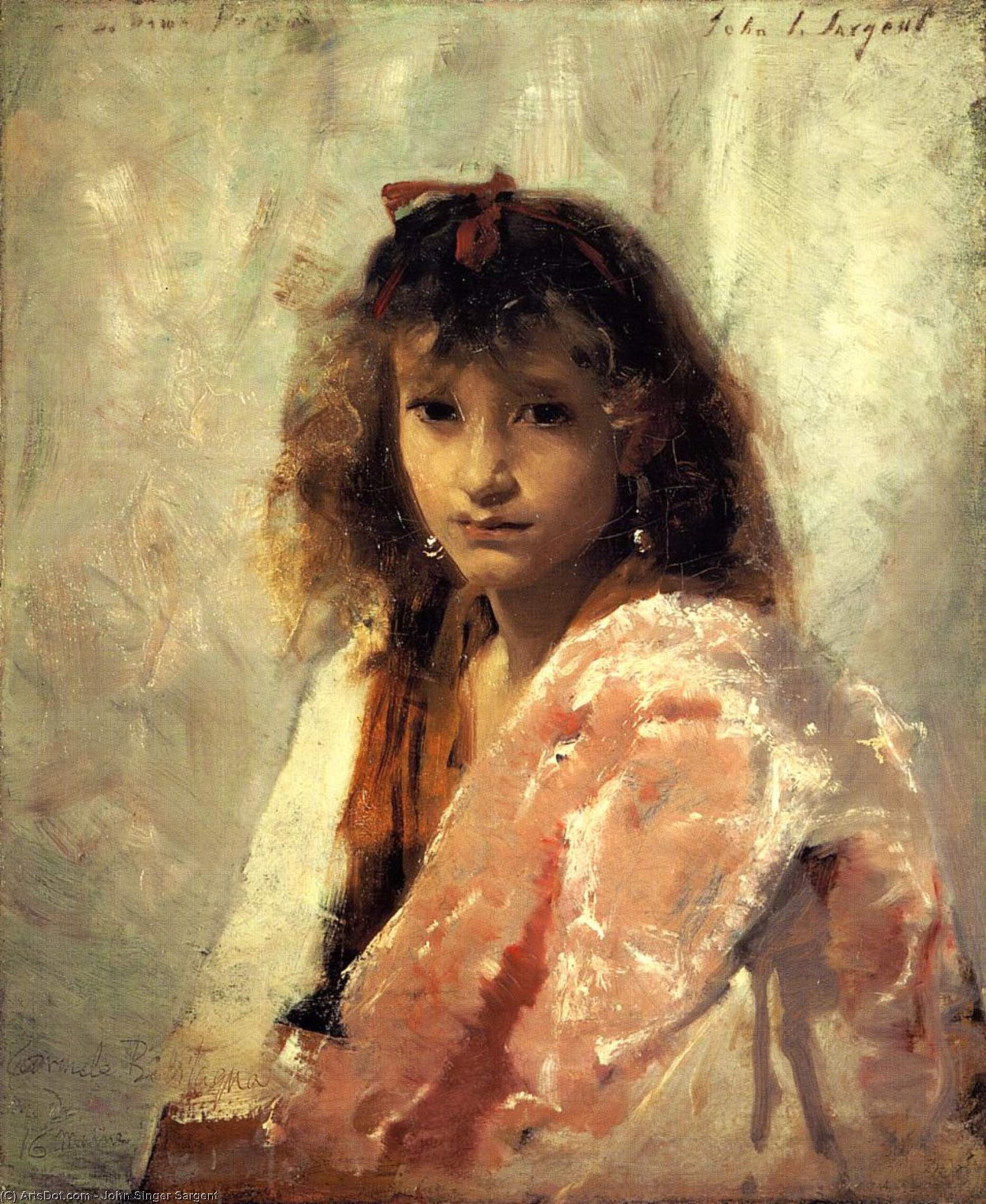
Carmela Bertagna
복제본 크기
John Singer Sargent's 1879 portrait, *Carmela Bertagna*, is more than just a likeness; it’s a carefully constructed tableau of Edwardian society, imbued with the artist’s signature blend of technical mastery and psychological insight. Housed within the Columbus Museum of Art, this oil on canvas offers a captivating glimpse into a world of refined elegance and subtle complexities, revealing Sargent's evolving artistic voice during a pivotal period in his career.
The painting immediately draws the eye to its subject – a young woman radiating quiet confidence. Dressed in a sumptuous pink gown, accented by a delicate bow at her throat, Carmela possesses an air of poised composure. Her gaze, directed just beyond the viewer’s frame, suggests a private thought or engagement, inviting us into her world without explicitly revealing it. The carefully arranged background – a simple chair and the suggestion of other figures – reinforces this sense of contained intimacy, typical of Sargent's portraiture which often depicted moments of social interaction rather than static poses.
Sargent’s technical skill is immediately apparent in *Carmela Bertagna*. His ability to render fabric with such luminous detail – the folds of the dress, the sheen of the silk – speaks to his meticulous observation and masterful brushwork. He employed a technique he termed “drawing with a brush,” meticulously building up layers of paint to achieve an almost photographic realism. However, this approach was not without its detractors; some critics found it overly polished, lacking the spontaneity of Impressionism. Yet, Sargent skillfully navigated between these stylistic influences, adhering to the conventions of the ‘Grand Manner’ while simultaneously injecting his own distinctive sensibility.
The subtle use of light and shadow further enhances the painting's dramatic effect. Light falls across Carmela’s face and dress, creating a sense of depth and volume. The darker tones in the background contribute to the overall mood, adding an element of mystery and intrigue. This careful manipulation of light is characteristic of Sargent’s approach, designed to capture not just the physical appearance of his subjects but also their inner character.
*Carmela Bertagna* was painted during a period of significant social change in Britain. The Edwardian era, marked by rapid industrialization and burgeoning wealth, saw a rise in portraiture as a means of solidifying status and demonstrating success. Sargent’s work reflects this trend, but he also subtly challenges its conventions. The painting's composition, with its implied narrative and the subject's averted gaze, hints at the unspoken complexities of Victorian society – particularly regarding social expectations for women.
Interestingly, a reevaluation of Sargent’s oeuvre in the late 20th century revealed deeper layers of meaning within his work. The discovery of previously hidden male nudes sparked a critical reassessment, revealing themes of unconventional friendships, same-sex interests, and a progressive engagement with emerging globalism. *Carmela Bertagna*, therefore, can be viewed as part of this broader narrative – a subtle yet powerful statement about artistic freedom and the exploration of human experience.
Beyond its historical context and technical brilliance, *Carmela Bertagna* possesses an undeniable emotional resonance. The painting’s quiet dignity, combined with Carmela's enigmatic expression, invites viewers to contemplate themes of beauty, grace, and the complexities of human relationships. It is a portrait that transcends its time, continuing to captivate audiences with its elegance and psychological depth. Its enduring appeal lies in Sargent’s ability to capture not just a likeness but also the very essence of his subject – a woman poised between social expectation and personal reflection.

1856 - 1925 , 이탈리아

존 싱어 사전트의 대표작 25선을 만나보세요. 인상주의 초상화부터 빛과 색채가 아름다운 유화까지, 그의 예술 세계를 탐험하고 TopImpressionists에서 고품질 아트 프린트로 거실 장식을 완성하세요. 지금 온라인 컬렉션을 확인하세요!

존 컨스터블 대표작 25선을 만나보세요. 영국 풍경화 거장의 자연주의 회화, 데담 밸리의 아름다움과 헤이 웨인의 정취를 담은 명화를 감상하세요. TopImpressionists에서 고품질 예술 작품 복제본을 소장하고 특별한 인테리어를 완성해보세요. 지금 바로 컬렉션을 탐험하세요!

Explore the life & art of John Singer Sargent, premier portraitist of the Gilded Age. Discover his Impressionistic masterpieces, technical brilliance, and enduring legacy. Expert insights for collectors.

Explore 10 iconic portrait paintings – from Mona Lisa to Van Gogh’s self-portraits. Discover the stories behind these masterpieces, artistic techniques & find museum-quality art reproductions for your home at TopImpressionists.com.

Explore 25 captivating portraits by Sir Joshua Reynolds, a master of British art. Discover stories behind his iconic paintings, elegant style & historical influence. Find museum-quality reproductions and elevate your home decor on TopImpressionists.com.


최신 미술 뉴스, 특별 혜택 및 인테리어 아이디어를 가장 먼저 만나보세요.
프로젝트에 대해 알려주시면 저희 미술 전문가들이 맞춤형 아트 제안 3가지를 전달해 드립니다.
당신만을 위한 맞춤형 옵션 3가지를 무료로 추천해 드립니다!

 Preview
 작품 구매하기
 공유하기
공유하기 공유하기
공유하기
 상세 정보
상세 정보

 다운로드
다운로드
 유사 작품
유사 작품 X-레이
X-레이 슬라이드 쇼


 더 보기
더 보기









 유리 옵션은 110cm 미만 크기에서만 선택 가능합니다.


