

 미리보기
미리보기
 공유하기
공유하기 공유하기
공유하기
 상세 정보
상세 정보 가이드 보기

 다운로드
다운로드
 유사 작품 더 보기
 X-레이
X-레이 슬라이드 쇼 보기
 질의응답
질의응답 통계 정보
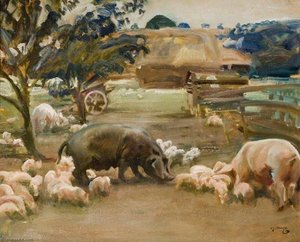
통계 정보Pigs

- 24.0 x 45.0 cm

Discover Joseph Crawhall (1861-1913), a British artist famed for his evocative animal & landscape watercolors. Explore his work influenced by Impressionism & the Glasgow Boys.
 더 보기
더 보기
웹 미리보기 화면을 훨씬 뛰어넘는 인쇄용 파일을 만나보세요. 저희가 판매하는 모든 디지털 이미지는 스톡 데이터베이스 내의 고해상도 마스터 파일(일반적으로 가로 5,000~15,000픽셀)을 기반으로 합니다. 따라서 대형 인쇄나 정밀한 크롭 작업 시에도 세밀한 디테일을 자신 있게 구현할 수 있습니다.
저희 스튜디오를 거치는 모든 파일은 정교한 손길을 거칩니다. 디지털 전문가가 원작과 대조하여 색상을 점검하고 필요 시 보정하며, 전문 리터칭 도구를 사용하여 선명도와 디테일을 높입니다. 이 과정에서 작가의 붓 터치와 화풍을 충실히 유지하는 것을 원칙으로 합니다. 그 결과, 단순한 스캔본에 필터를 입힌 듯한 느낌이 아닌, 마치 실제 회화 작품을 보는 듯한 이미지를 구현해냅니다.
최종 완료 전 확인 단계가 있습니다. 전문가가 검토하실 수 있도록 72시간 이내에 이미지를 이메일로 보내드립니다. 결과물이 만족스럽지 않으신가요? 수정이나 보완을 요청하시거나, 품질이 기대에 미치지 못할 경우 환불을 요청하실 수 있습니다.
출판사, 디자인 스튜디오, 갤러리 및 인쇄소가 신뢰하는 바로 그 품질입니다.
디지털 이미지
개인 소장 및 전시, 인쇄, 창작 프로젝트를 위한 고해상도 파일을 다운로드하세요. ( 프린트 판매로 전환 수작업 채색 복제본 주문하기)
모든 디지털 이미지 주문 시 포함되는 혜택
전문적인 디지털 이미지 전송 보장
TopImpressionists.com를 선택하시면 단순히 이미지를 받는 것을 넘어, 정밀한 보정 과정을 거쳐 완성된 전문적인 디지털 예술 작품을 만나보실 수 있습니다. 모든 주문에는 만족 보장 서비스가 포함되어 있으며, 다음과 같은 사항들이 자동으로 제공됩니다:

빠른 이메일 전송
주문 후 72시간 이내에 고해상도 디지털 이미지 파일이 이메일로 발송되며, 즉시 사용하실 수 있습니다.

AI 기술로 최적화된 디지털 파일
귀하의 작품은 첨단 AI 기술과 정교한 수동 편집 과정을 거쳐 전문적으로 최적화되며, 이를 통해 디테일과 선명도, 색상의 정확도를 극대화합니다.

평생 무료 재전송 서비스
파일을 실수로 삭제하거나 분실하셨나요? 걱정 마세요. 언제든 무료로 다시 보내드립니다.

추가 수입 비용 없음 - 언제나
관세, 부가세, 배송비 부담 없이 작품을 즉시 소장하세요 - 디지털 다운로드는 언제나 면세 혜택이 적용됩니다.

정확한 색상 보장
전문적인 도구와 색상 관리 시스템을 통해 디지털 이미지가 원본의 색상을 최대한 정확하게 구현하도록 보장합니다.

100일 만족 보장제
구매하신 디지털 이미지에 만족하지 못하실 경우, 100일 이내에 별도의 조건 없이 수정 또는 100% 환불을 진행해 드립니다.

100% 환불 보장
만족스럽지 않으신가요? 디지털 파일을 받으신 후 100일 이내라면 어떤 이유로든 조건 없이 전액 환불해 드립니다.

대량 주문 할인
이미지 3매 구매 시 10% 할인 - 5매 구매 시 15% 할인 - 10매 이상 구매 시 20% 할인. 크리에이티브 프로젝트, 갤러리, 에이전시에 매우 유용합니다.
유사한 작품들




작가 소개
Joseph Crawhall (1861-1913): A Master of Animal and Landscape Watercolor
Born in Morpeth, Northumberland, in 1861, Joseph Crawhall III was a British artist whose evocative watercolors captured the essence of both animal and landscape subjects. Though often overlooked during his lifetime, particularly within the established art world, Crawhall’s work now stands as a testament to his unique vision and technical skill—a captivating blend of Impressionistic influence, Japanese aesthetics, and an intimate understanding of the natural world.
His early life was steeped in artistic tradition. He was the son of Joseph Crawhall II, a ropemaker, author, and watercolor painter himself, and Margaret Boyd. This familial connection provided a fertile ground for his own artistic development, though he deliberately distanced himself from his father’s more traditional approach, forging his own distinctive style. Crawhall received formal training at King's College London before embarking on a crucial period of artistic immersion in Paris under the tutelage of Aimé Morot in 1882. This Parisian experience exposed him to the vibrant currents of Impressionism, profoundly shaping his palette and technique – though he ultimately moved beyond strict adherence to the movement.
The Glasgow Boys and Early Influences
Crawhall’s name became inextricably linked with the “Glasgow Boys” in the 1880s and 1890s. This group of young Scottish artists, including Arthur Melville, Robert Penrose, and James Guthrie, challenged the conservative norms of the Royal Scottish Academy through their bold use of color, loose brushwork, and unconventional subject matter. While Crawhall wasn’t formally a member, his work shared many characteristics with theirs—a rejection of academic conventions and an embrace of capturing fleeting moments of light and atmosphere. The influence of Japanese art was also significant during this period, evident in the flattened perspectives and simplified forms often found in his compositions.
However, Crawhall’s artistic journey took a fascinating turn in 1887/88 when he traveled to Tangier with Pollock Nisbet, Robert Alexander, and Edwin Robert. This Moroccan sojourn proved transformative. Disillusioned with oil painting's demands, he transitioned to watercolors, adopting a lighter palette and focusing on capturing the vibrant colors and atmospheric conditions of North Africa and Spain. The experience profoundly impacted his style, leading him to prioritize spontaneity and direct observation – a shift that would define much of his later work.
A Distinctive Style: Animals and Landscapes
Crawhall’s paintings are immediately recognizable for their remarkable ability to convey the essence of animal movement and emotion. He possessed an extraordinary gift for capturing the subtle nuances of posture, expression, and texture—whether it was a proud stallion galloping across open fields or a delicate bird perched on a branch. His subjects weren't merely depicted; they were imbued with life and personality.
Alongside his animal paintings, Crawhall excelled at rendering landscapes, often infused with the same sensitivity and attention to detail. He frequently painted scenes of Northumberland’s rugged terrain, capturing the interplay of light and shadow across rolling hills and dramatic coastlines. His compositions are characterized by a sense of tranquility and connection to nature—a reflection of his own deep appreciation for the natural world.
Legacy and Recognition
Despite facing initial rejection from established art institutions like the Royal Scottish Academy, Crawhall’s work gradually gained recognition in the early 20th century. His paintings are now held by prestigious collections such as the Kelvingrove Art Gallery and Museum in Glasgow and the Burrell Collection in Edinburgh. His dedication to preserving his own artistic vision is evident in the fact that he reportedly destroyed many works he deemed unsatisfactory, leaving a relatively small but highly valued body of work.
A portrait by Walter Westley Russell offers a glimpse into Crawhall’s personality and character. His legacy endures as a significant figure in British watercolor painting—an artist who defied convention, embraced innovation, and created works that continue to captivate viewers with their beauty, sensitivity, and profound connection to the natural world.

Joseph Crawhall
1861 - 1913 , 영국