

 미리보기
미리보기
 공유하기
공유하기 공유하기
공유하기
 상세 정보
상세 정보 가이드 보기

 다운로드
다운로드
 유사 작품 더 보기
 X-레이
X-레이 슬라이드 쇼 보기
 질의응답
질의응답 통계 정보
통계 정보Unknown

- 50.0 x 61.0 cm


Delve into Cubist brilliance with Juan Gris’s ‘Unknown,’ a Stockholm Moderna Museum treasure. Explore geometric forms and balanced composition inspired by Picasso & Kirchner – reproduced authentically on TopImpressionists.
 더 보기
더 보기
후안 그리(1887-1927)는 스페인의 대표적인 입체주의 화가입니다! 기하학적 스타일, 종합 입체주의와 현대 미술에 대한 지속적인 영향력을 발견해보세요. 작품을 감상하세요.
지클레 / 아트 프린트
빠른 제작과 다양한 마감 옵션을 제공하는 박물관 수준의 지클레이 및 캔버스 프린트. ( 수작업 채색 복제본 주문하기 디지털 이미지로 전환)




P118B ₩10

P118H ₩10

P118W ₩10

P438Z ₩10

P508JH ₩12

P508YH ₩12

P805H ₩10

P805Z ₩10

P919BZ ₩10

P919G ₩10

P919XJ ₩10

P959ZH ₩10

P968JZ ₩12

W106C ₩8

W218G ₩10

W218JH ₩8

W218Y ₩10

W307PJ ₩10

W316G ₩10

W316PJ ₩8

W316Y ₩10

W398PJ ₩8

W4111J ₩10

W500HY ₩15

W500JH ₩15

W692G ₩12

W849H ₩8

W940BG ₩15

W953PJ ₩8




표준 규격
맞춤형
CM
INCH
작품의 원본 비율을 그대로 유지하는 프리셋 사이즈 중에서 선택해 보세요.
Loading sizes...

가로 너비
세로 길이
액자나 벽면 크기에 맞춰 필요한 가로와 세로 길이를 입력해 주세요. 프린트는 원본 이미지보다 크게 제작할 수 없으며 오직 자르는 것만 가능하므로, 비율이 다른 사이즈를 선택할 경우 이미지의 일부가 잘려 나갈 수 있습니다. 인쇄 작업에 들어가기 전, 최종 확인을 위해 디지털 목업을 보내드립니다. 이 페이지에 표시된 이미지는 실제 잘리는 영역을 나타내지 않으며, 오직 목업을 통해서만 정확한 확인이 가능합니다.


 유리 옵션은 110cm 미만 크기에서만 선택 가능합니다.

Unknown
지클레 / 아트 프린트
복제본 크기
-


최종 결제 금액
₩ 93918
A Geometric Symphony of Modernity
In the quiet corners of Stockholm’s Moderna Museum resides a masterpiece that captures the very essence of a world in transition. Juan Gris’s 1916 work, often referred to as Unknown, is far more than a simple arrangement of objects; it is a profound meditation on the fractured nature of modern perception. At first glance, the viewer is greeted by a deceptively tranquil still life: a bottle of wine containing a deep red liquid, a solitary cup, and two books resting upon a table. Yet, as one lingers before the canvas, the stillness dissolves into a rhythmic dance of planes and edges. This is the hallmark of Synthetic Cubism, where Gris does not merely depict reality but reconstructs it through a sophisticated lens of geometric abstraction.
The composition is a masterclass in balance and structural tension. Eschewing the traditional vanishing points that had governed Western art since the Renaissance, Gris employs a technique of overlapping forms and intersecting lines to create a sense of depth that feels both shallow and infinite. The bottle, the cup, and the books are dissected into cylinders and cubes, subtly rearranged to challenge the eye. This deliberate fragmentation serves as a poignant metaphor for the anxieties of early 20th-century Europe—a period where old certainities were being dismantled by the rapid onset of industrialization and the looming shadows of global conflict.
The Architect of Color and Form
Gris’s approach to this piece reveals his unique intellectual lineage. While often overshadowed by the monumental presence of Pablo Picasso, Gris brought an almost mathematical precision to the Cubist movement, likely a remnant of his early training in engineering. In Unknown, every stroke feels calculated to contribute to a larger, cohesive architecture. The interplay between the solid weight of the books and the translucent suggestion of the wine bottle creates a tactile experience for the viewer. There is a rhythmic quality to the way light seems to catch certain edges while others recede into shadow, guiding the eye in a continuous loop around the central tableau.
For the discerning collector or interior designer, this artwork offers a sophisticated focal point that bridges the gap between historical significance and contemporary elegance. The muted yet purposeful palette allows the piece to integrate seamlessly into modern, minimalist environments, providing a sense of intellectual depth without overwhelming the surrounding space. To possess a high-quality reproduction of this work is to invite a conversation about the nature of sight itself—a reminder that beauty often lies in the way we choose to reassemble the broken pieces of our world.
Ultimately, Unknown remains an evocative testament to the power of transformation. It invites us to look past the surface of everyday objects and find the complex, beautiful structures hidden within. Whether viewed as a historical landmark of the Cubist era or as a striking decorative element for a curated home, Gris’s vision continues to resonate, offering a timeless window into the soul of modern art.
질의응답
"Unknown"의 Cubist Composition 양식에는 어떤 정서적 어조가 담겨 있나요?
"Unknown"의 Reflective한 정서는 Cubist Composition 양식과 조화를 이룹니다.
후안 그리스의 "Unknown"의 저작권 상태는 어떻게 되나요?
"Unknown"의 저작권 상태(퍼블릭 도메인 - 저작권 보호 기간이 만료되었습니다)는 작가의 1927년 사망 시점을 기준으로 결정됩니다.
"Unknown"은(는) 어떤 화풍에 속하나요?
후안 그리스의 "Unknown"은(는) Cubist Composition 사조에 속하며, 이 사조는 해당 작품의 양식적 배경을 잘 보여줍니다.
작가 정보
마드리드의 비전을 담은 쿠비즘의 선구자: 후안 그리스의 삶과 예술
1887년 마드리드에서 호세 빅토리아노 곤살레스-페레즈라는 이름으로 태어난 이 예술가는 후에 후안 그리스로 알려지게 되며, 20세기 초 미술계의 가장 중요한 인물 중 한 명으로 자리매김했습니다. 그의 초기 여정은 즉각적으로 캔버스와 브러시로 향하는 길은 아니었습니다. 그는 마드리드 예술과학학교에서 공학을 공부하며 나중에 그의 예술적 접근 방식에 심오한 영향을 미칠 분석적인 사고방식을 보여주었습니다. 이러한 형성기 동안에도 창의적인 불꽃이 타올랐습니다. 지역 잡지에 그림을 기고하면서 싹트는 시각적 재능을 암시했습니다. 1905년, 그는 새로운 정체성과 목적 의식을 반영하는 이름인 후안 그리스를 채택했고, 호세 모레노 카르보네로 아래에서 본격적인 회화 연구를 시작했습니다. 이것은 혁신적인 예술을 향한 중요한 전환점이었습니다.파리에서의 각성 그리고 쿠비즘의 수용
1906년은 역동적인 예술적 에너지로 맥동하는 도시인 파리로의 획기적인 이주를 목격했습니다. 그리스는 이 활기찬 환경에 몰입하여 앙리 마티스, 조르주 브라크, 페르낭 레제와 같은 저명한 인사들과 우정을 쌓았습니다. 그는 처음에 *L'Assiette au Beurre*와 같은 출판물을 위한 풍자적인 삽화를 제작하며 관찰력을 연마하고 날카로운 시각적 재치를 개발했습니다. 그러나 파블로 피카소의 자석과 같은 매력은 특히 영향력이 컸습니다. 1910년경, 그리스는 진지하게 회화에 전념하기 시작하여 캐리커처에서 떠오르는 쿠비즘의 언어로 전환했습니다. 이것은 단순한 모방이 아니었습니다. 그는 형태와 공간의 본질을 추출하고 새로운 시각적 질서를 추구하는 탐구를 시작했습니다. 그의 초기 실험은 전통적인 표현으로부터 의도적인 탈피를 특징으로 했으며, 현실의 근본적인 구조를 포착하기 위한 수단으로서 추상화를 받아들였습니다.지각의 기하학: 스타일과 주요 작품
후안 그리스의 예술적 산출물은 탁월한 명확성과 지적인 엄격함을 특징으로 합니다. 그는 단순히 물체를 해체했을 뿐만 아니라, 신중하게 고려된 팔레트를 강조하면서 의도적인 정밀함으로 재구성했습니다. 이러한 접근 방식은 *Still Life Before an Open Window*와 *Place Ravignan*(1915)과 같은 걸작에 의해 대표되는 그의 “수정기”로 이어졌습니다. 이 작품들은 평면과 각도의 놀라운 상호 작용을 보여주며, 기존의 관점 개념에 도전하면서 깊이와 견고함을 만들어냅니다. 1913년 이후, 그리스는 전적으로 합성 쿠비즘을 받아들여 *papier collé* – 콜라주 – 기술을 개척했습니다. 신문 조각과 질감이 있는 종이와 같은 실제 재료를 그의 구성에 통합했습니다. 이 기술은 그의 작품에 또 다른 복잡성과 촉각성을 더하여 회화와 조각 사이의 경계를 모호하게 만들었습니다. 주목할 만한 예로는 그의 단순화된 형태와 쿠비즘 원칙에 대한 헌신을 증명하는 *Guitar in front of the sea*(1925)와 아방가르드 미술계에서 그의 인지도가 높아짐을 알리는 *Homage à Pablo Picasso*(1912)가 있습니다.유산과 지속적인 영향
후안 그리스의 쿠비즘에 대한 기여는 단순한 스타일 혁신을 넘어섭니다. 그는 운동에 독특한 지적 깊이와 구조적 명확성을 가져왔습니다. 그는 분석 단계에서 벗어나 질서와 정밀함을 강조하는 보다 조직적이고 합성적인 접근 방식으로 나아갔습니다. 그의 작품은 고전적인 형태와 구성을 되돌리기를 옹호한 아메데 오젠팡과 샤를 에두아르 제네레(르 코르뷔지에)가 주창한 순수주의 스타일에 심오한 영향을 미쳤습니다. 그리스의 기하학적 형태, 조화로운 색상 팔레트 및 일상적인 물체를 그의 예술에 통합하는 데 대한 강조는 그를 20세기 미술의 중요한 인물로 확립했습니다. 그의 유산은 오늘날에도 예술가들에게 영감을 주고 있으며, 쿠비즘의 지속적인 힘과 지각과 표현을 재정의한 스페인 거장의 비전을 증명하고 있습니다.
후안 그리스
1887 - 1927 , 스페인
작가 정보 요약
- Artistic Movement Or Style: 입체주의, 종합 입체주의
- Artists Or Movements Influenced By This Artist:
- 정밀주의
- 아메데 오젠팡
- 르 코르뷔지에
- Artists Who Influenced This Artist:
- 파블로 피카소
- 앙리 마티스
- 조르주 브라크
- Date Of Birth: 1887년 3월 23일
- Date Of Death: 1927년 5월 11일
- Full Name: 호세 빅토리아노 곤살레스-페레즈
- Nationality: 스페인 국적
- Notable Artworks (List Of Titles):
- 기타 앞의 바다
- 피카소에게 보내는 헌사
- 곡물 장수
- 조제트 그리 부인의 초상
- Place Of Birth (City And Country): 마드리드, 스페인
관련 콘텐츠

Pablo Picasso: A Revolutionary Vision – Cubism, Symbolism & Enduring Legacy
Explore the revolutionary art of Pablo Picasso with TopImpressionists.com. Discover Cubism's origins, symbolism in his masterpieces & investment insights for collectors. Expert appraisal & custom reproductions available.
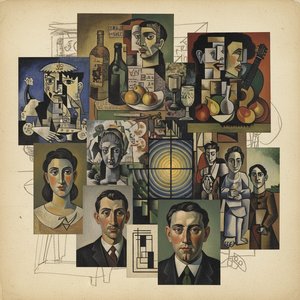
Cubism's Revolution: 10 Masterpieces That Redefined Modern Art | TopImpressionists
Explore 10 Cubist masterpieces by Picasso, Braque & more! Delve into the history of this revolutionary art movement. Find museum-quality reproductions and elevate your home decor with TopImpressionists. Discover all masterpieces on TopImpressionists.com

Juan Gris: Cubist Deconstruction & Synthesis – A Comprehensive Exploration
Explore the revolutionary art of Juan Gris – a master of Cubism. Discover his unique approach to deconstruction, vibrant Synthetic Cubist works, and lasting influence on modern art. Expert analysis for collectors.

Deconstructing Reality: Cubism's Revolutionary Impact on 20th-Century Art
Explore the revolutionary world of Cubism with TopImpressionists. Discover Picasso & Braque's groundbreaking techniques, its philosophical roots, and lasting impact on modern art. Expert insights for collectors.

Deconstructing Identity: A Comprehensive Exploration of Cubist Portraiture
Explore the revolutionary world of Cubist portraiture with our comprehensive guide. Discover Picasso, Braque, Gris & the movement's impact on modern art. Expert analysis for collectors and enthusiasts.
테마, 스타일, 특징별로 분류된 작품들을 만나보세요.


