
빠른 제작과 다양한 마감 옵션을 제공하는 박물관 품질의 지클레이 또는 캔버스 프린트. ( 수제 페인팅으로 전환하기 이미지로 전환)
작품의 원본 비율을 유지하는 미리 설정된 크기 중에서 선택하세요.

특정 프레임이나 공간에 맞춰 직접 치수를 입력하실 수 있습니다. 선택하신 사이즈가 원본 이미지의 비율과 일치하지 않을 경우, 작품을 크롭(자르기)하거나 이미지를 대칭 또는 단색 채우기로 확장하여 제작합니다. 제작 시작 전, 최종 확인을 위해 디지털 목업이 전송됩니다.
화면상의 미리보기는 실제 크롭이나 확장 상태를 반영하지 않으므로, 최종 구도는 오직 목업을 통해서만 정확하게 확인하실 수 있습니다.
맞춤 사이즈 제작도 가능하지만, 원본 비율을 유지하기 위해서는 사전 정의된 목록에서 치수를 선택하시는 것을 권장합니다.

Suprematic elements
복제본 크기
Kazimir Malevich's "Suprematic Elements," painted in 1917, isn’t merely a depiction of geometric forms; it’s a profound statement about the very nature of art and human perception. Born in Kyiv Oblast, Ukraine, in 1878, Malevich embarked on a revolutionary artistic journey that would forever alter the landscape of 20th-century art. His early explorations encompassed Impressionism, Symbolism, and Cubism, but it was his encounter with the burgeoning avant-garde movements of Europe – particularly in Paris – that ignited his desire to strip away representational imagery and delve into the realm of pure feeling. “Suprematic Elements” stands as a pivotal example of this radical shift, embodying the core tenets of Suprematism: a movement dedicated to reducing art to its most fundamental geometric forms, divorced from any connection to the external world.
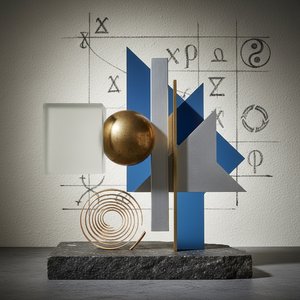
The photograph presented here captures a study in stark simplicity – a black and white composition dominated by circles and triangles arranged against a neutral background. The central element is a large circle, bisected by a smaller circle, creating an immediate visual hierarchy that draws the eye inward. Surrounding this core form are other geometric shapes—rectangles and triangles—that contribute to a dynamic yet balanced arrangement. Notice how these forms appear to float within the frame, lacking any conventional spatial relationships; they exist purely as elements of shape and color, devoid of illusionistic depth. This deliberate flattening of space is characteristic of Suprematism’s rejection of traditional perspective, prioritizing instead the inherent qualities of form itself.
Malevich's artistic philosophy centered on the belief that art should transcend objective representation and tap directly into the viewer’s emotional experience. He sought to create a “zero degree” of painting—a state where color and form are divorced from any reference to the external world, allowing pure feeling to emerge. "Suprematic Elements" exemplifies this pursuit. The monochromatic palette – shades of gray rendered in black and white photography – amplifies the impact of the shapes themselves. The precise lines defining each geometric element convey a sense of order and control, while subtle variations in tone suggest the artist’s hand—perhaps graphite or charcoal applied to paper. This tactile quality hints at the physicality of the original work, grounding its abstract concepts in a tangible reality.
While seemingly devoid of overt symbolism, “Suprematic Elements” invites contemplation on deeper meanings. The circles, often associated with wholeness, infinity, and the cosmos, could represent Malevich’s aspiration for a universal artistic language. Conversely, the triangles—symbols of dynamism, tension, and even spirituality—suggest an underlying energy within the composition. The interplay between these fundamental shapes creates a visual dialogue that transcends simple geometric arrangement. It's important to remember that Suprematism wasn’t about literal representation; it was about expressing pure feeling through the reduction of art to its most essential elements. The artist aimed to evoke a response in the viewer, prompting them to engage with the work on an emotional and intellectual level.
Created during a period of immense social and political upheaval—the aftermath of World War I and the rise of the Bolshevik Revolution—"Suprematic Elements" reflects the radical spirit of its time. Malevich’s artistic explorations aligned with broader cultural shifts, challenging established conventions and seeking to redefine the role of art in society. His work profoundly influenced subsequent movements, including Constructivism and De Stijl, demonstrating the lasting impact of his pioneering approach. Reproductions like this offer a window into a pivotal moment in art history, allowing us to appreciate Malevich’s revolutionary vision and its continuing relevance today. Consider how these fundamental geometric forms resonate within contemporary design—from minimalist architecture to graphic layouts—a testament to the enduring power of Suprematism.

1878 - 1935 , 우크라이나

Explore the evolution of geometric abstraction in art history, from Cubism to contemporary masters like Kandinsky & Rothko. Expert insights for discerning collectors and enthusiasts.

Explore the captivating history of geometric abstraction, from its revolutionary origins to contemporary masters. Expert insights for art collectors & investors. Discover key artists and build your collection with TopImpressionists.

카지미르 말레비치의 최고작 25선을 만나보세요. 추상 미술의 혁신적인 세계, 슈프레마티즘의 정수를 담은 작품들의 이야기와 영감을 TopImpressionists에서 경험하세요. 고품질 아트 프린트와 인테리어 데코 아이디어를 지금 바로 확인하세요! TopImpressionists.com

Explore the evolution of geometric abstraction from Cubism to contemporary art. Discover key artists like Malevich & Mondrian, investment insights, and expert collecting advice at TopImpressionists.
Explore the philosophical roots & artistic evolution of geometric abstraction with TopImpressionists. Discover Mondrian, Malevich, De Stijl & more. Expert insights for collectors and art enthusiasts.


최신 미술 뉴스, 특별 혜택 및 인테리어 아이디어를 가장 먼저 만나보세요.
프로젝트에 대해 알려주시면 저희 미술 전문가들이 맞춤형 아트 제안 3가지를 전달해 드립니다.
당신만을 위한 맞춤형 옵션 3가지를 무료로 추천해 드립니다!


 미리보기
미리보기
 공유하기
공유하기 공유하기
공유하기
 상세 정보
상세 정보

 다운로드
다운로드
 유사 작품
유사 작품 X-레이
X-레이 슬라이드 쇼

 더 보기
더 보기






































 유리 옵션은 110cm 미만 크기에서만 선택 가능합니다.


