
빠른 제작과 다양한 마감 옵션을 제공하는 박물관 품질의 지클레이 또는 캔버스 프린트. ( 손으로 그린 그림 구매 이미지 구매)
작품의 원본 비율을 유지하는 미리 설정된 크기 중에서 선택하세요.

특정 프레임이나 공간에 맞춰 직접 치수를 입력하실 수 있습니다. 선택하신 사이즈가 원본 이미지의 비율과 일치하지 않을 경우, 작품을 크롭(자르기)하거나 이미지를 대칭 또는 단색 채우기로 확장하여 제작합니다. 제작 시작 전, 최종 확인을 위해 디지털 목업이 전송됩니다.
화면상의 미리보기는 실제 크롭이나 확장 상태를 반영하지 않으므로, 최종 구도는 오직 목업을 통해서만 정확하게 확인하실 수 있습니다.
맞춤 사이즈 제작도 가능하지만, 원본 비율을 유지하기 위해서는 사전 정의된 목록에서 치수를 선택하시는 것을 권장합니다.

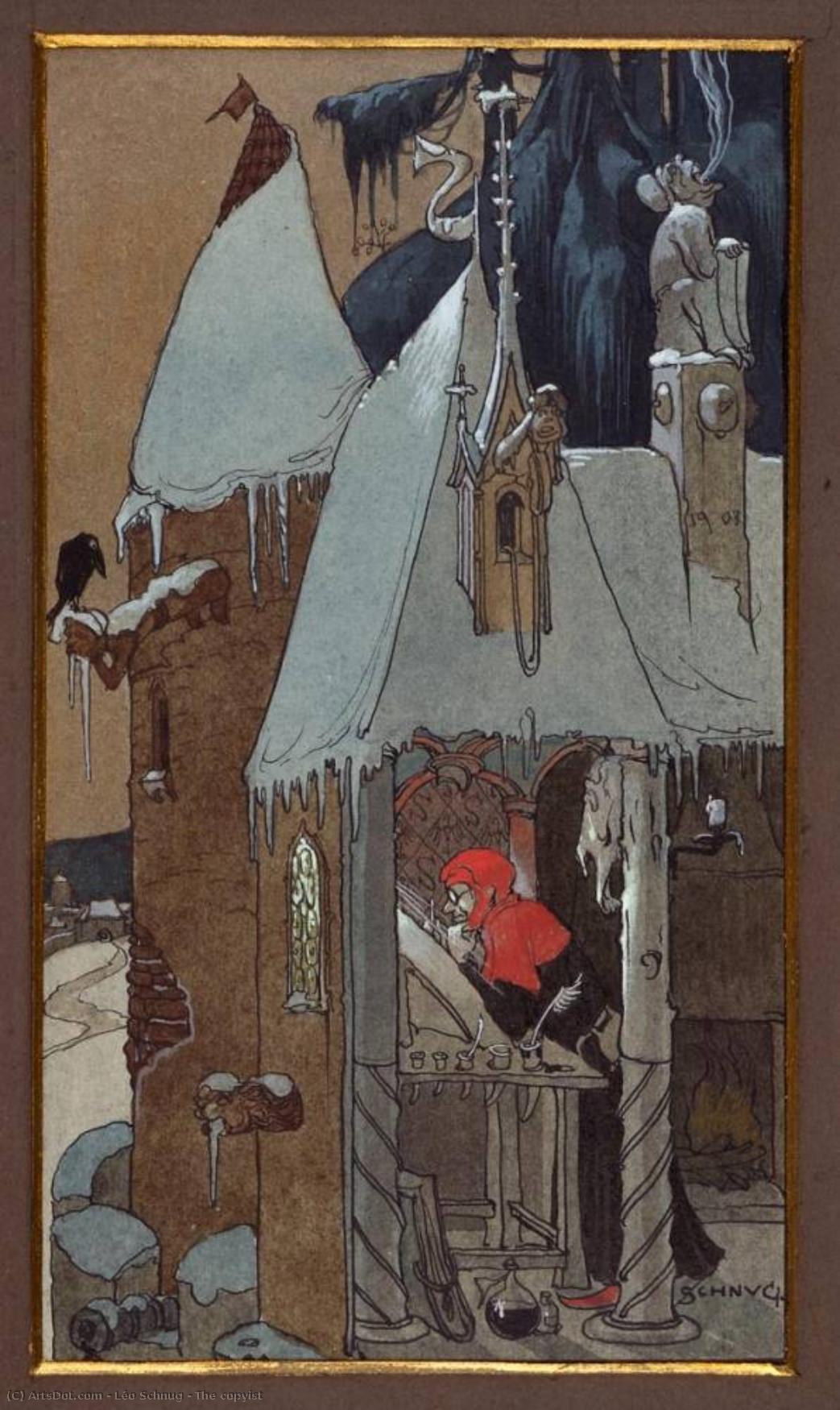
The copyist
복제본 크기
The life of Léo Schnug was a profound dialogue between the tangible struggles of history and the ethereal realms of imagination. Born in 1878 in Strasbourg, during a period when Alsace was transitioning under the shadow of the German Empire, Schnug’s very identity was forged in a landscape of shifting borders and cultural duality. His early years were marked by a poignant domestic reality; with his father hospitalized for mental illness, Schnug’s childhood home became a revolving door for performers from the local municipal theater. The vibrant, theatrical costumes that drifted through his halls provided an early, intoxicating glimpse into a world of drama and artifice, planting the seeds for a lifelong fascination with costume, character, and the storytelling power of visual art.
As he matured, Schnug’s artistic journey took him from the School of Decorative Arts in Strasbourg to the prestigious Academy of Fine Arts in Munich. Under the tutelage of masters like Nikolaos Gyzis, his technical prowess began to coalesce with a unique stylistic vision. He possessed a rare ability to marry the opulent, flowing ornamentation of the Art Nouveau movement—reminated by the works of Klimt and Mucha—with a deep, reverent obsession for the medieval and the Gothic. This synthesis allowed him to create works that felt simultaneously modern in their decorative elegance and ancient in their symbolic weight, often evoking the atmosphere of illuminated manuscripts or the intricate beauty of stained glass.
Schnug’s oeuvre is inseparable from the soil of Alsace. He was not merely a painter of scenes, but a chronicler of a regional soul. His involvement with the Cercle de Saint-Léonard and his studies in marquetry under Charles Spindler allowed him to explore texture and medium with a craftsman's precision. This dedication to detail is most evident in his depictions of Alsatian heritage, where he breathed life into local legends and historical motifs. His art often functioned as a bridge between the past and the present, utilizing Gothic aesthetics to celebrate a sense of continuity amidst the political upheavals of his era.
Beyond the regional, Schnug’s work reached toward the fantastical. He had an uncanny ability to conjure atmospheres that felt both haunting and heroic. His illustrations often featured:
The later years of Schnug’s life were shadowed by personal tragedy and the tumultuous tides of the early 20th century. The outbreak of World War I saw him serve as a sergeant in the German army, a period that brought both recognition through the Order of Merit and the deepening of personal struggles with mental health and substance use. This internal turbulence, much like the external conflicts of his homeland, infused his later works with a more somber, reflective quality. The brilliance of his decorative style was often tempered by a poignant sense of loss and an awareness of the fragility of existence.
Despite the hardships that eventually led to his death in 1933 near Brumath, Schnug’s historical significance remains undiminished. He stands as a pivotal figure in Alsatian art, a master who could navigate the delicate boundary between the decorative and the profound. His influence can be felt in the way he transformed historical motifs into living, breathing narratives, leaving behind a legacy that continues to captivate those drawn to the intersection of myth, history, and the human spirit.

1878 - 1933 , France


최신 미술 뉴스, 특별 혜택 및 인테리어 아이디어를 가장 먼저 만나보세요.
프로젝트에 대해 알려주시면 저희 미술 전문가들이 맞춤형 아트 제안 3가지를 전달해 드립니다.
당신만을 위한 맞춤형 옵션 3가지를 무료로 추천해 드립니다!

 미리보기
미리보기
 공유하기
공유하기 공유하기
공유하기
 상세 정보
상세 정보

 다운로드
다운로드
 유사 작품
유사 작품 X-레이
X-레이 슬라이드 쇼
 더 보기
더 보기






































 유리 옵션은 110cm 미만 크기에서만 선택 가능합니다.


