


 실제 크기로 보기
 보내기
보내기 공유하기
공유하기
 상세 보기
상세 보기 가이드 보기

 이미지 다운로드
 유사 작품 더 보기
 X-레이
X-레이 슬라이드 쇼 보기
 통계 정보
통계 정보Sun


A vibrant yellow sun with a whimsical face shines against a purple floral pattern in this captivating 1987 painting by Haitian master Levoy Exil, inviting you to bring the spirit of Saint Soleil into your collection.
 상세 보기
상세 보기
Discover Levoy Exil, a renowned Haitian artist & Saint Soleil movement contributor! Explore his mystical, pointillist paintings depicting Vodou, vibrant colors & abstract forms. Learn more!
이 페이지에 표시된 작품은 저작권법의 보호를 받으며, 이에 따라 동일한 복제품을 제작하거나 판매하는 것은 법으로 금지되어 있습니다. 이러한 권리 보호는 다음과 같은 국제 협약에 따라 시행됩니다. 베른 협약 또한 다음에서 명시하는 법률을 포함한 국내법에 의해 보호됩니다. 미국 저작권법 제17조.
저희는 존중을 담은 합법적인 대안으로서, 원작에서 영감을 받은 맞춤형 수제 유화 작품을 제공합니다. 저희의 숙련된 전문 화가들은 원작의 스타일, 분위기, 예술적 정수를 면밀히 연구하여, 그 자체로 독창적인 창작물이면서도 원작과 동일한 감동을 불러일으키는 새로운 작품을 만들어냅니다.
이 방식은 저작권 보호를 받는 예술 작품을 복제하거나 그대로 재현하는 것이 아니기에 저작권 규정을 완벽히 준수합니다. 대신, 이는 창의적인 재해석의 과정을 거칩니다. 즉, 원작에서 영감을 받되 원작과 동일하지 않은 새로운 회화 작품을 의미합니다.
핸드메이드 유화 복제화
작가가 직접 캔버스에 손으로 그린 유화 작품으로, 원하는 크기와 액자로 맞춤 제작해 드립니다. ( 프린트 판매로 전환 디지털 이미지 판매 채널로 전환)




P118B ₩10

P118H ₩10

P118W ₩10

P438Z ₩10

P508JH ₩12

P508YH ₩12

P805H ₩10

P805Z ₩10

P919BZ ₩10

P919G ₩10

P919XJ ₩10

P959ZH ₩10

P968JZ ₩12

W106C ₩8

W218G ₩10

W218JH ₩8

W218Y ₩10

W307PJ ₩10

W316G ₩10

W316PJ ₩8

W316Y ₩10

W398PJ ₩8

W4111J ₩10

W500HY ₩15

W500JH ₩15

W692G ₩12

W849H ₩8

W940BG ₩15

W953PJ ₩8




표준 규격
맞춤 제작
CM
INCH
작품의 원본 비율을 그대로 유지하는 프리셋 사이즈 중에서 선택해 보세요.
Loading sizes...

가로 너비
높이
액자나 벽면 크기에 맞춰 필요한 가로와 세로 길이를 입력해 주세요. 본 작품은 수작업으로 제작되므로, 요청하신 비율에 따라 작가가 그림의 가장자리를 조금 더 넓게 그리거나 일부를 조정하여 작업할 수 있습니다. 작업 시작 전, 최종 확인을 위해 디지털 목업 이미지를 보내드립니다. 이 페이지에 표시된 이미지는 실제 결과물과 다를 수 있으며, 오직 목업 이미지만이 정확한 결과물을 보여줍니다.
변경 가능한 예시: 얼굴을 고객님의 사진으로 교체, 반려동물 추가(예: 고양이를 강아지로 변경), 배경에 숨겨진 메시지 삽입, 배경 풍경 또는 요소 변경 등
주문 완료 후 TopImpressionists.com 팀에서 상세 안내를 위해 고객님께 이메일을 보내드리며, 미리보기 시안을 함께 제공해 드립니다.
주문 완료 후 TopImpressionists.com 팀에서 상세 안내를 위해 고객님께 이메일을 보내드리며, 미리보기 시안을 함께 제공해 드립니다.


 유리 옵션은 110cm 미만 크기에서만 선택 가능합니다.

Sun
재현 매체
복제본 규격
-


총 결제 금액
₩ 369717
A Radiant Vision of Haitian Spirit
In the vibrant tapestry of Haitian contemporary art, few works capture the whimsical yet profound essence of the Saint Soleil movement quite like Levoy Exil’s Sun. Created in 1987, this masterpiece serves as a luminous window into a world where the celestial and the terrestrial dance in perfect harmony. The painting centers on a magnificent, golden sun, personified with a gentle, expressive face. With eyes of deep blue and a mouth that suggests a quiet, knowing smile, the sun becomes more than a mere astronomical body; it is a sentient deity, a guardian of light watching over the cosmos. This personification invites the viewer into an intimate dialogue with nature, transforming a cosmic phenomenon into a relatable, soulful companion.
The composition is a masterclass in color theory and rhythmic pattern. Surrounding the central solar figure is a mesmerizing backdrop of purple floral motifs, which provides a striking chromatic contrast to the brilliant yellows and golds of the sun. This interplay between warm and cool tones creates a visual vibration that feels alive with energy. Scattered throughout the canvas, smaller figures emerge like whispers from a dream, adding layers of mystery and narrative depth. These secondary characters, nestled within the intricate patterns, suggest a larger, populated universe where every element—from the smallest petal to the largest star—possesses its own spirit and story.
The Legacy of Saint Soleil and Vodou Symbolism
To truly appreciate Sun, one must understand the profound cultural currents that flowed through Levoy Exil’s brush. As a pivotal figure in the Saint Soleil movement, Exil utilized his canvas to translate the complex spiritualities of Haitian Vodou into a visual language accessible to the world. His work is deeply rooted in the concept of the Loas—the spirits that inhabit the natural world. In this painting, the sun acts as a symbol of vitality, clarity, and divine presence. The use of bright, saturated colors and flattened perspectives is not merely an aesthetic choice but a way to represent a spiritual reality where boundaries between the physical and the metaphysical are beautifully blurred.
Exil’s technique, characterized by a rhythmic application of color and a focus on symbolic forms, evokes a sense of primordial joy. The painting does not demand attention through aggression, but rather through its infectious warmth and the meticulous detail of its patterns. For collectors and interior designers, this piece offers a unique opportunity to introduce a sense of "luminous storytelling" into a space. Whether placed in a sun-drenched gallery or a sophisticated modern living room, a high-quality reproduction of this work brings with it an aura of peace, cultural richness, and an eternal summer that transcends time.
질의응답
"Sun"은(는) 어떤 화풍에 속하나요?
"Sun"은(는) Saint Soleil 양식의 작품입니다. 이 사조는 해당 작품이 속한 예술적 전통을 나타냅니다.
Levoy Exil은(는) 몇 세에 "Sun"을(를) 제작했을까요?
1987년에 "Sun"이(가) 제작되었을 당시, 1944년에 태어난 Levoy Exil의 나이는 43세였습니다.
Levoy Exil의 "Sun"의 원화는 어디에서 볼 수 있나요?
Levoy Exil의 "Sun"은(는) Haitian Art Society, Washington, D.C., United States of America에 전시되어 있습니다. 박물관 목록은 복제품이 아닌 원작을 기준으로 합니다.
작가 소개
A Visionary of Haitian Vodou Art
Levoy Exil stands as one of Haiti’s most distinctive artistic voices, a pivotal figure within the Saint Soleil movement and celebrated for his mesmerizing depictions of Vodou spirituality. Born in 1944 in Soisson-la-Montagne, Haiti, he embodies the spirit of Haitian folk art—a raw, emotive expression rooted in ancestral traditions and imbued with profound symbolism. His journey into painting began in 1972, coinciding with his immersion in the Saint Soleil workshops cofounded by Tiga and Maude Robart, a collaborative endeavor that profoundly shaped his artistic vision. Before finding his calling on the canvas, Exil worked as a mason, a background that perhaps informs the structural precision found within his vibrant, layered compositions.
Exil’s formative years were marked by exposure to Haitian culture and Vodou beliefs—a religion characterized by elaborate rituals, ancestor veneration, and communion with spirits known as Loas. These influences permeate his oeuvre, informing his stylistic choices and thematic preoccupations. Notably, he cites Prosper Pierre Louis, another Saint Soleil artist, as a significant inspiration, recognizing Pierre Louis’s masterful portrayals of Vodou Loas and their evocative use of color and form. The influence of African art traditions is palpable in Exil's approach—a deliberate harkening back to primal visual languages that prioritize intuition over rational representation. Interestingly, Exil has also expressed being haunted more by the memory of the Arawak Indians, the first inhabitants of Hispaniola, than by his African ancestry, often manifesting in figures with elongated limbs and almond-shaped eyes.
The Spirit of Saint Soleil
The Saint Soleil movement, established in the mountains above LaBoule, served as a crucible for artistic experimentation and spiritual exploration. Participants were provided with art materials without prior experience, fostering spontaneity and unlocking latent creative potential. This environment nurtured Exil’s distinctive style—characterized by Pointillism, where minuscule dots meticulously layered onto canvas reveal an image through chromatic diffusion. His canvases rarely exhibit unused portions of the surface, demonstrating a commitment to maximal visual impact. The movement gained international prestige following the visit of French novelist and art historian André Malraux in 1975. Malraux was so profoundly moved by the works emerging from this community that he dedicated a chapter of his final book, L'Intemporel, to Saint Soleil, famously describing it as the most striking experience of magic painting in the twentieth century.
As Exil’s technique matured, his work became a rhythmic dance of color and form. His paintings often feature:
- Symbolic Nature: Elements such as the sun, doves, and floral patterns that evoke both tranquility and cosmic energy.
- Spiritual Geometry: A complex network of grid-like lines and intense motifs that trap solar forms within a structured, mystical space.
- Chromatic Diffusion: The use of vibrant, saturated hues applied through delicate dots to create a sense of shimmering light.
Legacy and Artistic Significance
Beyond his early contributions to the original Saint Soleil group, Exil remained a vital force in Haitian art, later becoming one of the five members of Cinq Soleil, a group of artists that reformed in the late 1980s. His work continues to serve as a bridge between the earthly and the divine, translating the complex, often unseen world of Vodou into a visual language accessible to the global stage. Through his mastery of pointillist textures and his ability to weave together the histories of the Arawak and African peoples, Levoy Exil has secured his place as a master of Caribbean expressionism. His paintings are not merely images but are windows into a spiritual landscape where every dot of color serves as an invocation of the sacred.

Levoy Exil
1944 - , Haiti
작가 정보 요약
- Artistic Movement Or Style: Saint Soleil
- Artists Or Movements Influenced By This Artist: ['Pointillism']
- Artists Who Influenced This Artist: ['Prosper Pierre Louis']
- Date Of Birth: 1944
- Full Name: Levoy Exil
- Nationality: Haitian
- Notable Artworks:
- Dove with Squabs
- Country Wedding
- Place Of Birth: Soisson-la-Montagne, Haiti
관련 기사

구스타프 클림트 명작 25선: 황금빛 예술의 정수, 당신의 공간에 영감을 불어넣다
구스타프 클림트의 황홀한 명작 25선을 만나보세요. '키스'부터 '주디트'까지, 빈 분리주의를 대표하는 예술가의 삶과 작품 세계를 탐험합니다. 오스트리아 화가 클림트의 걸작으로 공간에 특별한 감성을 더하세요. TopImpressionists.com에서 고품질 유화 복제를 만나보세요.
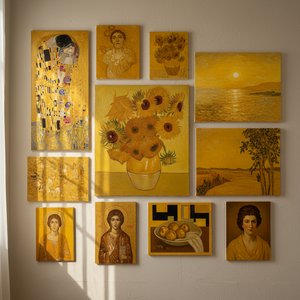
Golden Hues: Top 10 Paintings Dominated by Yellow Ochre |
Explore 10 iconic paintings bathed in golden yellow ochre! From Van Gogh's sunflowers to Monet’s haystacks, discover the stories behind these masterpieces. Find museum-quality art reproductions & elevate your home decor on .

Blossoms of Time: A Historical & Aesthetic Exploration of Floral Painting Across Cultures
Explore the rich history of floral painting! Discover symbolism, techniques & masterpieces from Van Huysum to O'Keeffe. Expert insights for art lovers & collectors at TopImpressionists.

The Golden Hue: Exploring Symbolism & Emotion in Yellow Art
Explore the rich symbolism & emotional power of yellow in art history! From Van Gogh to Kandinsky, discover how artists used this vibrant hue. Expert analysis & high-quality reproductions at TopImpressionists.
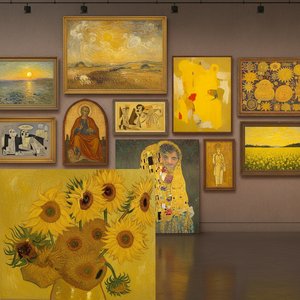
Golden Hues: 10 Masterpieces Dominated by Chrome Yellow | TopImpressionists
Immerse yourself in golden light! Explore 10 famous paintings dominated by 'Chrome Yellow', from Van Gogh’s Sunflowers to Monet's Haystacks. Discover the stories behind these iconic Impressionist & Post-Impressionist masterpieces and find museum-quality art reproductions at TopImpressionists.com.