

 미리보기
미리보기
 공유하기
공유하기 공유하기
공유하기
 상세 정보
상세 정보 가이드 보기

 다운로드
다운로드
 유사 작품 더 보기
 X-레이
X-레이 슬라이드 쇼 보기
 질의응답
질의응답 통계 정보
통계 정보A la gloire de Rubens


Explore 'A la gloire de Rubens' by Louis Beroud – a vibrant Baroque masterpiece inspired by Rubens! Capturing opulent revelry & sensual energy, this oil painting offers a glimpse into 19th-century Parisian art.
 더 보기
더 보기
루브르 박물관과 오페라 가르니에 등 파리의 실내 공간과 주요 랜드마크를 정교하게 묘사한 것으로 유명한 프랑스 화가 루이 베루드(1852-1930)의 작품 세계를 만나보세요.
웹 미리보기 화면을 훨씬 뛰어넘는 인쇄용 파일을 만나보세요. 저희가 판매하는 모든 디지털 이미지는 스톡 데이터베이스 내의 고해상도 마스터 파일(일반적으로 가로 5,000~15,000픽셀)을 기반으로 합니다. 따라서 대형 인쇄나 정밀한 크롭 작업 시에도 세밀한 디테일을 자신 있게 구현할 수 있습니다.
저희 스튜디오를 거치는 모든 파일은 정교한 손길을 거칩니다. 디지털 전문가가 원작과 대조하여 색상을 점검하고 필요 시 보정하며, 전문 리터칭 도구를 사용하여 선명도와 디테일을 높입니다. 이 과정에서 작가의 붓 터치와 화풍을 충실히 유지하는 것을 원칙으로 합니다. 그 결과, 단순한 스캔본에 필터를 입힌 듯한 느낌이 아닌, 마치 실제 회화 작품을 보는 듯한 이미지를 구현해냅니다.
최종 완료 전 확인 단계가 있습니다. 전문가가 검토하실 수 있도록 72시간 이내에 이미지를 이메일로 보내드립니다. 결과물이 만족스럽지 않으신가요? 수정이나 보완을 요청하시거나, 품질이 기대에 미치지 못할 경우 환불을 요청하실 수 있습니다.
출판사, 디자인 스튜디오, 갤러리 및 인쇄소가 신뢰하는 바로 그 품질입니다.
디지털 이미지
개인 소장 및 전시, 인쇄, 창작 프로젝트를 위한 고해상도 파일을 다운로드하세요. ( 프린트 판매로 전환 수작업 채색 복제본 주문하기)
모든 디지털 이미지 주문 시 포함되는 혜택
전문적인 디지털 이미지 전송 보장
TopImpressionists.com를 선택하시면 단순히 이미지를 받는 것을 넘어, 정밀한 보정 과정을 거쳐 완성된 전문적인 디지털 예술 작품을 만나보실 수 있습니다. 모든 주문에는 만족 보장 서비스가 포함되어 있으며, 다음과 같은 사항들이 자동으로 제공됩니다:

빠른 이메일 전송
주문 후 72시간 이내에 고해상도 디지털 이미지 파일이 이메일로 발송되며, 즉시 사용하실 수 있습니다.

AI 기술로 최적화된 디지털 파일
귀하의 작품은 첨단 AI 기술과 정교한 수동 편집 과정을 거쳐 전문적으로 최적화되며, 이를 통해 디테일과 선명도, 색상의 정확도를 극대화합니다.

평생 무료 재전송 서비스
파일을 실수로 삭제하거나 분실하셨나요? 걱정 마세요. 언제든 무료로 다시 보내드립니다.

추가 수입 비용 없음 - 언제나
관세, 부가세, 배송비 부담 없이 작품을 즉시 소장하세요 - 디지털 다운로드는 언제나 면세 혜택이 적용됩니다.

정확한 색상 보장
전문적인 도구와 색상 관리 시스템을 통해 디지털 이미지가 원본의 색상을 최대한 정확하게 구현하도록 보장합니다.

100일 만족 보장제
구매하신 디지털 이미지에 만족하지 못하실 경우, 100일 이내에 별도의 조건 없이 수정 또는 100% 환불을 진행해 드립니다.

100% 환불 보장
만족스럽지 않으신가요? 디지털 파일을 받으신 후 100일 이내라면 어떤 이유로든 조건 없이 전액 환불해 드립니다.

대량 주문 할인
이미지 3매 구매 시 10% 할인 - 5매 구매 시 15% 할인 - 10매 이상 구매 시 20% 할인. 크리에이티브 프로젝트, 갤러리, 에이전시에 매우 유용합니다.
À la gloire de Rubens – A Celebration of Baroque Grandeur
Louis Béroud’s “À la gloire de Rubens” is more than just a depiction of a painting; it's an embodiment of the artistic spirit of its time—the fervent embrace of academic tradition alongside a keen observation of modern life that characterized Parisian art in the early 20th century. Painted in 1905, this monumental canvas captures the atmosphere of the Louvre Museum during a period marked by significant cultural renewal and intellectual curiosity. The artwork’s subject matter is deceptively simple: a young woman diligently sketching “The Coronation” by Peter Paul Rubens from his celebrated Marie de Medici cycle—a masterpiece that embodies the Baroque ideal of dramatic grandeur and emotional intensity.- Composition & Style: Béroud adheres to the stylistic conventions of the École de Beaux-Arts, prioritizing clarity of form and meticulous detail. The scene unfolds within a richly ornamented interior space reminiscent of Rubens’s own studio, emphasizing architectural perspective and creating a sense of spatial depth. However, unlike Rubens's canvases which aim for idealized beauty, Béroud presents a realistic portrayal of artistic practice—a testament to the artist’s commitment to capturing the essence of his subject matter.
- Technique: Employing oil paint on canvas with visible brushstrokes, Béroud utilizes impasto – thick application of pigment – particularly noticeable in areas depicting drapery and skin tones. This technique lends texture and luminosity to the painting, mirroring the dramatic chiaroscuro employed by Rubens himself. The artist’s careful attention to light and shadow contributes significantly to the overall theatrical quality of the composition.
- Historical Context: Béroud's work emerged during a period of artistic debate following Impressionism’s dominance. Artists like Béroud sought to reaffirm classical principles while acknowledging the influence of contemporary life—a dynamic tension that reflects broader cultural shifts occurring in France at the time. The painting’s inclusion within the Louvre’s collection underscores its significance as an exemplar of academic art and a celebration of Rubens's legacy.
- Symbolism: The central figure, sketching “The Coronation,” symbolizes the dedication to artistic craft and the pursuit of excellence—values deeply ingrained in the Beaux-Arts tradition. The inclusion of Rubens’s monumental painting serves as a visual reminder of the Baroque aesthetic’s ambition to inspire awe and convey profound emotion.
- Emotional Impact: “À la gloire de Rubens” evokes a feeling of reverence for artistic heritage combined with an appreciation for meticulous observation. It invites viewers to contemplate the role of art in capturing beauty, conveying emotion, and preserving cultural memory—themes that resonate powerfully across generations.
Detailed Description & Artistic Considerations
The painting’s palette is dominated by muted earth tones – ochre, umber, Sienna – reflecting the subdued lighting of the Louvre’s galleries. Béroud skillfully renders textures with remarkable precision, capturing the folds of fabric and the subtle nuances of skin tone. The artist's meticulous brushwork contributes to a palpable sense of movement—suggesting the dynamism inherent in artistic creation itself. Careful attention is paid to architectural elements – moldings, arches – reinforcing the spatial illusion and enhancing the grandeur of the setting. Béroud’s masterful technique elevates the depiction beyond mere representation, transforming it into an evocative meditation on art history and artistic practice.Provenance & Acquisition
“À la gloire de Rubens” entered the Louvre's collection in 1993 as a bequest from Micheline Héblot (1930-1990), honoring her parents’ memory. The painting was originally exhibited at the Salon of Société des Artistes français in 1905 and subsequently reproduced as prints during that era. Its inclusion in Musée Carnavalet's permanent collection provides invaluable insight into Parisian artistic culture at the turn of the century.Further Research & Artistic Influences
Louis Béroud’s artistic trajectory was profoundly shaped by his training at the École Supérieure des Beaux-Arts, where he absorbed the precepts of classical art and technique. His unwavering devotion to realism combined with an artist's sensitivity distinguishes him as a pivotal figure in late 19th-century French painting—a legacy that continues to inspire artists today. References: Musée Carnavalet; Louvre éditions / Somogy, 2008, p. 149, coul. n°178; Bresc-Bautier, Geneviève ; Foucart, Jacques, « Le tableau du mois n° 9 : trois nouveaux tableaux pour l’histoire du Louvre : Louis Béroud, Henri Coroënne », Tableau du mois, 9, du 7 septembre au 3 octobre 1994, 1994, 1-4, p. 1-4, n&b, p. 1, B; Musée du Louvre, Département des Peintures; Bresc-Bautier, Geneviève ; Foucart, Jacques, « Le tableau du mois n° 9 : trois nouveaux tableaux pour l’histoire du Louvre : Louis Béroud, Henri Coroënne », Tableau du mois, 9, du 7 septembre au 3 octobre 1994, 1994, 1-4, p. 1-4, n&b, p. 1, B; Musée Carnavalet; Louvre éditions / Somogy, 2008, p. 149, coul. n°178; Musée du Louvre, Département des Peintures; Bresc-Bautier, Geneviève ; Foucart, Jacques, « Le tableau du mois n° 9 : trois nouveaux tableaux pour l’histoire du Louvre : Louis Béroud, Henri Coroënne », Tableau du mois, 9, du 7 septembre au 3 octobre 1994, 1994, 1-4, p. 1-4, n&b, p. 1, B; Musée Carnavalet; Louvre éditions / Somogy, 2008, p. 149, coul. n°178질의응답
루이 베루드의 "A la gloire de Rubens"은(는) 어떤 공간에 잘 어울릴까요?
루이 베루드의 "A la gloire de Rubens" 작품에 추천하는 공간은 Living Room입니다. 물론 이 제안은 고객님의 인테리어 스타일에 맞춰 자유롭게 조정하실 수 있습니다.
"A la gloire de Rubens"은(는) 어떤 공간에서 어떤 용도로 활용하기에 좋을까요?
루이 베루드의 "A la gloire de Rubens"에 대한 두 가지 추천 사항은 Accent 용도와 Living Room 공간입니다.
"A la gloire de Rubens" 프린트의 권장 용도는 무엇인가요?
"A la gloire de Rubens" 프린트의 권장 용도는 Accent입니다.
작가 소개
루이 베루드: 시대의 정신을 포착한 파리의 선지자
루이 베루드(1852-1930)는 19세기 후반과 20세기 초반 프랑스 미술계에서 독보적인 위치를 차지하는 인물로, 루브르 박물관과 오페라 가르니에 등 파리의 실내 공간과 주요 랜드마크를 정교하게 묘사한 작품들로 찬사를 받습니다. 프랑스 리옹에서 태어난 베루드의 예술적 여정은 인상주의의 영향력이 서서히 저물어가던 시대적 배경 속에서 펼쳐졌습니다. 그는 아카데믹 전통을 확고히 고수하면서도, 동시에 현대 삶에 대한 섬세하고 깊이 있는 이해를 작품에 담아냈습니다. 그의 캔버스는 웅장함과 세밀한 디테일, 그리고 심리적 관찰이 어우러진 세계를 보여주며, 이는 예술가로서의 감수성과 사실주의를 향한 흔들림 없는 집념이 결합된 결과물이라 할 수 있습니다.- 초기 생애와 예술적 훈련: 베루드는 파리의 에콜 데 보자르(École Supérieure des Beaux-Arts)에서 첫 예술 교육을 받으며, 구도와 기법의 고전적 원칙을 중시했던 영향력 있는 스승들 아래서 실력을 연마했습니다. 이 형성기는 그에게 전통에 대한 깊은 존경심을 심어주는 동시에, 다양한 주제와 양식을 탐구하게 만드는 탐구 정신을 길러주었습니다.
- 주요 작품과 예술적 스타일: 베루드의 작품 세계는 루브르와 오페라 가르니에를 그려낸 기념비적인 건축 묘사부터 파리 삶의 정수를 담은 친밀한 초상화에 이르기까지 놀라운 범위를 아우릅니다. 그의 회화는 세심한 디테일에 대한 집착, 빛과 그림자의 숙련된 사용, 그리고 탁월한 정확도로 분위기를 전달하는 능력이 특징입니다. 그는 아카데믹 사실주의와 표현력 있는 붓터치를 능숙하게 결합하여, 지적 엄격함과 정서적 깊이가 공존하는 이미지를 창조해냈습니다.
루브르의 사건: 초현실적인 유머의 순간
베루드의 가장 영원한 명성은 아마도 1911년 8월, 루브르 박물관을 방문했을 때 겪었던 잊지 못할 에피소드에서 비롯되었을 것입니다. 박물관 개관 100주년을 기념하는 작품의 영감을 얻기 위해 도착한 그는 '루브르의 모나리자'를 스케치하려 했으나, 레오나르도 다 빈치의 상징적인 초상화가 사라지고 그 자리에 벽에 고정되어 있던 네 개의 철제 못만이 남겨진 것을 발견했습니다. 이 기이한 상황은 걸작 도난 사건에 대한 조사로 이어졌으며 파리 시민들의 이목을 집중시으로 만들었습니다. 이 사건은 예술적 진본성을 둘러싼 불안감과 유서 깊은 기관에 침투하는 현대성의 충돌을 상징하는 사건이 되었습니다.- 박물관 의뢰와 예술적 인정: 베루드의 화가로서의 명성은 루브르 박물관을 포함한 저명한 문화 기관들의 수많은 의뢰 덕분에 상당한 추진력을 얻었습니다. 이러한 프로젝트들은 그가 거대한 규모로 자신의 재능을 선보일 기회를 제공했으며, 당대 프랑스를 대표하는 예술가 중 한 명으로서의 입지를 굳건히 해주었습니다.
- 영향력과 유산: 세밀한 사실주의와 심리적 통찰력을 특징으로 하는 베루드의 예술 양식은 후대 화가들, 특히 도시 삶의 복잡성을 포착하고자 했던 이들에게 영향을 미쳤습니다. 그의 작품들은 벨 에포크 시대 파리 사회에 대한 기술적 탁월함과 환기적인 묘사로 오늘날까지도 찬사를 받고 있으며, 프랑스 미술사에서 중추적인 인물로서 그의 유산을 공고히 하고 있습니다.
파리의 공간을 탐험하다: 웅장한 홀에서 고요한 구석까지
베루드의 예술적 초점은 기념비적인 건축물부터 일상적인 공간에 이르기까지 파리의 환경을 세밀하게 기록하는 데 맞춰져 있었습니다. 그는 오페라 가르니에와 루브르 같은 건축 공간의 웅장함을 숨 막히는 정밀함으로 포착했으며, 당시 아카데믹 화가들이 선호하던 기법을 사용했습니다. 동시에, 일상적인 루틴에 몰두하는 평범한 파리 시민들의 모습을 담은 친밀한 초상화와 장면들을 통해 일상의 미묘함을 탐구했습니다. 이러한 캔버스들은 급격한 산업화, 예술적 혁신, 그리고 현대성에 대한 열망이 고조되었던 벨 에포크 시대의 사회적, 문화적 풍경에 대한 귀중한 통찰을 제공합니다.주요 회화 및 박물관 전시
베루드의 가장 유명한 작품 중에는 "니스 역 광장(Avenue de la Gare in Nice)"과 "1889년 만국박람회 기계관의 중앙 돔(Le dôme central de la galerie des machines à l'exposition universelle de 1889)"이 있으며, 이는 시대의 정신을 포착하려는 그의 의지를 잘 보여줍니다. 그의 작품들은 루브르 박물관과 세인트루이스 미술관을 포함하여 프랑스 전역의 권위 있는 박물관에서 찾아볼 수 있으며, 그 예술적 가치와 역사적 중요성을 통해 관람객들에게 끊임없는 영감을 주고 있습니다.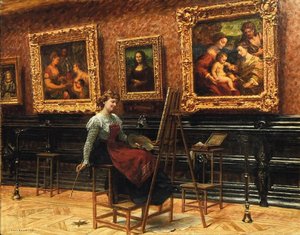
루이 베루드
1852 - 1930 , 프랑스
주요 정보
- Artistic Movement Or Style: 아카데믹 리얼리즘
- Artists Or Movements Influenced By This Artist: ['아르 데코']
- Artists Who Influenced This Artist: ['귀스타브 모로']
- Date Of Birth: 1852년 프랑스 리옹
- Date Of Death: 1930년
- Full Name: 루이 베루
- Nationality: 프랑스
- Notable Artworks:
- 니스 가르 역 광장 (Avenue de la Gare in Nice)
- 1889년 만국 박람회 기계관 중앙 돔 (Le dôme central de la galerie des machines à l'exposition universelle de 1889)
- 바롱 쉬링의 집무실 (Bureau du Baron Schlichting)
- Place Of Birth: 프랑스 리옹