

 실제 크기로 보기
 보내기
보내기 공유하기
공유하기
 상세 보기
상세 보기 가이드 보기

 이미지 다운로드
 유사 작품 더 보기
 X-레이
X-레이 슬라이드 쇼 보기
 통계 정보
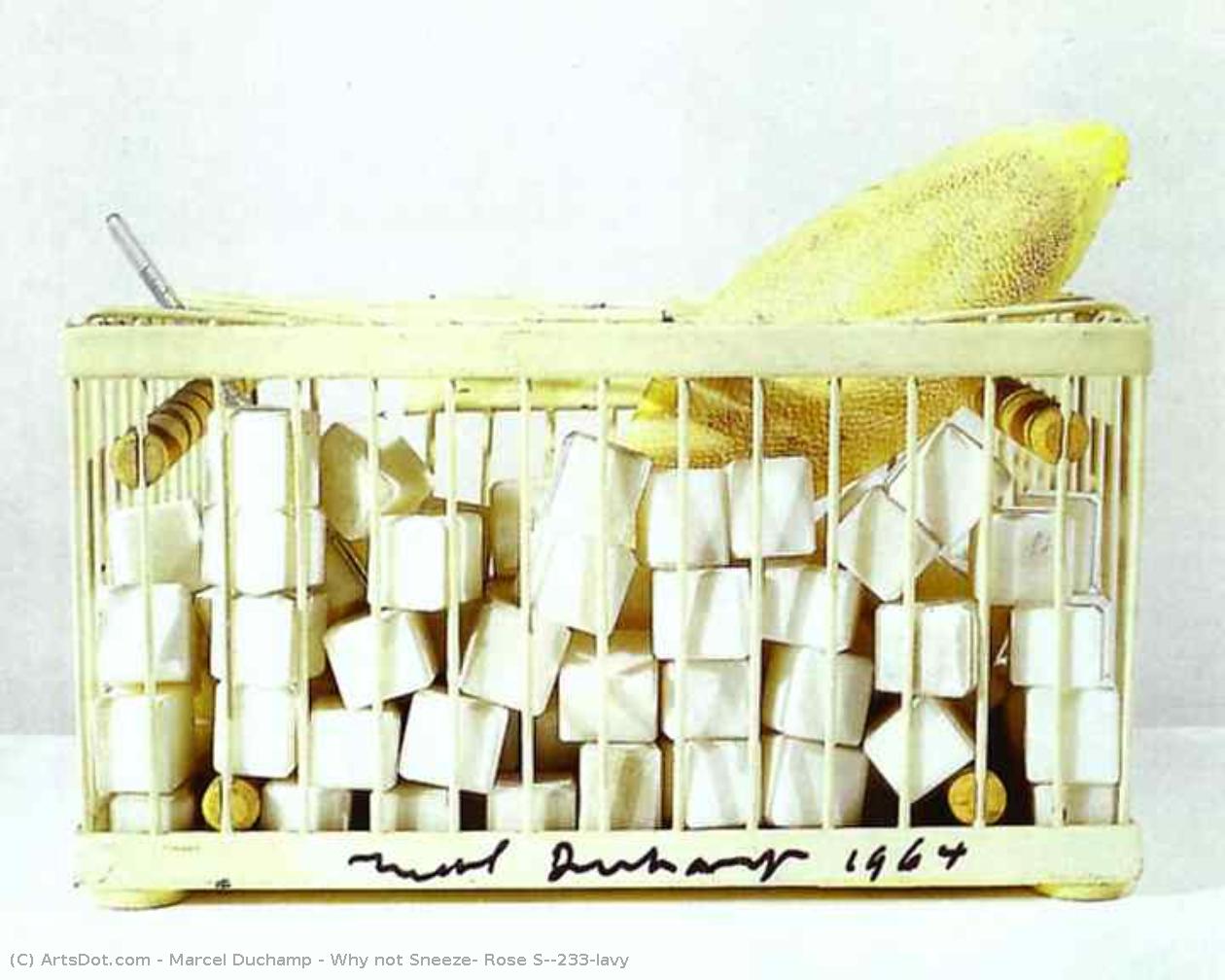
통계 정보Why not Sneeze, Rose Sélavy
 Acrylic On Canvas
- WallArt
- Dada Gesamtkunstwerk
 1921
1921 12.0 x 22.0 cm
 테이트 모던
 상세 보기
상세 보기
마르셀 뒤샹은 다다이즘과 레디메이드 예술로 미술 역사를 혁명하며 현대 미술에 지대한 영향력을 행사했습니다. 그는 작품의 아름다움보다 아이디어와 개념을 중시하는 방식으로 미술가들의 새로운 시각을 제시했으며, 오늘날에도 많은 예술가들에게 영감을 불어넣고 있습니다. 그의 대표작은 화려한 색채와 기계적인 형태를 활용하여 움직임을 표현한 그림과 함께 다다이즘의 상징적인 작품으로 인정받습니다. 레디메이드는 일상적인 오브젝트를 선택하여 예술 작품으로 승격시키는 행위로 미술의 본질에 대한 기존 관념을 뒤집고 미술가들의 창작 능력과 저작권을 의문으로 여겨 미술사에서 중요한 위치를 차지합니다. 뒤샹은 미술가에게 눈보다는 마음이 중요하다고 믿으며 미술 역사를 새롭게 정의했습니다.
이 페이지에 표시된 작품은 저작권법의 보호를 받으며, 이에 따라 동일한 복제품을 제작하거나 판매하는 것은 법으로 금지되어 있습니다. 이러한 권리 보호는 다음과 같은 국제 협약에 따라 시행됩니다. 베른 협약 또한 다음에서 명시하는 법률을 포함한 국내법에 의해 보호됩니다. 미국 저작권법 제17조.
이 방식은 저작권 보호를 받는 예술 작품을 복제하거나 그대로 재현하는 것이 아니기에 저작권 규정을 완벽히 준수합니다. 대신, 이는 창의적인 재해석의 과정을 거칩니다. 즉, 원작에서 영감을 받되 원작과 동일하지 않은 새로운 회화 작품을 의미합니다.
지클레 / 아트 프린트
빠른 제작과 다양한 마감 옵션을 선택할 수 있는 박물관 수준의 지클레이 및 캔버스 프린트. ( 수작업 채색 복제본 주문하기 디지털 이미지 판매 채널로 전환)




P118B ₩10

P118H ₩10

P118W ₩10

P438Z ₩10

P508JH ₩12

P508YH ₩12

P805H ₩10

P805Z ₩10

P919BZ ₩10

P919G ₩10

P919XJ ₩10

P959ZH ₩10

P968JZ ₩12

W106C ₩8

W218G ₩10

W218JH ₩8

W218Y ₩10

W307PJ ₩10

W316G ₩10

W316PJ ₩8

W316Y ₩10

W398PJ ₩8

W4111J ₩10

W500HY ₩15

W500JH ₩15

W692G ₩12

W849H ₩8

W940BG ₩15

W953PJ ₩8




표준 규격
맞춤 제작
CM
INCH
작품의 원본 비율을 그대로 유지하는 프리셋 사이즈 중에서 선택해 보세요.
Loading sizes...

가로 너비
높이
액자나 벽면 크기에 맞춰 필요한 가로와 세로 길이를 입력해 주세요. 프린트는 원본 이미지보다 크게 제작할 수 없으며 오직 자르는 것만 가능하므로, 비율이 다른 사이즈를 선택할 경우 이미지의 일부가 잘려 나갈 수 있습니다. 인쇄 작업에 들어가기 전, 최종 확인을 위해 디지털 목업을 보내드립니다. 이 페이지에 표시된 이미지는 실제 잘리는 영역을 나타내지 않으며, 오직 목업을 통해서만 정확한 확인이 가능합니다.


 유리 옵션은 110cm 미만 크기에서만 선택 가능합니다.

Why not Sneeze, Rose Sélavy
지클레 / 아트 프린트
복제본 규격
-


총 결제 금액
₩ 93455
A Provocative Pause: Unpacking “Why Not Sneeze, Rose Sélavy”
Marcel Duchamp’s "Why Not Sneeze, Rose Sélavy," painted in 1921, isn't merely a still life; it’s an audacious declaration. This deceptively simple image – a white box containing a yellow banana alongside several cups and spoons – immediately throws the viewer off balance, demanding they reconsider their assumptions about art itself. Duchamp, a pivotal figure in the Dada movement, wasn’t interested in replicating reality or expressing personal emotion through traditional means. Instead, he sought to dismantle established artistic conventions, forcing us to confront the very definition of what constitutes “art” and its role within society.
The painting's genesis lies within Duchamp’s exploration of chance and readymades – everyday objects presented as art without alteration. "Why Not Sneeze" exemplifies this approach perfectly. The choice of a banana, an utterly mundane item, elevates it to the status of subject matter through its placement within the box, transforming it into something worthy of contemplation. The inclusion of the cups and spoons further complicates the scene, suggesting a potential for consumption or ritual – elements deliberately devoid of inherent meaning, yet imbued with a subtle tension.
Dadaist Disruptions: Style and Technique
“Why Not Sneeze” is firmly rooted in the principles of Dadaism, a movement born from the disillusionment following World War I. Rejecting logic and reason, Dada artists embraced absurdity, chance, and anti-art sentiments. Duchamp’s technique reflects this ethos; he employed a precise, almost clinical approach to rendering the objects, using oil paint on canvas with a smooth, matte finish. There's no attempt at illusionistic depth or vibrant color – instead, the focus is entirely on the arrangement of the elements and their juxtaposition. The stark white box acts as a frame, isolating the objects and intensifying their impact.
Interestingly, Duchamp’s process involved a degree of chance. He reportedly placed the banana in the box after it had been emptied, allowing the positioning to be determined by accident. This element of randomness underscores the movement's core belief that art should not be dictated by conscious intention but rather emerge from unexpected encounters and unforeseen circumstances.
Symbolic Whispers: Interpretation and Context
The symbolism within “Why Not Sneeze” is deliberately ambiguous, inviting multiple interpretations. The banana itself has been suggested to represent fertility, sexuality, or even a subtle critique of consumer culture – a small, yellow object placed in an enclosed space, hinting at both abundance and confinement. The cups and spoons could symbolize hospitality, offering, or perhaps the act of consuming – again, devoid of any specific narrative but laden with potential meanings.
Furthermore, the title itself, “Why Not Sneeze?”, is a direct challenge to conventional artistic expectations. Duchamp’s question implies that there are no rules governing art, no prescribed methods for creating it. It's an invitation to embrace spontaneity and reject rigid constraints. The painting can be viewed as a meditation on the absurdity of artistic norms and a playful provocation against established aesthetic values.
A Timeless Dialogue: Emotional Impact and Legacy
Despite its seemingly simple composition, “Why Not Sneeze, Rose Sélavy” possesses a profound emotional impact. It’s unsettling, humorous, and thought-provoking – qualities that have cemented its place as one of the most significant works in modern art history. Duchamp's work continues to resonate today, prompting us to question our own perceptions of beauty, value, and the very nature of artistic expression. A reproduction of this iconic piece offers a unique opportunity to engage with a pivotal moment in art history and contemplate the enduring legacy of Marcel Duchamp’s revolutionary spirit.
질의응답
"Why not Sneeze, Rose Sélavy" 작품을 파인 아트 프린트로 구매할 수 있나요?
마르셀 뒤샹의 "Why not Sneeze, Rose Sélavy"의 프린트를 구매하시려면, 해당 작품의 파인 아트 프린트 페이지에서 간단히 주문하실 수 있습니다: 코튼 캔버스 또는 아카이브용 캔버스지에 인쇄된 파인 아트 프린트.
"Why not Sneeze, Rose Sélavy"에는 어떤 분위기와 감정이 어우러져 있나요?
"Why not Sneeze, Rose Sélavy"에서는 Playful 분위기와 함께 Playful 감정이 느껴집니다.
"Why not Sneeze, Rose Sélavy은(는) 마르셀 뒤샹의 예술적 여정 중 어느 시기에 해당하나요?"
"Why not Sneeze, Rose Sélavy"은(는) 마르셀 뒤샹의 예술적 생애 중 Dada Phase 시기에 해당합니다. 이 분류는 해당 작품을 작가의 예술적 발전 과정과 연결해 줍니다.
작가 소개
마르셀 뒤샹: 예술의 경계를 허문 선구자
마르셀 뒤샹, 1887년 프랑스 블랭빌에서 태어나 1968년 뉴욕에서 세상을 떠난 그는 단순한 화가가 아닌, 예술의 본질을 근본적으로 질문하고 현대 미술의 지형을 완전히 바꿔놓은 사상가이자 선구자였다. 뒤샹은 어린 시절부터 예술적 환경 속에서 성장하며 그림과 조각에 대한 재능을 보였지만, 전통적인 예술 교육을 거치면서도 끊임없이 기존의 틀을 벗어나려는 실험 정신을 불태웠다. 그는 단순히 세상을 묘사하는 것을 넘어, 우리가 세상을 인식하고 예술이라는 개념 자체를 정의하는 방식에 도전하고자 했다. 이러한 지적 호기심은 그의 전 생애에 걸쳐 펼쳐진 다채로운 작품 활동의 원동력이 되었다.입체주의에서 다다이즘으로: 관습과의 단절
뒤샹의 예술 여정은 끊임없는 진화와 변화로 점철되어 있다. 초기에는 입체주의의 영향을 받아 형태를 분해하고 다양한 시점을 탐구하는 작품들을 선보였지만, 곧 순수한 미적 가치에만 머무르는 것을 거부하며 더 깊이 있는 질문을 던지기 시작했다. 제1차 세계대전의 참혹함은 그의 예술적 혼란을 더욱 심화시켰고, 그는 기존의 논리와 이성, 그리고 전통적인 예술 가치를 부정하는 다다이즘에 몸을 담게 된다. 다다이즘 안에서 뒤샹은 예술의 의미를 해체하고 재정립하기 위한 과감한 시도를 감행했다. 아름다움을 추구하는 대신, 그는 생각과 논쟁을 불러일으키고 관습적인 판단 기준을 폭로하고자 했다.르디메이드와 예술의 전복
뒤샹이 남긴 가장 획기적인 유산은 바로 ‘르디매이드(ready-made)’라는 개념이다. 이는 일상적인 오브제를 약간의 변형 없이 그대로 작품으로 제시하는 기법으로, 기존의 예술적 숙련도와 창조성에 대한 통념을 완전히 뒤흔들었다. 1917년, 그는 변기를 가져다 놓고 ‘R. Mutt’라는 가명을 써서 ‘샘(Fountain)’이라는 제목으로 전시회에 출품했다. 이 사건은 예술의 정의를 둘러싼 격렬한 논쟁을 불러일으켰고, 예술가의 손기술이 아닌 아이디어가 작품의 가치를 결정한다는 개념을 확립하는 데 결정적인 역할을 했다. L.H.O.O.Q.(1919)는 모나리자의 초상화에 콧수염과 오리를 그린 단순한 콜라주이지만, 예술사의 상징을 해체하고 관습적인 미적 가치관에 도전하는 강력한 메시지를 담고 있다. 뒤샹은 예술이 눈으로 감상하는 것을 넘어, 정신으로 사유하는 활동이어야 한다고 믿었다.유산과 지속적인 영향력
마르셀 뒤샹의 작품은 현대 미술에 지대한 영향을 미쳤으며, 개념 미술, 미니멀리즘, 팝 아트 등 수많은 예술 운동의 토대가 되었다. 그의 아이디어 중심의 예술관은 오늘날까지도 수많은 예술가들에게 영감을 주고 있으며, 창작과 예술의 본질에 대한 끊임없는 질문을 던지고 있다. 입체주의, 다다이즘, 그리고 개념 미술 등 다양한 사조를 섭렵하며 그는 예술의 경계를 허물고 새로운 가능성을 제시했다. 뒤샹은 단순한 예술가가 아니라, 철학자이자 선동가였으며, 예술에 대한 우리의 고정관념을 깨뜨리고 끊임없이 질문하게 만드는 혁명가였다. 그의 작품은 예술이 무엇인가를 정의하는 것이 아니라, 그 의미를 끊임없이 재고하도록 촉구하며 현대 미술의 지평을 넓혔다. 특히 대 유리(The Large Glass)(1915-1923)는 복잡한 상징과 불가사의한 이미지로 뒤샹의 지적 깊이와 지속적인 영향력을 증명하는 작품으로 평가받는다. 뒤샹의 예술은 답을 제공하기보다는 질문을 던지는 방식으로, 오늘날까지도 우리를 사유하게 하고 영감을 불어넣고 있다.주요 작품
- 샘 (Fountain)
- L.H.O.O.Q.
- 대 유리 (The Large Glass)
- 보이테-앙-발리즈 (Boîte-en-valise)

마르셀 뒤샹
1887 - 1968 , 프랑스
작가 정보 요약
- 국적: 프랑스-미국 국적
- 영향을 받은 예술가/운동:
- 개념 미술
- 팝 아트
- 미니멀리즘
- 예술 운동/스타일:
- 입체주의
- 다다이즘
- 개념 미술
- 전체 이름: 마르셀 뒤샹
- 주요 작품:
- 퐁튀(Fountain)
- L.H.O.O.Q.
- 대형 유리 (The Large Glass)
- 보이트-앙-발리즈(Boîte-en-valise)
- 출생일: 1887년 7월 28일
관련 기사

Dadaism Unveiled: The Beautiful Chaos of Art's Most Rebellious Movement
Explore the profound rebellion of Dadaism. Discover how this avant-garde movement emerged from the chaos of WWI to redefine art through absurdity, anti-logic, and a legacy that shaped Surrealism and Pop Art. A deep dive into the beautiful chaos of art history for the true enthusiast.

Pop Surrealism Unveiled: The Sophisticated Intersection of Vibrant Pop Art and Dreamlike Subconscious Landscapes
Explore the captivating world of Pop Surrealism. Discover how vibrant Pop Art meets dreamlike subconscious imagery through the works of masters like Jeff Soto and Ryan Heshka. An expert guide for discerning collectors seeking to understand this profound contemporary art movement.
테마, 스타일, 특징별로 큐레이션된 작품들을 만나보세요.


