
 Oil On PanelNorthern Renaissance
 81.0 x 109.0 cm
 국립 미술관
빠른 제작과 다양한 마감 옵션을 제공하는 박물관 품질의 지클레이 또는 캔버스 프린트. ( 손으로 그린 그림 구매 이미지 구매)





























작품의 원본 비율을 유지하는 미리 설정된 크기 중에서 선택하세요.

특정 프레임이나 공간에 맞춰 직접 치수를 입력하실 수 있습니다. 선택하신 사이즈가 원본 이미지의 비율과 일치하지 않을 경우, 작품을 크롭(자르기)하거나 이미지를 대칭 또는 단색 채우기로 확장하여 제작합니다. 제작 시작 전, 최종 확인을 위해 디지털 목업이 전송됩니다.
화면상의 미리보기는 실제 크롭이나 확장 상태를 반영하지 않으므로, 최종 구도는 오직 목업을 통해서만 정확하게 확인하실 수 있습니다.
맞춤 사이즈 제작도 가능하지만, 원본 비율을 유지하기 위해서는 사전 정의된 목록에서 치수를 선택하시는 것을 권장합니다.

St Jerome
복제본 크기
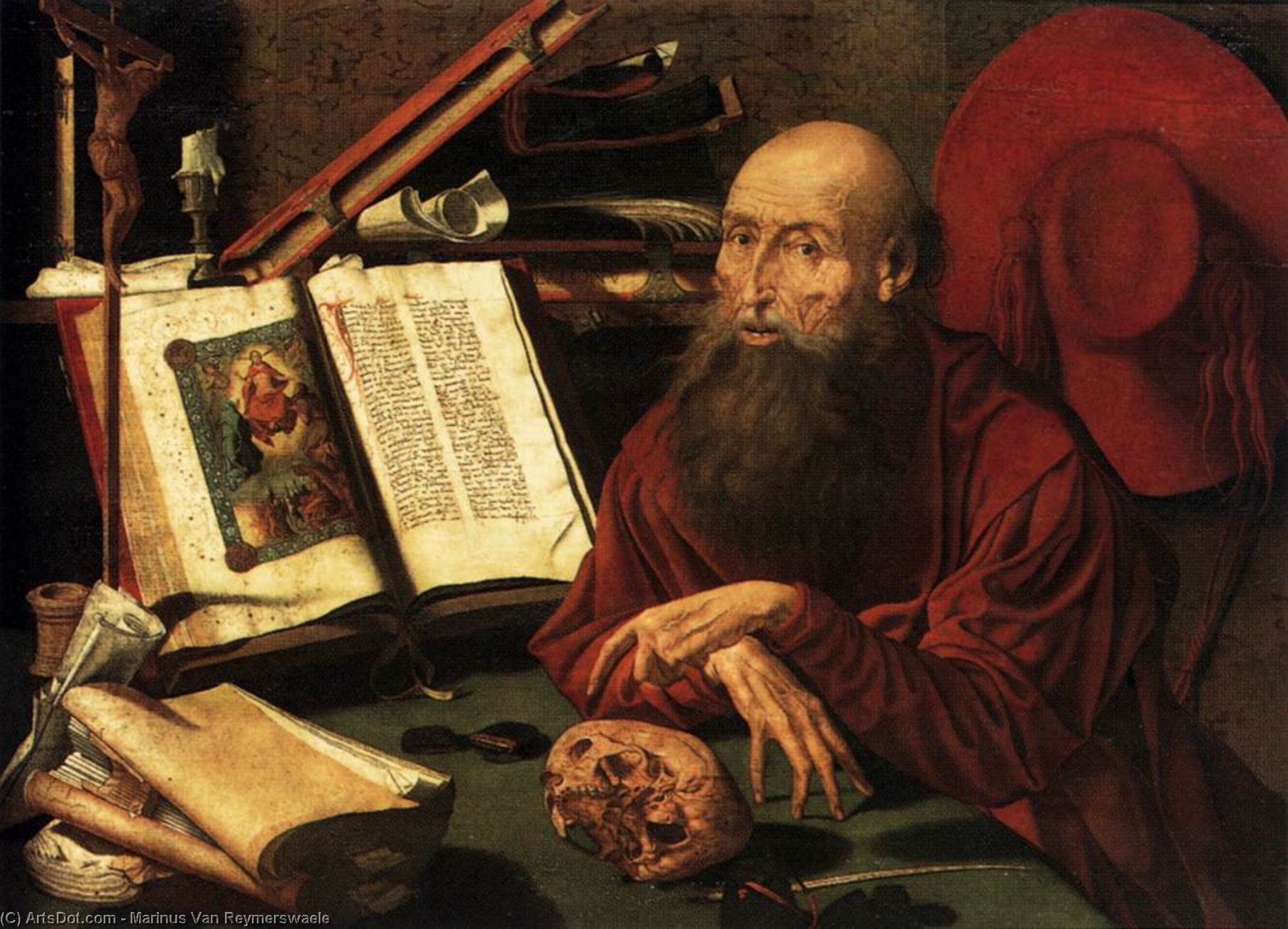
Marinus van Reymerswaele’s “St. Jerome in His Study,” housed within the venerable halls of the Museo Nacional del Prado, is more than a mere depiction of a biblical figure; it’s a meticulously crafted window into the mind and world of a 16th-century Dutch artist grappling with faith, scholarship, and mortality. Painted around 1545, this oil-on-panel masterpiece offers a profound glimpse into the contemplative life of the saint, revealing a complex interplay of religious devotion, humanist learning, and the ever-present awareness of human frailty.
The scene unfolds within a modestly appointed study—a space deliberately devoid of ostentation. Jerome, rendered with remarkable realism for his time, is seated at a sturdy wooden desk, its surface laden with the paraphernalia of intellectual pursuit: open books, scattered parchment, and a meticulously crafted quill pen. His posture suggests both diligence and weariness, reflecting the arduous task of translating scripture and engaging in theological reflection. The artist’s choice to portray Jerome not as an ascetic hermit but as a learned scholar subtly shifts the focus from monastic seclusion to the intellectual life of faith – a prevalent theme within Northern Renaissance art.
Reymerswaele's mastery lies in his ability to imbue this seemingly simple scene with an astonishing level of detail. The artist’s meticulous observation is evident in the textures of the fabrics, the worn wood of the desk, and the subtle nuances of Jerome’s face—the furrowed brow, the deep-set eyes, and the carefully rendered lines of his beard. The use of oil paint allowed for a remarkable degree of luminosity and depth, capturing the play of light across the surfaces and creating a sense of tangible reality within the painted space.
Notably, the panel itself—oak wood treated with multiple layers of gesso and primer—contributes to the painting’s rich texture and durability. The artist skillfully employed glazing techniques to build up layers of color, achieving a remarkable depth and richness of tone. The careful attention to detail extends even to the background, where a partially drawn curtain reveals a glimpse of daylight filtering through a window, suggesting both the natural world and the potential for divine illumination.
Beyond its technical brilliance, “St. Jerome in His Study” is laden with symbolic meaning. The prominent skull positioned beside the quill—a direct reference to mortality—serves as a constant reminder of the fleeting nature of earthly existence. It’s a stark contrast to the saint's intellectual pursuits, highlighting the tension between worldly concerns and spiritual aspirations. The inclusion of spectacles further emphasizes Jerome’s role as a scholar, while the open book suggests his dedication to biblical study.
Furthermore, the statue of Christ on the cross visible in the background—a deliberate inclusion by Reymerswaele—underscores the saint's devotion and his connection to the broader Christian narrative. It elevates the scene beyond a mere portrait of an individual, transforming it into a meditation on faith, knowledge, and redemption. The placement of the statue is carefully considered, drawing the viewer’s eye towards the central theme of sacrifice and salvation.
“St. Jerome in His Study” offers a compelling glimpse into the intellectual and spiritual landscape of 16th-century Europe. It reflects the burgeoning interest in classical learning, the rise of humanism, and the ongoing debate between faith and reason. Reymerswaele’s masterful execution—his meticulous attention to detail, his skillful use of color and light, and his profound understanding of symbolism—elevates this painting beyond a simple depiction of a biblical figure; it becomes a timeless meditation on the complexities of the human condition.
Reproductions of this captivating artwork capture much of its original power. Consider commissioning a high-quality hand-painted reproduction to bring this evocative scene into your home or office—a testament to the enduring legacy of Marinus van Reymerswaele and his profound exploration of faith, knowledge, and mortality.
1490년대는 유럽 전역에 르네상스가 만개하던 시기였으며, 그 활기 넘치는 풍경 속에서 티치아노(Titian)가 등장했습니다. 그는 약 1488년 또는 1490년경 작은 알프스 마을 피에베 디 카도레(Pieve di Cadore)에서 태어났습니다. 그의 삶은 거의 여덟 세기에 걸쳐 펼쳐졌으며, 초기 르네상스 플로렌스의 다소 경직된 형식미에서 벗어나 베네치아 회화의 전설적인 색채와 역동적인 구도를 확립한 거대한 예술적 변혁의 시기와 맞물려 있었습니다. 그의 이야기는 단순히 기술적 숙련함만을 의미하지 않습니다. 그것은 당대 변화하는 문화적 흐름을 반영하며, 야망과 후원, 그리고 색채가 지닌 영속적인 힘에 대한 증거입니다.
티치아노의 초기 훈련 과정은 그 시대의 지망생 예술가에게 일반적이었습니다. 그는 베네치아의 저명한 모자이크 장인 세바스티아노 주카토(Sebastiano Zuccato)의 작업실에서 견습생으로 시작했으며, 이후 도시에서 가장 확고한 거장 중 한 명이었던 젠틸레 벨리니(Gentile Bellini)의 스튜디오에 잠시 머물기도 했습니다. 하지만 그의 독자적인 스타일을 진정으로 구축하게 된 것은 조르조네(Giorgione)와의 만남 덕분이었습니다. 조르조네의 영향력은 티치아노의 경력 전반에 걸쳐 파문을 일으켰습니다. 색채와 대기 원근법에 대한 조르조네의 혁신적인 사용, 그리고 덧없이 스쳐 가는 아름다움의 순간을 포착하는 데 집중한 점은 티치아노 후기 발전의 결정적인 토대가 되었습니다. 두 사람은 파도바의 ‘스쿠올라 델 산토(Scuola del Santo)’를 장식한 장엄한 프레스코화 작업에 함께 참여했고, 이 프로젝트는 그들의 유대를 공고히 하며 티치아노를 떠오르는 재능으로 자리매김하게 했습니다.
1510년 조르조네가 갑작스럽게 세상을 떠난 후, 티치아노는 그 기회를 놓치지 않았습니다. 그는 빠르게 독립적인 예술가로 자신을 확립하며 이탈리아 전역의 부유한 후원자들의 주목을 받았습니다. 플로렌스의 강력한 메디치 가문부터 페라라, 만투아, 우르비노의 공작들과 왕자들에 이르기까지 그를 따랐습니다. 그의 다재다능함은 놀라웠습니다. 초상화, 신화적 장면, 종교 제단화, 풍경화를 포함하여 광범위한 주제에서 탁월함을 보였습니다. 그는 단순한 화가에 머무르지 않았습니다. 그는 궁정인사이자 외교관이었으며, 자신의 고객들과의 관계를 가꾸는 것의 중요성을 이해하는 연출의 대가였습니다.
티치아노의 초기 작품들은 섬세한 서정성과 목가적인 배경에 대한 애착이 특징입니다. 양치기들, 님프들, 부드러운 빛에 잠긴 목가적 풍경들이 그려져 있습니다. 하지만 그가 성숙해짐에 따라 그의 스타일은 극적인 변신을 겪었습니다. 그는 더 대담한 색채, 보다 자유로운 붓놀림, 그리고 구도에 대한 더욱 역동적인 접근 방식을 받아들였습니다. 그의 후기 작품들은 관능적인 에너지와 인간 감정에 대한 깊은 이해로 가득 차 있습니다. 베네치아 산타 마리아 글로리오사 데이 프라리 성당의 ‘성모 승천(Assumption of the Virgin)’ (1516-18)은 이러한 진화의 대표적인 예입니다. 이 기념비적인 제단화는 베네치아 회화를 재정의하고 웅장함과 감정적 강렬함에 대한 새로운 기준을 세웠습니다.
티치아노의 색채에 대한 숙련도는 비할 데가 없었습니다. 그는 "색채 글레이징(color glazing)"이라는 독특한 기법을 개발하여, 얇고 반투명한 여러 겹의 물감을 덧입혀 풍부하고 빛나는 표면을 만들어냈습니다. 이 방법 덕분에 가장 깊은 울트라마린 블루부터 가장 생생한 빨강과 노랑에 이르기까지 놀라운 범위의 색조와 음영을 구현할 수 있었습니다. 그는 또한 다양한 안료들을 광범위하게 실험하며, 빛과 그림자의 미묘한 차이를 포착하는 새로운 방법을 끊임없이 모색했습니다. 그가 사용한 키아로스쿠로(chiaroscuro)—빛과 어둠의 극적인 대비—는 그의 스타일의 특징이 되었으며, 작품에 깊이와 드라마를 더했습니다.
색채를 넘어, 티치아노의 혁신은 구도와 붓놀림에도 미쳤습니다. 그는 초기 르네상스 회화의 경직된 형식미에서 벗어나 보다 유동적이고 표현적인 접근 방식을 포용했습니다. 그의 붓터치는 종종 느슨하고 제스처적이어서 움직임과 자발성의 감각을 전달했습니다. 또한 그는 의복이나 질감을 묘사하는 새로운 기법을 개척하여, 마치 생명력으로 반짝이며 흐르는 듯한 직물을 창조해냈습니다.
티치아노가 후대 예술가들에게 미친 영향은 헤아릴 수 없습니다. 그는 틴토레토(Tintoretto), 베로네세(Veronese), 바사노(Bassano)를 포함한 일련의 베네치아 화가들의 계보를 만들었고, 이들은 그의 혁신 위에 구축하여 베네치아 학파를 유럽에서 가장 중요한 예술 중심지 중 하나로 확립했습니다. 그의 기법들은 17세기와 그 이후에 걸쳐 연구되고 모방되었으며 서양 미술사의 흐름을 형성했습니다.
티치아노의 유산은 캔버스를 훨씬 넘어섭니다. 그는 영리한 사업가였고, 카리스마 넘치는 인물이었으며, 인간 본성에 대한 예리한 관찰자였습니다. 그의 삶은 전례 없는 창조성, 혁신, 문화 교류의 시기였던 르네상스 정신 그 자체를 구현합니다. 그는 여전히 가장 사랑받고 존경받는 역사 속 예술가 중 한 명으로 남아 있으며, 눈부신 색채, 극적인 구도, 그리고 아름다움에 대한 깊은 이해로 찬사를 받고 있습니다.

1490 - 1546

빈센트 반 고흐의 영혼을 담은 25개의 명작을 만나보세요. 별이 빛나는 밤, 해바라기 등 걸작의 숨겨진 이야기와 후기 인상주의 화풍을 TopImpressionists에서 감상하고, 고품질 유화 재현 작품으로 공간에 예술적인 감성을 더하세요. 지금 바로 컬렉션을 탐험하세요!

렘브란트 반 레인 명작 25선을 만나보세요. 빛과 그림자의 거장이 그린 역사화, 초상화 속 예술의 정수를 감상하고, 네덜란드 황금시대 바로크 미술의 깊이를 느껴보세요. TopImpressionists.com에서 고품질 복제화를 컬렉션하세요.

Journey into the world of Early Netherlandish painting! Explore 10 masterpieces by Jan van Eyck, Rogier van der Weyden & more. Discover stunning detail, symbolism & Renaissance art for your home decor. Find museum-quality reproductions on TopImpressionists.com

Explore the Northern Renaissance! Discover Jan van Eyck's innovations, religious shifts, & key artists of this influential period. Expert analysis and insights into Early Netherlandish painting at TopImpressionists.

Journey into the Early Netherlandish Renaissance! Explore 10 iconic paintings by Jan van Eyck, Rogier van der Weyden & more. Discover stunning detail, symbolism, and oil painting techniques. Find museum-quality art reproductions for your home at TopImpressionists.com.


최신 미술 뉴스, 특별 혜택 및 인테리어 아이디어를 가장 먼저 만나보세요.
프로젝트에 대해 알려주시면 저희 미술 전문가들이 맞춤형 아트 제안 3가지를 전달해 드립니다.
당신만을 위한 맞춤형 옵션 3가지를 무료로 추천해 드립니다!

 미리보기
미리보기
 공유하기
공유하기 공유하기
공유하기
 상세 정보
상세 정보

 다운로드
다운로드
 유사 작품
유사 작품 X-레이
X-레이 슬라이드 쇼
 더 보기
더 보기









 유리 옵션은 110cm 미만 크기에서만 선택 가능합니다.


