
 Painting
 Early Modern
 68.0 x 80.0 cm
 The Bowes Museum
빠른 제작과 다양한 마감 옵션을 제공하는 박물관 품질의 지클레이 또는 캔버스 프린트. ( 수제 페인팅으로 전환하기 이미지로 전환)





























작품의 원본 비율을 유지하는 미리 설정된 크기 중에서 선택하세요.

특정 프레임이나 공간에 맞춰 직접 치수를 입력하실 수 있습니다. 선택하신 사이즈가 원본 이미지의 비율과 일치하지 않을 경우, 작품을 크롭(자르기)하거나 이미지를 대칭 또는 단색 채우기로 확장하여 제작합니다. 제작 시작 전, 최종 확인을 위해 디지털 목업이 전송됩니다.
화면상의 미리보기는 실제 크롭이나 확장 상태를 반영하지 않으므로, 최종 구도는 오직 목업을 통해서만 정확하게 확인하실 수 있습니다.
맞춤 사이즈 제작도 가능하지만, 원본 비율을 유지하기 위해서는 사전 정의된 목록에서 치수를 선택하시는 것을 권장합니다.

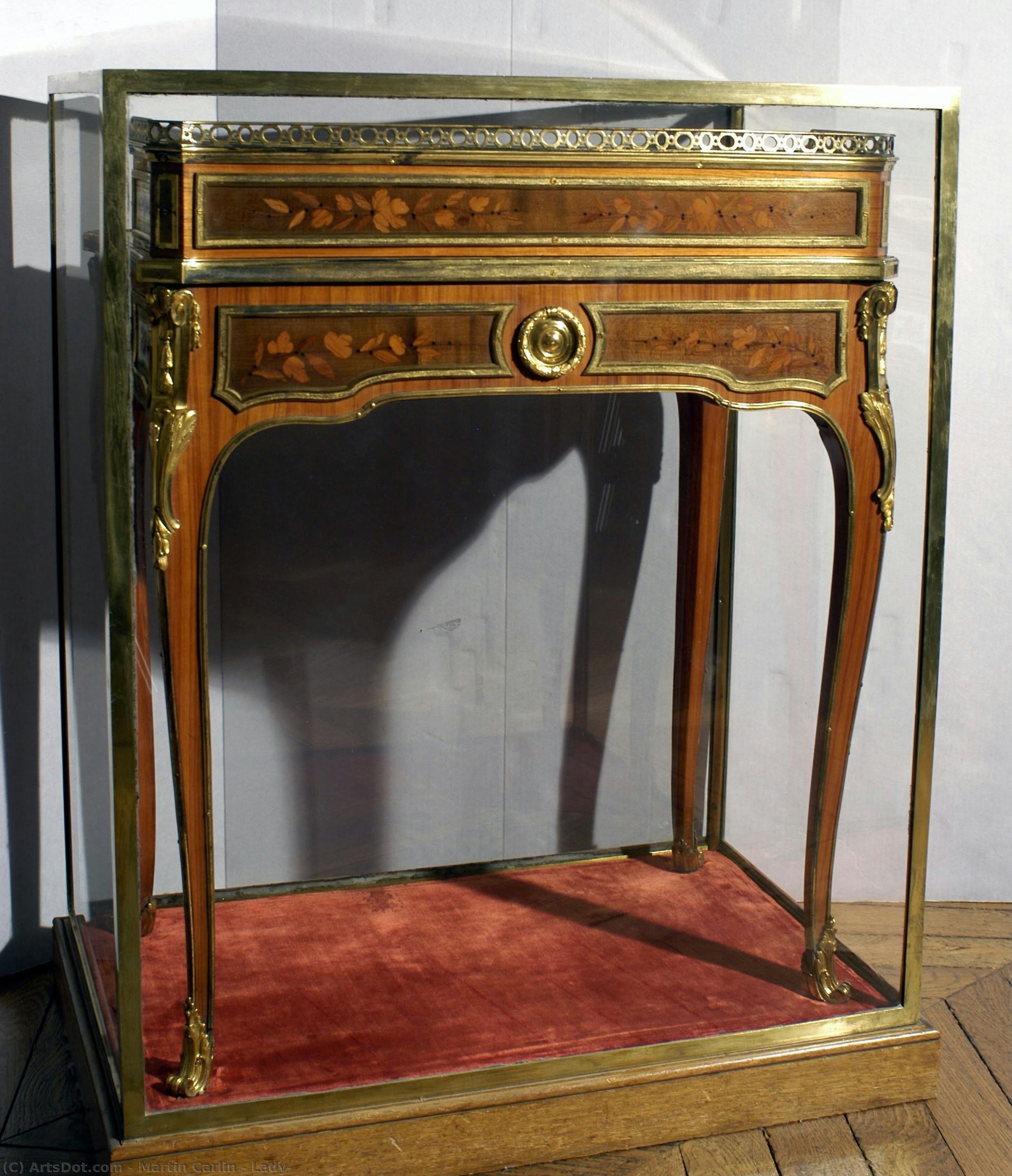
Lady
복제본 크기
Born in Freiburg im Breisgau, Germany, around 1730, Martin Carlin’s life was a fascinating confluence of craftsmanship, luxury, and the burgeoning aesthetic sensibilities of 18th-century Europe. While his origins lie in the Black Forest region, it was Paris that would become his stage and where he ultimately cemented his reputation as one of the most innovative “ébénistes” – cabinetmakers – of his era. Carlin’s story is not simply one of a skilled artisan; it's a reflection of the opulent tastes of the French aristocracy and the intricate mechanisms that defined the era’s fascination with both beauty and ingenuity.
Carlin’s early career began as a day-worker for Jean-François Oeben, a renowned cabinetmaker whose workshop was a hotbed of experimentation and innovation. This apprenticeship proved invaluable, exposing him to the latest techniques in veneering, carving, and particularly, the integration of precious materials like Sèvres porcelain. His marriage to Oeben’s sister further solidified his connection to this influential circle. However, Carlin's ambition quickly outstripped mere assistance; he sought independence and a chance to establish his own distinct style. The contract details reveal that he was initially “still a day-worker,” highlighting the precariousness of early careers in such competitive fields.
Carlin’s breakthrough came through his association with the “marchands-merciers”— Parisian merchants who acted as intermediaries between artisans and wealthy clients. These dealers, including Simon-Philippe Poirier and Dominique Daguerre, were crucial to Carlin's success. They provided access to the Sèvres porcelain workshops, a vital component of his distinctive style. Without these connections, it would have been exceedingly difficult for Carlin to acquire the elaborate porcelain plaques that adorned his furniture – pieces that elevated his work beyond mere cabinetry and into the realm of true luxury. This relationship also exposed him to the tastes of Marie Antoinette and other members of the French elite, solidifying his position within the highest echelons of Parisian society.
Carlin’s genius lay not just in his technical skill but also in his ability to fuse realism with a touch of fantastical invention. His furniture was characterized by incredibly detailed carvings, often depicting scenes from mythology, history, or even everyday life – all rendered with meticulous precision. The integration of Sèvres porcelain, frequently featuring elaborate floral motifs and intricate landscapes, added another layer of visual richness. He wasn’t simply replicating existing designs; he was creating entirely new worlds within the confines of a table, writing desk, or commode. This blend of classical influences and imaginative embellishment reflected the transitional style between Rococo and Neoclassicism, capturing the spirit of an era embracing both grandeur and refinement.
Martin Carlin’s most celebrated works include the “Combined Work, Writing And Reading Table,” a stunning example of his technical mastery and artistic vision. His “Bonheur du jour” tables – literally translated as "Happiness of the Day" – are particularly noteworthy for their intricate mechanical features, including rotating elements and hidden compartments. These pieces demonstrate Carlin’s fascination with mechanics and his ability to seamlessly integrate them into decorative objects. Beyond these iconic examples, he produced a range of exquisite cabinets, chests, and jewelry boxes, each showcasing his exceptional skill and attention to detail. While relatively few of his original works survive today, they remain highly prized by collectors worldwide, serving as testaments to the artistry and innovation of this remarkable ébéniste. Carlin’s influence can be seen in subsequent generations of furniture makers, who continued to explore the possibilities of combining craftsmanship with decorative embellishment.
His work reflects a deep understanding of both artistic trends and mechanical principles, making him a truly unique figure in 18th-century European art history.

1730 - 1785 , Germany

Explore 10 iconic portrait paintings – from Mona Lisa to Van Gogh’s self-portraits. Discover the stories behind these masterpieces, artistic techniques & find museum-quality art reproductions for your home at TopImpressionists.com.

Explore 25 captivating portraits by Sir Joshua Reynolds, a master of British art. Discover stories behind his iconic paintings, elegant style & historical influence. Find museum-quality reproductions and elevate your home decor on TopImpressionists.com.

Elevate your space with expert art framing guidance! Discover how to choose frames that enhance artwork & interior design, protect valuable pieces, and create stunning displays. Trusted advice for designers & collectors.

Commission a timeless oil portrait from skilled artists at TopImpressionists. Preserve your family's legacy with museum-quality paintings, crafted to cherish for generations. Expert guidance & personalized service.

구스타프 클림트의 황홀한 명작 25선을 만나보세요. '키스'부터 '주디트'까지, 빈 분리주의를 대표하는 예술가의 삶과 작품 세계를 탐험합니다. 오스트리아 화가 클림트의 걸작으로 공간에 특별한 감성을 더하세요. TopImpressionists.com에서 고품질 유화 복제를 만나보세요.


최신 미술 뉴스, 특별 혜택 및 인테리어 아이디어를 가장 먼저 만나보세요.
프로젝트에 대해 알려주시면 저희 미술 전문가들이 맞춤형 아트 제안 3가지를 전달해 드립니다.
당신만을 위한 맞춤형 옵션 3가지를 무료로 추천해 드립니다!

 미리보기
미리보기
 공유하기
공유하기 공유하기
공유하기
 상세 정보
상세 정보

 다운로드
다운로드
 유사 작품
유사 작품 X-레이
X-레이 슬라이드 쇼
 더 보기
더 보기









 유리 옵션은 110cm 미만 크기에서만 선택 가능합니다.


