


 실제 크기로 보기
 보내기
보내기 공유하기
공유하기
 상세 보기
상세 보기 가이드 보기

 이미지 다운로드
 유사 작품 더 보기
 X-레이
X-레이 슬라이드 쇼 보기
 통계 정보
통계 정보The Floating Feather
 Oil On Canvas
- WallArt
- Baroque
 1680
1680- Early Modern
 159.0 x 144.0 cm
 국립 미술관
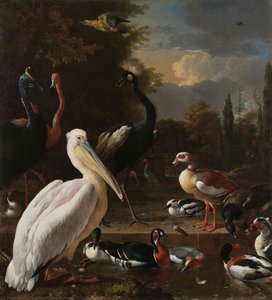
A vibrant collection of exotic bird species gathers around a pond in this 1680 Baroque masterpiece by Melchior De Hondecoeter and you can bring this exquisite piece of Dutch Golden Age history into your home.
 상세 보기
상세 보기
Explore Melchior de Hondecoetter’s exquisite bird paintings! Dutch animalier known for dynamic compositions of exotic birds & landscapes, a Baroque master.
지클레 / 아트 프린트
빠른 제작과 다양한 마감 옵션을 선택할 수 있는 박물관 수준의 지클레이 및 캔버스 프린트. ( 수작업 채색 복제본 주문하기 디지털 이미지 판매 채널로 전환)




P118B ₩10

P118H ₩10

P118W ₩10

P438Z ₩10

P508JH ₩12

P508YH ₩12

P805H ₩10

P805Z ₩10

P919BZ ₩10

P919G ₩10

P919XJ ₩10

P959ZH ₩10

P968JZ ₩12

W106C ₩8

W218G ₩10

W218JH ₩8

W218Y ₩10

W307PJ ₩10

W316G ₩10

W316PJ ₩8

W316Y ₩10

W398PJ ₩8

W4111J ₩10

W500HY ₩15

W500JH ₩15

W692G ₩12

W849H ₩8

W940BG ₩15

W953PJ ₩8




표준 규격
맞춤 제작
CM
INCH
작품의 원본 비율을 그대로 유지하는 프리셋 사이즈 중에서 선택해 보세요.
Loading sizes...

가로 너비
높이
액자나 벽면 크기에 맞춰 필요한 가로와 세로 길이를 입력해 주세요. 프린트는 원본 이미지보다 크게 제작할 수 없으며 오직 자르는 것만 가능하므로, 비율이 다른 사이즈를 선택할 경우 이미지의 일부가 잘려 나갈 수 있습니다. 인쇄 작업에 들어가기 전, 최종 확인을 위해 디지털 목업을 보내드립니다. 이 페이지에 표시된 이미지는 실제 잘리는 영역을 나타내지 않으며, 오직 목업을 통해서만 정확한 확인이 가능합니다.


 유리 옵션은 110cm 미만 크기에서만 선택 가능합니다.

The Floating Feather
지클레 / 아트 프린트
복제본 규격
-


총 결제 금액
₩ 93791
Melchior De Hondecoeter's The Floating Feather is a captivating oil on canvas painting that showcases the artist's exceptional skill in capturing the beauty and diversity of nature. Created in 1680, this masterpiece is housed at the Rijksmuseum Amsterdam, Netherlands.
A Vivid Depiction of Nature
The painting measures 159 x 144 cm and presents a lively scene of various bird species gathered around a water basin. At least 13 different bird species are depicted, each with its unique features and colors. Some birds stand on rocks or branches, while others perch on the ground, creating an interactive atmosphere. In addition to the birds, a person is present in the painting, observing the flock from a distance. This human presence adds an element of interaction between humans and nature, enhancing the natural beauty and charm of the scene.Artistic Significance
Melchior De Hondecoeter was renowned for his bird paintings, and The Floating Feather is one of his most celebrated works. The painting demonstrates his ability to capture the intricate details of birds and their natural habitats. The artist's use of oil on canvas allows for a rich and vibrant color palette, bringing the scene to life.Other Works by Melchior De Hondecoeter
Melchior De Hondecoeter created several other notable paintings, including A Pelican and other Birds near a Pool, Known as ‘The Floating Feather’, which is also housed at the Rijksmuseum Amsterdam. Another significant work is Ducks, measuring 93 x 116 cm.Reproductions Available
For art enthusiasts and collectors, TopImpressionists offers high-quality, handmade oil painting reproductions of Melchior De Hondecoeter's works. Visit https://TopImpressionists.com to explore these beautiful pieces and bring a touch of history into your home.- The Floating Feather by Melchior De Hondecoeter
- A Pelican and other Birds near a Pool, Known as ‘The Floating Feather’ by Melchior De Hondecoeter
- Ducks by Melchior De Hondecoeter
질의응답
Melchior De Hondecoetter의 "The Floating Feather"은(는) 무엇을 묘사하고 있으며, 어떤 분위기를 담고 있나요?
Melchior De Hondecoetter의 "The Floating Feather"은(는) Serene한 분위기 속에서 birds, white bird, black swan, flamingo, pond, trees, foliage, clouds을(를) 묘사합니다. 작품의 주제와 분위기가 어우러져 하나의 완성된 세계를 보여줍니다.
Melchior De Hondecoetter의 "The Floating Feather"의 전반적인 분위기는 어떠한가요?
"The Floating Feather"은(는) Serene 분위기를 자아냅니다.
증강 현실(AR)을 사용하여 제 방에 Melchior De Hondecoetter의 "The Floating Feather"를 배치해 볼 수 있나요?
Melchior De Hondecoetter의 "The Floating Feather"의 AR 미리보기 페이지에서는 증강 현실(AR) 기술을 사용하여 호환 가능한 기기를 통해 작품이 사용자의 공간에 배치된 모습을 미리 확인할 수 있습니다.
작가 소개
The Avian Majesty of Melchior de Hondecoeter
In the golden twilight of the Dutch Golden Age, few artists captured the vibrant pulse of the natural world as vividly as Melchior de Hondecoeter. A master of the Baroque era, his brush possessed a rare alchemy, capable of transforming mere pigment into the iridescent sheen of a peacock’s plume or the delicate, translucent down of a songbird. Born in Utrecht around 1636, Hondecoetter emerged not merely as a painter of animals, but as a storyteller of the exotic and the magnificent. His work serves as a window into a century defined by global exploration, where the arrival of rare species from distant lands ignited a profound fascination with the wonders of the natural order.
The foundation of his extraordinary talent was laid through rigorous discipline and an unwavering commitment to anatomical truth. Apprenticeship under the esteemed Willem van Royen provided him with the technical scaffolding necessary to master the complexities of light and shadow. Yet, Hondecoetter’s genius lay in his ability to transcend mere scientific documentation. While he approached his subjects with the precision of a naturalist—studying musculature and skeletal structure with almost clinical devotion—he infused every composition with a theatrical energy characteristic of the Baroque movement. His canvases are never static; they are stages where birds interact, preen, and take flight amidst lush, atmospheric landscapes.
A Symphony of Color and Motion
To gaze upon a Hondecoeter masterpiece is to experience a sensory deluge. He rejected the muted, somber palettes that often characterized much of Dutch genre painting, opting instead for a bold, expressive use of color that commands the viewer's attention. His technique was a sophisticated balance of precise observation and expressive bravura. Through masterful rendering of texture, he could differentiate between the heavy, waxy surface of a waterfowl’s wing and the soft, airy lightness of a forest dweller. This tactile quality creates an immersive experience, pulling the observer into a world where the rustle of feathers feels almost audible.
The development of his style saw him move toward increasingly complex and dynamic compositions. He became renowned for his ability to arrange multiple subjects within a single frame, creating a sense of organized chaos that mirrors the untamed beauty of nature. These works often featured:
- Exoticism: The inclusion of rare, brightly colored birds that symbolized wealth, discovery, and the expanding horizons of the Dutch Republic.
- Dramatic Lighting: A use of chiaroscuro that highlighted the intricate details of plumage while casting deep, mysterious shadows in the surrounding foliage.
- Narrative Depth: Scenes that suggested a larger story, whether it be a moment of predatory tension or a peaceful interlude in a sun-drenched garden.
Legacy and Historical Significance
Melchior de Hondecoeter’s influence extended far beyond the borders of the Netherlands. As an animalier, he helped establish a specialized genre that would captivate collectors across Europe, from the courts of kings to the homes of wealthy merchants. His ability to marry scientific accuracy with high art ensured that his work was valued both for its aesthetic splendor and its contribution to the era's burgeoning interest in natural history.
Though his life ended in 1695, his artistic footprint remains indelible. He did not simply paint birds; he elevated them to subjects of profound dignity and drama. In an age of discovery, Hondecoeter acted as a visual chronicler of the earth's splendor, leaving behind a legacy of canvases that continue to breathe with life, color, and an eternal sense of wonder. His work remains a testament to the power of art to bridge the gap between the observed world and the human imagination.
Melchior De Hondecoetter
1636 - 1695
작가 정보 요약
- Full Name: Melchior de Hondecoetter
- Nationality: Dutch
- Date Of Birth: 1636
- Date Of Death: 1695
- Place Of Birth: Utrecht, Netherlands
- Notable Artworks:
- A Cock
- The Menagerie
- Birds, Butterflies and a Frog Among Plants and Fungi
- Artistic Movement Or Style: Baroque
- Artists Who Influenced This Artist: ['None Known']
- Artists Or Movements Influenced By This Artist: ['William Hendrik Wilhemus van Royen']
관련 기사

Illuminating Realism: Exploring the Dutch Golden Age of Painting (1600-1700)
Explore the Dutch Golden Age of painting (1600-1700) with TopImpressionists. Discover Rembrandt, Vermeer & other masters. Learn about techniques, history & find museum-quality reproductions.

Golden Age Reflections: Dutch Baroque Painting & Cultural Innovation
Explore the Dutch Golden Age of painting! Discover key artists like Vermeer & ter Borch, their innovative techniques, and the rich cultural context behind these Baroque masterpieces. Learn about collecting & appreciating this iconic art period.

네덜란드 황금 시대 예술의 정수를 담은 10대 걸작 탐구
렘브란트, 베르메르의 걸작부터 할스의 인물화까지! 네덜란드 황금시대 미술의 10대 명품을 만나보세요. 예술적 깊이와 아름다움을 담은 작품들을 TopImpressionists에서 감상하고, 고품질 아트 프린트로 당신의 공간에 특별함을 더하세요. 지금 바로 TopImpressionists.com에서 모든 걸작을 발견하세요!

Illuminating Innovation: Exploring the Dutch Golden Age of Painting
Explore the Dutch Golden Age of painting with TopImpressionists. Discover Rembrandt, Vermeer & other Masters. Learn about key characteristics, iconic artworks, and lasting influence. Expert insights for collectors & enthusiasts.

Dutch Baroque Masters: 10 Paintings That Shaped an Era | TopImpressionists
Journey through the Golden Age with our guide to the Top 10 Dutch Baroque masterpieces! Explore iconic paintings by Rembrandt, Vermeer & Frans Hals. Find museum-quality art reproductions and elevate your home decor at TopImpressionists.com.