





























작품의 원본 비율을 유지하는 미리 설정된 크기 중에서 선택하세요.

특정 프레임이나 공간에 맞도록 직접 크기를 입력할 수 있습니다. 선택하신 크기가 원본 이미지의 비율과 일치하지 않는 경우, 작품을 자르거나 추가적인 손으로 그린 요소를 사용하여 그림을 확장합니다. 제작 시작 전 승인을 위해 디지털 목업을 보내드립니다.
화면 미리 보기는 실제 자르기 또는 확장을 반영하지 않습니다. 최종 구성은 목업을 통해서만 정확하게 확인하실 수 있습니다.
맞춤 크기 제작도 가능하지만, 원본 비율을 유지하기 위해 사전 정의된 목록에서 크기를 선택하시는 것을 권장합니다.

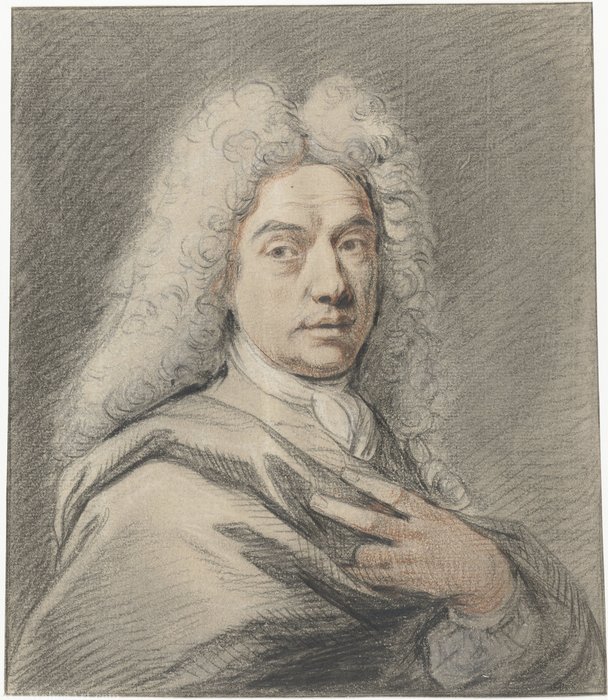
Self portrait
복제본 크기
In the grand tapestry of the Baroque era, few artists managed to weave together the rugged realism of the Low Countries with the sun-drenched elegance of Italy as seamlessly as Norbert van Bloemen. Born in Antwerp in 1670, a city then pulsating with artistic vitality, van Bloemen was destined for a life shaped by both familial tradition and international wanderlust. As the younger brother of the renowned painters Pieter and Jan Frans van Bloemen, his very foundation was laid within a lineage of masters. This early immersion in the Flemish tradition provided him with a technical rigor and an eye for detail that would become the hallmark of his later, more cosmopolitan works. His upbringing was not merely about learning brushstrokes; it was about inheriting a visual language of texture, light, and human emotion.
The trajectory of van Bloemen’s life took a transformative turn as he moved toward the Mediterranean, eventually finding himself in the heart of the Roman art scene. It was here that his style underwent a profound metamorphosis. Influenced by the Bamboccianti—a group of Dutch and Flemish painters in Rome who specialized in scenes of everyday life—he began to infuse his compositions with an Italianate charm. This period of his life is perhaps best encapsulated by his association with the Bentvueghels, a spirited society of artists where he adopted the nickname 'cefalus' or 'cephalos'. This moniker, a testament to his integration into the Roman artistic brotherhood, reflects a period of intense creative exchange and the blending of Northern observational precision with Southern atmospheric warmth.
Van Bloemen’s oeuvre is a captivating exploration of the human condition, often found in the quiet, unadorned moments of rural existence. He possessed a rare ability to elevate the mundane into the monumental, turning simple peasant gatherings into profound studies of light and companionship. His works frequently feature themes of domesticity and communal life, rendered with a delicate touch that avoids sentimentality in favor of authentic realism. Through his brush, we encounter scenes such as:
Technically, van Bloemen was a master of light. He understood how to use the chiaroscuro techniques prevalent in the Baroque period to direct the viewer's eye, creating depth and drama within even the most humble settings. His landscapes, while often serving as backdrops for his figures, possess an idealized beauty that speaks to the influence of Italianate aesthetics, providing a luminous stage for the rustic dramas unfolding within them.
As the 18th century progressed, van Bloemen’s influence traveled with him from Italy to the Dutch Republic, marking him as a truly pan-European artist. His ability to navigate different cultural landscapes allowed him to maintain a relevance that transcended borders. He did not merely imitate the styles of the South; he synthesized them into something uniquely his own—a style that respected the gritty honesty of his Flemish roots while embracing the poetic light of the Italian sun.
Today, the works of Norbert van Bloemen serve as vital historical documents of a period defined by movement and cultural fusion. He remains a pivotal figure for understanding the evolution of genre painting and the way in which the Bamboccianti style helped bridge the gap between Northern realism and Southern classicism. His legacy lives on in every brushstroke that captures the dignity of the common man and the enduring beauty of the natural world, reminding us that true artistry lies in the ability to find the extraordinary within the ordinary.

1670 - 1746 , Belgium

고야의 걸작 25선을 만나보세요. 스페인 화가 Francisco Goya의 낭만주의 회화, 어두운 색조와 강렬한 감성이 담긴 명화를 TopImpressionists에서 감상하세요. 고품질 유화 복제본으로 예술 작품을 소장하고 홈 데코를 완성해보세요! 지금 바로 컬렉션을 탐험하세요.

Explore the rich history of formal portraiture & its enduring power to capture identity and shape perception. Discover investment-worthy artworks, expert appraisals, and custom reproduction services at TopImpressionists.

Explore the world of 18th-century portraiture with TopImpressionists. Discover symbolism, artistic innovation & societal values reflected in masterpieces by Reynolds, Hogarth & more. Expert insights for collectors.

Transform your cherished travel photos into timeless oil paintings with expert artists at TopImpressionists.com. Museum-quality reproductions & custom portraits – preserve your memories beautifully.

전통 유화 기법과 현대 디지털 시각화의 완벽한 조화! TopImpressionists.com에서 전문가의 손길로 나만을 위한 특별한 맞춤형 유화를 제작해보세요. 고품질, 예술적 가치, 그리고 잊지 못할 경험을 선사합니다.


최신 미술 뉴스, 특별 혜택 및 인테리어 아이디어를 가장 먼저 만나보세요.
프로젝트에 대해 알려주시면 저희 미술 전문가들이 맞춤형 아트 제안 3가지를 전달해 드립니다.
당신만을 위한 맞춤형 옵션 3가지를 무료로 추천해 드립니다!

 미리보기
미리보기
 프린트 구매
 공유하기
공유하기 공유하기
공유하기
 상세 정보
상세 정보

 다운로드
다운로드
 유사 작품
유사 작품 X-레이
X-레이 슬라이드 쇼
 더 보기
더 보기









 유리 옵션은 110cm 미만 크기에서만 선택 가능합니다.


