





























작품의 원본 비율을 유지하는 미리 설정된 크기 중에서 선택하세요.

특정 프레임이나 공간에 맞도록 직접 크기를 입력할 수 있습니다. 선택하신 크기가 원본 이미지의 비율과 일치하지 않는 경우, 작품을 자르거나 추가적인 손으로 그린 요소를 사용하여 그림을 확장합니다. 제작 시작 전 승인을 위해 디지털 목업을 보내드립니다.
화면 미리 보기는 실제 자르기 또는 확장을 반영하지 않습니다. 최종 구성은 목업을 통해서만 정확하게 확인하실 수 있습니다.
맞춤 크기 제작도 가능하지만, 원본 비율을 유지하기 위해 사전 정의된 목록에서 크기를 선택하시는 것을 권장합니다.

Bottle, glass, violin
복제본 크기
"Bottle, Glass, Violin," created by Pablo Picasso in 1912, is a quintessential example of Synthetic Cubism. The artwork presents a still life arrangement featuring a bottle, a glass, and a violin placed upon what appears to be a tabletop. These objects are not depicted realistically but rather fragmented and reassembled into an abstract composition. The background remains muted, allowing the viewer's focus to remain firmly on the interplay of shapes and forms that constitute the subject matter.
Picasso’s work exemplifies Synthetic Cubism, a phase within the broader Cubist movement that emerged around 1912. Unlike earlier Analytic Cubism which focused on dissecting objects into their component parts, Synthetic Cubism introduced elements of collage and papier collé. This shift allowed artists to incorporate real-world materials directly into their artwork, blurring the lines between painting and sculpture. Picasso’s use of charcoal and what appears to be cardboard or textured paper in "Bottle, Glass, Violin" demonstrates this innovative approach. The style challenges traditional notions of representation, inviting viewers to actively engage with the artwork and reconstruct its meaning.
The creation of “Bottle, Glass, Violin” coincided with a period of significant artistic experimentation in Europe. Cubism itself was born from Picasso’s collaboration with Georges Braque, reacting against the conventions of Impressionism and Post-Impressionism. The early 20th century witnessed rapid technological advancements and societal shifts, which influenced artists to explore new ways of depicting reality. Synthetic Cubism reflected this spirit of innovation, embracing abstraction and challenging established artistic norms. The incorporation of everyday objects like a bottle, glass, and violin further emphasized the movement's desire to integrate art with modern life.
While seemingly simple in its subject matter, "Bottle, Glass, Violin" carries layers of symbolic meaning. The fragmented forms can be interpreted as representing the instability and complexity of modern existence. The violin, a symbol of music and harmony, is juxtaposed with the more utilitarian objects—the bottle and glass—creating a visual tension that reflects the contradictions inherent in contemporary society. Emotionally, the artwork evokes a sense of intellectual curiosity and invites contemplation. The muted palette and geometric forms create a calm yet stimulating atmosphere, encouraging viewers to actively participate in deciphering its meaning.
Picasso’s masterful use of charcoal is evident throughout the piece. The lines are bold and decisive, defining the fragmented shapes with precision. The incorporation of collage elements adds texture and depth, further enhancing the artwork's visual complexity. "Bottle, Glass, Violin" stands as a testament to Picasso’s genius and his pivotal role in shaping the course of 20th-century art. Its innovative approach to composition, its exploration of new materials, and its enduring emotional impact solidify its place as a landmark achievement within the Cubist movement.

1881 - 1973 , 스페인

파블로 피카소의 시대를 초월하는 25개의 걸작을 만나보세요. 입체주의부터 꿈까지, 각 작품에 담긴 예술과 영감을 TopImpressionists에서 감상하세요. 고품질 유화와 판화를 소장하고 특별한 공간을 완성해보세요! 지금 바로 TopImpressionists.com에서 컬렉션을 탐험하세요.
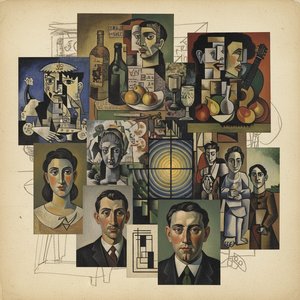
Explore 10 Cubist masterpieces by Picasso, Braque & more! Delve into the history of this revolutionary art movement. Find museum-quality reproductions and elevate your home decor with TopImpressionists. Discover all masterpieces on TopImpressionists.com

Explore 10 Cubist masterpieces by Picasso, Braque & more! Discover the stories behind these revolutionary paintings and their impact on modern art. Find museum-quality reproductions for your home at TopImpressionists.com – where art comes to life.

피카소, 브라크의 큐비즘 걸작 10선! 혁신적인 예술 세계를 만나보세요. 각 작품의 숨겨진 이야기와 감동을 TopImpressionists에서 경험하고, 당신의 공간에 특별한 예술적 영감을 더하세요. 지금 바로 TopImpressionists.com에서 모든 명작을 발견해보세요!

Explore 10 revolutionary Cubist portraits by Picasso, Braque & more! Discover the stories behind these iconic paintings and how they shaped modern art. Find museum-quality reproductions to elevate your home decor on TopImpressionists.com.


최신 미술 뉴스, 특별 혜택 및 인테리어 아이디어를 가장 먼저 만나보세요.
프로젝트에 대해 알려주시면 저희 미술 전문가들이 맞춤형 아트 제안 3가지를 전달해 드립니다.
당신만을 위한 맞춤형 옵션 3가지를 무료로 추천해 드립니다!


 미리보기
미리보기
 프린트 구매
 공유하기
공유하기 공유하기
공유하기
 상세 정보
상세 정보

 다운로드
다운로드
 유사 작품
유사 작품 X-레이
X-레이 슬라이드 쇼

 더 보기
더 보기









 유리 옵션은 110cm 미만 크기에서만 선택 가능합니다.


