
빠른 제작과 다양한 마감 옵션을 제공하는 박물관 품질의 지클레이 또는 캔버스 프린트. ( 수제 페인팅으로 전환하기 이미지로 전환)





























작품의 원본 비율을 유지하는 미리 설정된 크기 중에서 선택하세요.

특정 프레임이나 공간에 맞춰 직접 치수를 입력하실 수 있습니다. 선택하신 사이즈가 원본 이미지의 비율과 일치하지 않을 경우, 작품을 크롭(자르기)하거나 이미지를 대칭 또는 단색 채우기로 확장하여 제작합니다. 제작 시작 전, 최종 확인을 위해 디지털 목업이 전송됩니다.
화면상의 미리보기는 실제 크롭이나 확장 상태를 반영하지 않으므로, 최종 구도는 오직 목업을 통해서만 정확하게 확인하실 수 있습니다.
맞춤 사이즈 제작도 가능하지만, 원본 비율을 유지하기 위해서는 사전 정의된 목록에서 치수를 선택하시는 것을 권장합니다.

Café de Royan 1
복제본 크기
Pablo Picasso’s “Café de Royan” (1940) isn't merely a depiction of a seaside café; it’s a distilled essence of the anxieties and transformations swirling within Europe during the tumultuous years leading up to World War II. Born in Málaga, Spain, Picasso’s early life was marked by both artistic brilliance and profound personal loss – the death of his sister at a young age profoundly shaped his later work with recurring themes of melancholy and mortality. This sketch, created during his time in Royan, a charming French resort town on the Atlantic coast, captures a fleeting moment of apparent tranquility juxtaposed against the looming storm of war. It’s a testament to Picasso's ability to imbue even seemingly simple subjects with layers of psychological depth.
Royan, a popular destination for artists and intellectuals in the 1930s, offered Picasso a refuge from the growing political unrest in Paris. The town’s vibrant atmosphere, coupled with its proximity to the sea, provided fertile ground for his creative exploration. He established a studio there, capturing the essence of the locale through numerous sketches and paintings – “Café de Royan” being one of the most poignant examples. This particular drawing wasn't intended for grand exhibition; rather, it served as a personal record, a visual diary reflecting his observations and emotional state during that critical period.
“Café de Royan” is a quintessential example of Picasso’s evolving Cubist style. The drawing abandons traditional perspective, instead presenting multiple viewpoints simultaneously within a single frame. Buildings are fractured into geometric shapes – sharp angles and overlapping planes dominate the composition—creating a sense of dynamism and disorientation. This deliberate fragmentation mirrors the psychological impact of war, suggesting a world shattered and viewed through fragmented perceptions. The simplification of forms, characteristic of Cubism, allows Picasso to focus on the underlying structure and essence of the scene rather than its literal representation.
Notice how the figures are similarly treated – reduced to their essential components and rearranged within the composition. The walking figure, a solitary presence in the bustling cityscape, embodies a sense of isolation and contemplation. The other seated figure adds another layer of human interaction, yet both remain somewhat detached from the surrounding environment. Picasso’s use of line is equally expressive; loose, energetic strokes convey immediacy and spontaneity, reflecting the artist's intuitive approach to capturing his subject.
The drawing’s monochromatic palette – a range of blacks, whites, and grays—amplifies its emotional impact. The absence of color creates a stark, almost unsettling atmosphere, mirroring the anxieties and uncertainties of the time. This deliberate restriction focuses attention on the formal elements of the composition: line, shape, and texture. The rough, sketch-like quality of the drawing further enhances this sense of immediacy and vulnerability, as if we are witnessing a fleeting moment captured in charcoal.
Furthermore, the limited color scheme evokes the photographic techniques prevalent at the time, adding to the feeling of documentation and observation. Picasso’s choice of monochrome also aligns with his exploration of tonal values during his Analytical Cubist period, where he sought to represent objects through their fundamental components rather than their surface appearance. “Café de Royan” is a powerful demonstration of how color can be used not just for aesthetic effect but as a tool for conveying mood and emotion.
Beyond its formal qualities, "Café de Royan" carries symbolic weight. The café itself represents a fleeting moment of normalcy amidst the escalating chaos of war. The figures within suggest human interaction and daily life—a poignant reminder of what is at stake. The fragmented cityscape can be interpreted as a metaphor for the shattered state of Europe, while the solitary figure embodies the individual’s struggle to find meaning in a world turned upside down. Picasso's genius lies in his ability to transform a simple scene into a profound meditation on human experience.

1881 - 1973 , 스페인
전문적인 호텔 공간 디자인을 위한 흑백 회색 추상화 활용법! 색채 심리학 기반의 분위기 조성 전략과 최적의 작품 선택 가이드 제공. 브랜드 가치 제고 노하우를 지금 확인하세요.
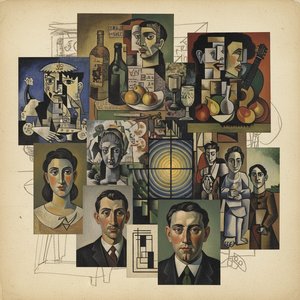
Explore 10 Cubist masterpieces by Picasso, Braque & more! Delve into the history of this revolutionary art movement. Find museum-quality reproductions and elevate your home decor with TopImpressionists. Discover all masterpieces on TopImpressionists.com

피카소, 브라크의 큐비즘 걸작 10선! 혁신적인 예술 세계를 만나보세요. 각 작품의 숨겨진 이야기와 감동을 TopImpressionists에서 경험하고, 당신의 공간에 특별한 예술적 영감을 더하세요. 지금 바로 TopImpressionists.com에서 모든 명작을 발견해보세요!

Explore the captivating world of monochrome art! Discover its rich history, influential artists like Malevich & Klein, and profound emotional impact. Expert insights for collectors & design enthusiasts.

Explore the rich history & artistic power of black and white photography. From early techniques to iconic masters like Ansel Adams, discover why monochrome continues to captivate art lovers today. Expert insights for collectors.


최신 미술 뉴스, 특별 혜택 및 인테리어 아이디어를 가장 먼저 만나보세요.
프로젝트에 대해 알려주시면 저희 미술 전문가들이 맞춤형 아트 제안 3가지를 전달해 드립니다.
당신만을 위한 맞춤형 옵션 3가지를 무료로 추천해 드립니다!


 미리보기
미리보기
 공유하기
공유하기 공유하기
공유하기
 상세 정보
상세 정보

 다운로드
다운로드
 유사 작품
유사 작품 X-레이
X-레이 슬라이드 쇼

 더 보기
더 보기









 유리 옵션은 110cm 미만 크기에서만 선택 가능합니다.


