
빠른 제작과 다양한 마감 옵션을 제공하는 박물관 품질의 지클레이 또는 캔버스 프린트. ( 손으로 그린 그림 구매 이미지 구매)





























작품의 원본 비율을 유지하는 미리 설정된 크기 중에서 선택하세요.

특정 프레임이나 공간에 맞춰 직접 치수를 입력하실 수 있습니다. 선택하신 사이즈가 원본 이미지의 비율과 일치하지 않을 경우, 작품을 크롭(자르기)하거나 이미지를 대칭 또는 단색 채우기로 확장하여 제작합니다. 제작 시작 전, 최종 확인을 위해 디지털 목업이 전송됩니다.
화면상의 미리보기는 실제 크롭이나 확장 상태를 반영하지 않으므로, 최종 구도는 오직 목업을 통해서만 정확하게 확인하실 수 있습니다.
맞춤 사이즈 제작도 가능하지만, 원본 비율을 유지하기 위해서는 사전 정의된 목록에서 치수를 선택하시는 것을 권장합니다.

Dos modelos vestidas
복제본 크기
Pablo Picasso's "Dos Modelos Vestidas" (Two Dressed Models), painted in 1933, is not merely a depiction of two women; it’s a profound exploration of form, perspective, and the evolving nature of representation during a pivotal moment in art history. This work, housed within the esteemed Suite Vollard collection, exemplifies Picasso's groundbreaking contributions to Cubism while simultaneously revealing his deep engagement with the human figure – a subject he relentlessly interrogated throughout his prolific career.
The painting immediately commands attention through its fractured composition and deliberate ambiguity. Picasso employs his signature Cubist technique, dissecting each model into a series of interlocking geometric planes—rectangles, triangles, and circles—that simultaneously exist and don’t exist within the same space. The figures themselves are rendered with an almost skeletal quality, their elongated necks and simplified features suggesting a detachment from traditional portraiture. Rather than aiming for realistic representation, Picasso prioritizes the exploration of form itself, presenting multiple viewpoints of each subject at once, challenging the viewer to actively reconstruct the image in their mind’s eye.
Executed in a monochromatic palette—primarily shades of gray—Picasso masterfully utilizes hatching and cross-hatching to create depth and texture. These subtle tonal variations, achieved through meticulous layering of lines, imbue the painting with a remarkable sense of dynamism and movement. The absence of vibrant color forces the viewer to focus on the interplay of shapes and planes, highlighting the structural elements of the composition. Notice how the overlapping forms create an illusion of volume, suggesting the curves of the women’s bodies despite their fragmented presentation. This deliberate manipulation of space is a hallmark of Cubism, pushing beyond traditional notions of perspective and realism.
The background, filled with these geometric abstractions, isn't merely decorative; it actively contributes to the painting’s overall effect. These shapes can be interpreted as architectural elements—windows, doorways, or perhaps even fragments of a stage set—further blurring the boundaries between reality and representation. Picasso seems to be suggesting that the models are not simply posed subjects but rather figures within a constructed environment, reflecting the anxieties and uncertainties of modern life.
"Dos Modelos Vestidas" was created during a period of immense social and political upheaval—the rise of fascism in Europe and the looming threat of World War II. Picasso’s art often reflected these turbulent times, grappling with themes of violence, loss, and displacement. The painting can be viewed as a commentary on the fragmentation of society and the breakdown of traditional values. It's important to note that Picasso was deeply influenced by African masks and Iberian sculpture during this period, which informed his exploration of simplified forms and geometric abstraction.
Furthermore, the Suite Vollard collection itself holds significant historical importance. Commissioned by French collector Louis Vauxcelles, it represented a bold departure from traditional printmaking, embracing innovative techniques such as offset lithography—a process that allowed for greater precision and detail than earlier methods. This experimentation with new technologies reflects Picasso’s willingness to push the boundaries of artistic expression.
Despite its fragmented appearance, “Dos Modelos Vestidas” possesses a powerful emotional resonance. The figures' averted gazes suggest a sense of detachment or perhaps even melancholy. They are not presented as objects of beauty but rather as subjects caught in a moment of introspection. The painting’s ambiguity invites the viewer to project their own emotions and interpretations onto the scene, creating a deeply personal experience.
Ultimately, “Dos Modelos Vestidas” is more than just a portrait; it's a meditation on perception, representation, and the complexities of the human condition. It remains a testament to Picasso’s genius—a work that continues to challenge and inspire viewers decades after its creation. A high-quality reproduction captures not only the visual details but also the spirit of innovation and emotional depth that define this iconic masterpiece.

1881 - 1973 , 스페인

파블로 피카소의 시대를 초월하는 25개의 걸작을 만나보세요. 입체주의부터 꿈까지, 각 작품에 담긴 예술과 영감을 TopImpressionists에서 감상하세요. 고품질 유화와 판화를 소장하고 특별한 공간을 완성해보세요! 지금 바로 TopImpressionists.com에서 컬렉션을 탐험하세요.
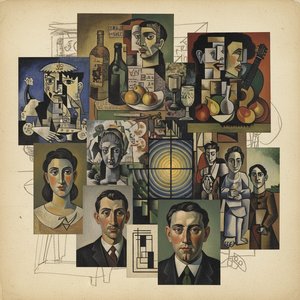
Explore 10 Cubist masterpieces by Picasso, Braque & more! Delve into the history of this revolutionary art movement. Find museum-quality reproductions and elevate your home decor with TopImpressionists. Discover all masterpieces on TopImpressionists.com

피카소, 브라크의 큐비즘 걸작 10선! 혁신적인 예술 세계를 만나보세요. 각 작품의 숨겨진 이야기와 감동을 TopImpressionists에서 경험하고, 당신의 공간에 특별한 예술적 영감을 더하세요. 지금 바로 TopImpressionists.com에서 모든 명작을 발견해보세요!

Explore the revolutionary world of Cubism. Discover how Pablo Picasso and Georges Braque dismantled perspective to redefine modern art through geometric innovation and analytical mastery. An essential guide for art students, collectors, and history enthusiasts.

Master the complexities of Cubism with our expert guide. Explore how Picasso and Braque revolutionized modern art through fragmentation, multiple perspectives, and geometric innovation. Perfect for art students and collectors seeking deep historical insight.


최신 미술 뉴스, 특별 혜택 및 인테리어 아이디어를 가장 먼저 만나보세요.
프로젝트에 대해 알려주시면 저희 미술 전문가들이 맞춤형 아트 제안 3가지를 전달해 드립니다.
당신만을 위한 맞춤형 옵션 3가지를 무료로 추천해 드립니다!


 미리보기
미리보기
 공유하기
공유하기 공유하기
공유하기
 상세 정보
상세 정보

 다운로드
다운로드
 유사 작품
유사 작품 X-레이
X-레이 슬라이드 쇼

 더 보기
더 보기









 유리 옵션은 110cm 미만 크기에서만 선택 가능합니다.


