
빠른 제작과 다양한 마감 옵션을 제공하는 박물관 품질의 지클레이 또는 캔버스 프린트. ( 손으로 그린 그림 구매 이미지 구매)





























작품의 원본 비율을 유지하는 미리 설정된 크기 중에서 선택하세요.

특정 프레임이나 공간에 맞춰 직접 치수를 입력하실 수 있습니다. 선택하신 사이즈가 원본 이미지의 비율과 일치하지 않을 경우, 작품을 크롭(자르기)하거나 이미지를 대칭 또는 단색 채우기로 확장하여 제작합니다. 제작 시작 전, 최종 확인을 위해 디지털 목업이 전송됩니다.
화면상의 미리보기는 실제 크롭이나 확장 상태를 반영하지 않으므로, 최종 구도는 오직 목업을 통해서만 정확하게 확인하실 수 있습니다.
맞춤 사이즈 제작도 가능하지만, 원본 비율을 유지하기 위해서는 사전 정의된 목록에서 치수를 선택하시는 것을 권장합니다.

Flowers on a table 1
복제본 크기
Pablo Picasso's “Flowers on a Table 1,” painted in 1907, isn’t merely a depiction of a vase and its contents; it’s a pivotal moment in the development of Cubism – a radical departure from traditional representation that would forever alter the course of art history. This particular iteration, often considered one of Picasso's earliest explorations of the style alongside “Still Life with Fruit,” offers a fascinating glimpse into his nascent ideas about form and space. The painting’s yellowish tint, hinting at age and perhaps even a faded memory, immediately establishes an atmosphere of quiet contemplation, inviting us to step closer and decipher the fragmented reality presented before us.
The scene is deceptively simple: a metal vase, holding a collection of everyday objects – scissors, a knife, spoons, a bowl, a cup, and a bottle – arranged on a table. However, Picasso doesn’t offer a unified, cohesive view. Instead, he dismantles the forms, breaking them down into geometric shapes and presenting multiple perspectives simultaneously. The vase itself isn't rendered as a single, solid volume; it appears to be constructed from overlapping planes of color and line, suggesting its inherent instability and challenging our perception of depth. This deliberate fracturing is characteristic of Cubism’s core principle – to represent objects not as they appear to the eye in a single moment, but as they are perceived by the mind, assembled from various viewpoints.
“Flowers on a Table 1” stands as a crucial stepping stone toward what would become known as Analytical Cubism. Following his encounter with Paul Cézanne’s work – particularly the artist's emphasis on geometric forms and multiple viewpoints – Picasso began to experiment with breaking down objects into their constituent parts, analyzing them from different angles before reassembling them in an abstract composition. This process is evident here; each element—the vase, the utensils—is dissected and presented as a collection of interlocking planes, creating a sense of dynamism and spatial ambiguity. The lack of traditional shading or modeling further emphasizes this fragmented approach, forcing the viewer to actively engage with the artwork and reconstruct its form in their own mind.
Interestingly, Picasso’s exploration of still life coincided with a period of personal upheaval. His sister Conchita's death profoundly affected him, and themes of loss and mortality subtly permeate his work during this time. While not overtly melancholic, the painting carries an undercurrent of fragility and impermanence—a reflection perhaps of the transient nature of beauty and the inevitability of decay. The muted color palette contributes to this mood, creating a sense of quiet introspection.
Despite its abstract qualities, “Flowers on a Table 1” is deeply rooted in the everyday. The objects depicted – a vase, scissors, knives, spoons—are familiar and commonplace, yet Picasso elevates them to an artistic level through his innovative approach. These tools of domesticity become symbols of human activity, hinting at the rituals and routines of daily life. The arrangement itself can be interpreted as a meditation on order versus chaos, suggesting a delicate balance between functionality and abstraction. The inclusion of the chair in the background subtly anchors the scene within a recognizable space, providing a point of reference for the viewer’s interpretation.
“Flowers on a Table 1” is more than just a still life; it’s a manifesto. It represents a radical shift in artistic thinking, paving the way for future generations of artists to explore abstraction and challenge traditional notions of representation. Picasso’s pioneering work laid the foundation for Synthetic Cubism, where he began incorporating collage elements into his paintings, further blurring the boundaries between art and reality. Today, reproductions of this seminal piece continue to captivate viewers with its innovative composition, evocative atmosphere, and profound exploration of form and perception. TopImpressionists offers meticulously crafted hand-painted reproductions that faithfully capture the essence of this groundbreaking artwork, allowing you to experience Picasso’s revolutionary vision firsthand.

1881 - 1973 , 스페인

파블로 피카소의 시대를 초월하는 25개의 걸작을 만나보세요. 입체주의부터 꿈까지, 각 작품에 담긴 예술과 영감을 TopImpressionists에서 감상하세요. 고품질 유화와 판화를 소장하고 특별한 공간을 완성해보세요! 지금 바로 TopImpressionists.com에서 컬렉션을 탐험하세요.
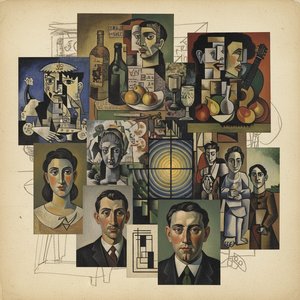
Explore 10 Cubist masterpieces by Picasso, Braque & more! Delve into the history of this revolutionary art movement. Find museum-quality reproductions and elevate your home decor with TopImpressionists. Discover all masterpieces on TopImpressionists.com

피카소, 브라크의 큐비즘 걸작 10선! 혁신적인 예술 세계를 만나보세요. 각 작품의 숨겨진 이야기와 감동을 TopImpressionists에서 경험하고, 당신의 공간에 특별한 예술적 영감을 더하세요. 지금 바로 TopImpressionists.com에서 모든 명작을 발견해보세요!

Explore the revolutionary world of Cubism. Discover how masters Pablo Picasso and Georges Braque dismantled reality through geometric abstraction to redefine modern art history.

Explore 10 Cubist masterpieces by Picasso, Braque & more! Discover the stories behind these revolutionary paintings and their impact on modern art. Find museum-quality reproductions for your home at TopImpressionists.com – where art comes to life.


최신 미술 뉴스, 특별 혜택 및 인테리어 아이디어를 가장 먼저 만나보세요.
프로젝트에 대해 알려주시면 저희 미술 전문가들이 맞춤형 아트 제안 3가지를 전달해 드립니다.
당신만을 위한 맞춤형 옵션 3가지를 무료로 추천해 드립니다!


 미리보기
미리보기
 공유하기
공유하기 공유하기
공유하기
 상세 정보
상세 정보

 다운로드
다운로드
 유사 작품
유사 작품 X-레이
X-레이 슬라이드 쇼
 더 보기
더 보기









 유리 옵션은 110cm 미만 크기에서만 선택 가능합니다.


