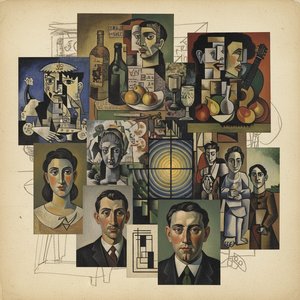
작품 상세 설명
Pablo Picasso’s “Hojas de Acanto”: A Study in Cubist Fragmentation
“Hojas de acanto” (Cactus Leaves), created by Pablo Picasso in 1913, is more than just a botanical study; it's a pivotal moment in the development of Cubism and a profound exploration of form, space, and perception. This deceptively simple drawing, rendered in charcoal on paper, captures the essence of Picasso’s groundbreaking approach to representation – dismantling familiar forms into their geometric components and reassembling them in an unsettling yet captivating manner. The work immediately draws the eye with its stark contrast between the dark, almost velvety charcoal strokes and the pale, slightly textured surface of the paper, creating a sense of depth and materiality that belies the drawing’s two-dimensional nature.
The Genesis of Cubism
Picasso created “Hojas de acanto” during his most intense period of experimentation with Cubism, a movement he co-founded alongside Georges Braque. Emerging from the ashes of Impressionism and Post-Impressionism, Cubism rejected traditional perspective and sought to represent objects from multiple viewpoints simultaneously. Rather than depicting a single, fixed reality, Picasso aimed to capture the *idea* of an object – its constituent parts as they exist within the mind’s eye. “Hojas de acanto” exemplifies this perfectly. The cactus leaves are not rendered with realistic detail; instead, they are broken down into a series of sharp angles and overlapping planes, suggesting their structure from various positions at once. This fragmentation mirrors Picasso's own intellectual approach to art – dissecting the familiar to reveal its underlying geometry.
Technique and Materiality
The drawing’s power lies in its masterful execution of Cubist principles. Picasso employs a meticulous technique, using precise lines and carefully controlled shading to define each fragmented element. The charcoal is applied with varying pressures, creating a dynamic range of tones that adds volume and texture to the seemingly flat surface. Notice how he uses hatching – closely spaced parallel lines – to suggest depth and shadow, while also employing cross-hatching to build up areas of darker tone. This layering of marks contributes significantly to the drawing’s tactile quality, inviting the viewer to trace the contours of each individual leaf with their eyes. The choice of charcoal itself is significant; its matte finish contrasts beautifully with the smooth paper, further emphasizing the drawing's sculptural qualities.
Symbolism and Emotional Resonance
While ostensibly a botanical study, “Hojas de acanto” carries deeper symbolic weight. Cactus plants are often associated with resilience, survival, and even defense – qualities that resonate powerfully within the context of Picasso’s era, marked by political upheaval and social unrest. The fragmented nature of the leaves can be interpreted as a metaphor for the breakdown of traditional values and the disorientation of modern life. Furthermore, the drawing's starkness and lack of color evoke a sense of melancholy and introspection – a characteristic often found in Picasso’s work during this period. It is not a joyous celebration of nature; rather, it’s a contemplative meditation on its deconstruction.
A Legacy of Innovation
“Hojas de acanto” stands as a cornerstone of 20th-century art, demonstrating Picasso's radical departure from traditional representation and his pioneering exploration of Cubist principles. It is a testament to the power of abstraction and a profound reflection on the nature of perception. Reproductions of this iconic drawing offer an accessible gateway into the world of Cubism, allowing viewers to appreciate Picasso’s genius and contemplate the enduring legacy of his revolutionary approach to art. Its stark beauty and intellectual depth continue to captivate and inspire generations of artists and art lovers alike.