작품 상세 설명
Pablo Picasso’s Woman with Cap: A Fragment of Cubist Vision
Pablo Ruiz y Picasso, born in Málaga, Spain, on October 25, 1881, stands as one of the most influential figures in twentieth-century art. His early life was marked by familial hardship and artistic fervor—legend recounts his first utterances as “piz,” an earnest attempt to pronounce ‘pencil,’ demonstrating a predisposition for visual representation that would define his entire career. Encouraged by his father, José Ruiz y Blasco, a painter himself, Picasso received foundational training, swiftly surpassing his mentor’s abilities with a naturalistic talent foreshadowing the revolutionary style he would forge. The subsequent relocation of his family to A Coruña and Barcelona brought further challenges—the devastating loss of his sister instilled in him themes of sorrow and mortality that subtly permeate his later oeuvre. Even during formal studies at the School of Fine Arts in Barcelona and brief explorations at the Royal Academy of San Fernando, Picasso resisted academic conventions, prioritizing personal expression above prescribed rules.
The Genesis of Cubism
Picasso’s artistic trajectory culminated in the co-founding of Cubism alongside Georges Braque, a movement that irrevocably altered the landscape of painting. Rejecting traditional perspective and illusionistic representation, Cubists dismantled objects into geometric fragments—planes intersecting at multiple viewpoints—creating a fractured yet unified image. This radical approach stemmed from Picasso’s fascination with Cézanne's explorations of form and volume, as well as his engagement with African sculpture, which captivated him with its stylized depiction of figures and surfaces. The resulting canvases prioritized conceptual representation over visual realism, inviting viewers to actively participate in reconstructing the depicted scene.
Analyzing Woman with Cap
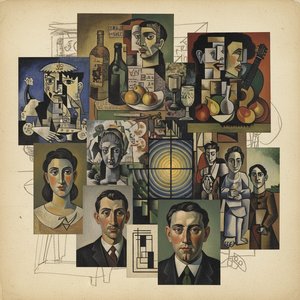
“Woman with Cap,” painted circa 1910-12, exemplifies Picasso’s mastery of Cubist principles. Executed in oil on canvas, the artwork presents a portrait of a woman adorned with a yellow headband—a deliberate choice reflecting Picasso's interest in exploring color and texture as expressive tools. The figure is rendered in fragmented planes, mirroring the simultaneous viewpoints characteristic of Cubism. Notice how the head and torso are depicted from multiple perspectives simultaneously, creating an unsettling yet compelling visual paradox. A subtle book rests on her left side, symbolizing knowledge and contemplation—a recurring motif in Picasso’s work—while a clock positioned in the upper right corner serves as a poignant reminder of time's passage and mortality.
Symbolism and Emotional Resonance
Beyond its formal innovation, “Woman with Cap” resonates deeply with emotional complexity. The woman’s gaze directs towards the viewer, establishing an intimate connection that transcends mere visual observation. Her expression conveys both vulnerability and determination—a testament to Picasso’s ability to imbue his subjects with psychological depth. The muted palette—primarily blues and purples—contributes to the painting's melancholic atmosphere, mirroring themes of loss and remembrance prevalent in Picasso’s artistic output.
A Legacy Enduring Through Reproduction
Today, “Woman with Cap” remains a cornerstone of Picasso’s legacy, celebrated for its groundbreaking stylistic achievements and profound emotional impact. TopImpressionists.com offers meticulously crafted reproductions that allow art enthusiasts to experience the beauty and intellectual rigor of this iconic masterpiece in their own homes. Bringing Picasso's vision into your interior design is an investment in artistic history—a celebration of innovation and enduring human emotion.