
빠른 제작과 다양한 마감 옵션을 제공하는 박물관 품질의 지클레이 또는 캔버스 프린트. ( 손으로 그린 그림 구매 이미지 구매)





























작품의 원본 비율을 유지하는 미리 설정된 크기 중에서 선택하세요.

특정 프레임이나 공간에 맞춰 직접 치수를 입력하실 수 있습니다. 선택하신 사이즈가 원본 이미지의 비율과 일치하지 않을 경우, 작품을 크롭(자르기)하거나 이미지를 대칭 또는 단색 채우기로 확장하여 제작합니다. 제작 시작 전, 최종 확인을 위해 디지털 목업이 전송됩니다.
화면상의 미리보기는 실제 크롭이나 확장 상태를 반영하지 않으므로, 최종 구도는 오직 목업을 통해서만 정확하게 확인하실 수 있습니다.
맞춤 사이즈 제작도 가능하지만, 원본 비율을 유지하기 위해서는 사전 정의된 목록에서 치수를 선택하시는 것을 권장합니다.

Self-Portrait (8)
복제본 크기
The early 20th century was a crucible of artistic innovation, a period where established conventions shattered and new languages of expression began to emerge. Within this vibrant landscape, Pablo Picasso stands as a towering figure – not merely an artist, but a revolutionary who fundamentally reshaped our understanding of representation itself. His “Self-Portrait (8),” painted in 1906, isn’t simply a likeness; it's a meticulously constructed puzzle box, offering glimpses into the artist’s evolving psyche and foreshadowing the radical trajectory of Cubism. This work, rendered in a strikingly monochromatic palette and dominated by geometric forms, represents a pivotal moment in Picasso’s artistic journey – a bridge between his earlier explorations and the groundbreaking innovations that would define his legacy.
Initially conceived during what is often referred to as Picasso's “Proto-Cubist” phase, this self-portrait demonstrates a deliberate shift away from traditional portraiture. Notice how the figure isn’t presented in a single, unified perspective. Instead, it’s fragmented and dissected, viewed simultaneously from multiple angles – a technique that anticipates the core principles of Cubism. The sharp, angular planes of the face, particularly around the eyes and mouth, are deliberately distorted, creating an unsettling yet compelling effect. This isn't about capturing a realistic image; it’s about conveying an internal state, a sense of psychological complexity. The limited color scheme – primarily shades of gray and black – further amplifies this effect, stripping away any superfluous detail and focusing attention on the essential forms.
“Self-Portrait (8)” is deeply rooted in the currents of Expressionism, a movement that prioritized emotional intensity over objective representation. Picasso’s use of distorted features – the prominent brow, the narrowed eyes – speaks to a sense of introspection and perhaps even anxiety. However, this work also possesses crucial precursors to Cubism. The simultaneous presentation of different viewpoints, the flattening of space, and the emphasis on geometric shapes are all hallmarks of this emerging style. It’s as if Picasso is actively dismantling traditional notions of perspective, laying the groundwork for a new way of seeing – one that would soon revolutionize the art world.
Interestingly, Picasso's experimentation during this period was profoundly influenced by other artists. The works of Claude Monet, with his fleeting impressions of light and color, provided a counterpoint to the emotional intensity of Expressionism. Similarly, Edvard Munch’s Symbolist paintings, characterized by their evocative imagery and psychological depth, offered a model for conveying complex emotions through simplified forms. Even Paul Cézanne, a key figure in the transition from Impressionism to Cubism, exerted an influence, particularly in his emphasis on geometric structures and the exploration of multiple viewpoints within a single composition.
While seemingly austere, “Self-Portrait (8)” is rich with symbolic meaning. The monochromatic palette itself can be interpreted as representing mourning – a direct response to the death of Picasso’s sister in 1895. The sharp angles and fragmented forms might also reflect a sense of disorientation or uncertainty, mirroring the turbulent times following the turn of the century. Furthermore, the painting's creation coincided with a period of intense social and political upheaval, marked by war, revolution, and rapid industrialization. Picasso’s art, in this context, can be seen as a reflection of these anxieties – a visual exploration of the complexities of modern life.
“Self-Portrait (8)” is more than just a painting; it's a manifesto. It represents a bold departure from traditional portraiture and a crucial step towards the development of Cubism, one of the most influential art movements of the 20th century. Picasso’s willingness to experiment with form, perspective, and color paved the way for countless artists who followed in his footsteps. Reproductions of this powerful work offer a unique opportunity to engage with a pivotal moment in art history – to witness firsthand the genesis of a revolutionary style and to contemplate the enduring legacy of one of the greatest artists of all time.
Further Resources:

1881 - 1973 , 스페인

파블로 피카소의 시대를 초월하는 25개의 걸작을 만나보세요. 입체주의부터 꿈까지, 각 작품에 담긴 예술과 영감을 TopImpressionists에서 감상하세요. 고품질 유화와 판화를 소장하고 특별한 공간을 완성해보세요! 지금 바로 TopImpressionists.com에서 컬렉션을 탐험하세요.
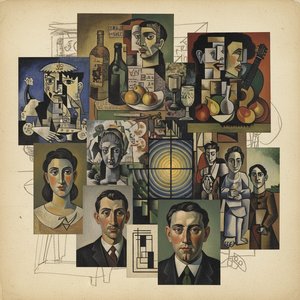
Explore 10 Cubist masterpieces by Picasso, Braque & more! Delve into the history of this revolutionary art movement. Find museum-quality reproductions and elevate your home decor with TopImpressionists. Discover all masterpieces on TopImpressionists.com

피카소, 브라크의 큐비즘 걸작 10선! 혁신적인 예술 세계를 만나보세요. 각 작품의 숨겨진 이야기와 감동을 TopImpressionists에서 경험하고, 당신의 공간에 특별한 예술적 영감을 더하세요. 지금 바로 TopImpressionists.com에서 모든 명작을 발견해보세요!

Explore 10 Cubist masterpieces by Picasso, Braque & more! Discover the stories behind these revolutionary paintings and their impact on modern art. Find museum-quality reproductions for your home at TopImpressionists.com – where art comes to life.

Explore the revolutionary world of Cubism. Discover how masters Pablo Picasso and Georges Braque dismantled reality through geometric abstraction to redefine modern art history.


최신 미술 뉴스, 특별 혜택 및 인테리어 아이디어를 가장 먼저 만나보세요.
프로젝트에 대해 알려주시면 저희 미술 전문가들이 맞춤형 아트 제안 3가지를 전달해 드립니다.
당신만을 위한 맞춤형 옵션 3가지를 무료로 추천해 드립니다!


 미리보기
미리보기
 공유하기
공유하기 공유하기
공유하기
 상세 정보
상세 정보

 다운로드
다운로드
 유사 작품
유사 작품 X-레이
X-레이 슬라이드 쇼

 더 보기
더 보기









 유리 옵션은 110cm 미만 크기에서만 선택 가능합니다.


