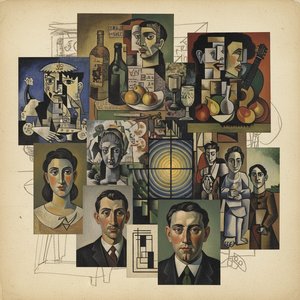
Portrait of Suzanne Bloch - Pablo Picasso's Blue Period Masterpiece
Pablo Picasso’s “Portrait of Suzanne Bloch,” completed in 1904 during his intensely formative Blue Period, stands as an emblem of artistic innovation and emotional depth—a testament to Picasso’s early exploration of Realism infused with profound psychological resonance. This oil on canvas painting, measuring 65 x 54 cm and currently residing at the Kunstmuseum Bern in Switzerland, transcends mere representation; it delves into the complexities of human experience through a masterful manipulation of color and form.
- Subject Matter: The portrait depicts Suzanne Bloch, a celebrated soprano known for her interpretations of Wagnerian opera—a figure Picasso encountered during his Parisian artistic milieu. Alongside Bloch herself, two indistinct individuals populate the background, contributing to an atmosphere of isolation and contemplation.
- Stylistic Characteristics: “Portrait of Suzanne Bloch” embodies the core tenets of Picasso’s Blue Period (1901–1904). Dominated by shades of indigo, Prussian blue, and cerulean, the palette reflects a preoccupation with themes of melancholy, despair, and social alienation—mirroring Picasso's own emotional state at the time.
- Technique: Picasso employed a technique characterized by thick impasto—a textural layering of paint that creates palpable surface irregularities—enhancing the painting’s expressive qualities. The artist skillfully utilized brushstrokes to convey emotion and dynamism, capturing Bloch’s gaze with remarkable precision.
Compositional Harmony and Symbolism
The composition is deliberately austere, prioritizing a central focus on Suzanne Bloch while minimizing detail in the surrounding figures. Picasso’s masterful use of perspective subtly guides the viewer's eye toward Bloch’s face—the primary conduit for conveying her inner turmoil. The inclusion of a chair or bench in the background serves as a visual anchor and reinforces the theme of solitude, symbolizing Bloch’s detachment from societal norms.
- Color Palette: Picasso’s deliberate choice of monochromatic hues underscores the painting's emotional core—a reflection of the artist’s preoccupation with grief and vulnerability.
- Gesture and Expression: Bloch’s open mouth—a gesture laden with unspoken emotion—captures a moment of profound introspection, inviting contemplation about human psychology and artistic representation.
Historical Context – Picasso's Engagement with Wagnerian Opera
Picasso’s fascination with Wagnerian opera stemmed from his admiration for the composer’s dramatic intensity and psychological exploration—influences that profoundly shaped his artistic vision during this pivotal period. Suzanne Bloch herself was a prominent advocate of Wagnerian ideals, representing a counterpoint to bourgeois values prevalent in Parisian society at the time. Picasso's engagement with Bloch reflects a broader interest in confronting societal anxieties and exploring the human condition through art.
- Influence of Cézanne: Picasso’s approach to portraying Suzanne Bloch demonstrates an awareness of Cézanne’s pioneering explorations of form and space—a stylistic dialogue that foreshadowed Cubism's revolutionary aesthetic breakthroughs.
Legacy and Artistic Significance
“Portrait of Suzanne Bloch” remains a cornerstone of Picasso’s oeuvre, encapsulating his early Realist style while simultaneously signaling the nascent stages of Cubism—a movement that would irrevocably transform the landscape of modern art. Its enduring appeal lies in its ability to evoke empathy and provoke contemplation about themes of isolation, vulnerability, and artistic expression—solidifying Picasso's position as one of the most influential artists of the 20th century. The painting’s presence at Kunstmuseum Bern ensures that this poignant masterpiece continues to inspire audiences worldwide.
Discover More About Pablo Picasso
Explore Picasso's groundbreaking contributions to art history:
Pablo Picasso,
Pablo Picasso and
Pablo Picasso. Learn about his artistic evolution and the enduring impact of his work on subsequent generations of artists. Visit Kunstmuseum Bern:
Kunstmuseum Bern, Switzerland



 프린트 구매하기
 공유하기
공유하기 공유하기
공유하기
 상세 정보
상세 정보

 다운로드
다운로드
 유사 작품
유사 작품 X-레이
X-레이 슬라이드 쇼


 더 보기
더 보기






































 유리 옵션은 110cm 미만 크기에서만 선택 가능합니다.