






























작품의 원본 비율을 유지하는 미리 설정된 크기 중에서 선택하세요.

특정 프레임이나 공간에 맞춰 직접 치수를 입력하실 수 있습니다. 선택하신 사이즈가 원본 이미지의 비율과 일치하지 않을 경우, 작품을 크롭(자르기)하거나 이미지를 대칭 또는 단색 채우기로 확장하여 제작합니다. 제작 시작 전, 최종 확인을 위해 디지털 목업이 전송됩니다.
화면상의 미리보기는 실제 크롭이나 확장 상태를 반영하지 않으므로, 최종 구도는 오직 목업을 통해서만 정확하게 확인하실 수 있습니다.
맞춤 사이즈 제작도 가능하지만, 원본 비율을 유지하기 위해서는 사전 정의된 목록에서 치수를 선택하시는 것을 권장합니다.

The Mirror
복제본 크기
Pablo Picasso's 1932 painting, “The Mirror,” isn’t a straightforward depiction of a reflective surface; it’s a profoundly layered exploration of identity, perception, and the unsettling nature of self-representation. Captured in a deceptively simple composition – a woman reclining on the floor with her head resting against a mirror – the work immediately draws us into a space of quiet contemplation. The painting's power lies not in its realism but in the deliberate ambiguity surrounding the figures present, creating an atmosphere of psychological depth rarely found in Picasso’s earlier Cubist explorations.
The initial impression is one of vulnerability and repose. The woman, rendered with a loose, expressive brushstroke characteristic of Picasso's later work, appears lost in thought or perhaps drifting into sleep. Her posture suggests both surrender and a certain melancholy. However, the inclusion of two secondary figures – a man partially visible at the top left and another near the bottom right – introduces an element of unease. They are not fully integrated into the scene; their presence feels almost spectral, as if they represent fragments of memory or perhaps alternate versions of herself. This deliberate fragmentation mirrors the fractured nature of identity that Picasso so often explored in his art.
“The Mirror” firmly places Picasso within the context of his mature style, bridging the gap between his earlier Cubist experiments and the more emotionally charged works he produced during the 1930s. While retaining elements of Cubism – the fractured planes, multiple perspectives, and flattened space – the painting moves beyond purely analytical deconstruction. The forms are less rigidly geometric and more fluid, allowing for a greater sense of organic movement and psychological intensity. The color palette is muted, dominated by browns, grays, and ochres, contributing to the overall mood of introspection and quiet sadness.
Picasso’s technique here demonstrates a remarkable control over his materials. He employs a layering of paint – glazes and scumbles – that creates a rich surface texture and imbues the figures with a palpable sense of physicality. The mirror itself isn't rendered as a perfect, flawless reflection; it’s subtly distorted, adding to the painting’s unsettling quality. This deliberate imperfection suggests that the image presented is not an objective truth but rather a subjective interpretation – a fragmented representation of reality filtered through the woman’s own consciousness.
The mirror, of course, is central to the painting's symbolism. It represents not just a physical surface for reflection but also the complex process of self-awareness. Picasso frequently used mirrors as metaphors for the elusive nature of identity, suggesting that we are always both observer and observed, subject and object. The woman’s head resting against it implies a confrontation with her own image – a moment of introspection where she is forced to confront her own vulnerabilities and uncertainties.
The presence of the two secondary figures adds another layer of complexity. They could represent lost loves, forgotten memories, or perhaps even aspects of herself that she has suppressed. Their ambiguous positioning reinforces the idea that identity is not a fixed entity but rather a constantly evolving construct shaped by experience and relationships. Ultimately, “The Mirror” invites us to contemplate the mysteries of selfhood and the ways in which we perceive ourselves and others – a timeless theme explored with Picasso’s characteristic brilliance and emotional depth.

1881 - 1973 , 스페인

Explore the powerful history of social commentary in art! Discover key movements like Realism & Satire, influential artists, and how art reflects—and shapes—society. Expert insights at TopImpressionists.
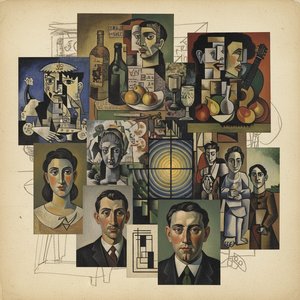
Explore 10 Cubist masterpieces by Picasso, Braque & more! Delve into the history of this revolutionary art movement. Find museum-quality reproductions and elevate your home decor with TopImpressionists. Discover all masterpieces on TopImpressionists.com

피카소, 브라크의 큐비즘 걸작 10선! 혁신적인 예술 세계를 만나보세요. 각 작품의 숨겨진 이야기와 감동을 TopImpressionists에서 경험하고, 당신의 공간에 특별한 예술적 영감을 더하세요. 지금 바로 TopImpressionists.com에서 모든 명작을 발견해보세요!

Explore the revolutionary art of Pablo Picasso with TopImpressionists.com. Discover Cubism's origins, symbolism in his masterpieces & investment insights for collectors. Expert appraisal & custom reproductions available.

조르주 브라크의 시대를 초월한 25개의 걸작을 만나보세요. 입체주의를 개척한 프랑스 화가의 예술 세계와 숨겨진 이야기를 TopImpressionists에서 감상하고, 명작 유화 복제본으로 공간에 특별함을 더하세요. 지금 바로 컬렉션을 탐험하세요!


최신 미술 뉴스, 특별 혜택 및 인테리어 아이디어를 가장 먼저 만나보세요.
프로젝트에 대해 알려주시면 저희 미술 전문가들이 맞춤형 아트 제안 3가지를 전달해 드립니다.
당신만을 위한 맞춤형 옵션 3가지를 무료로 추천해 드립니다!

 Preview
 작품 구매하기
 공유하기
공유하기 공유하기
공유하기
 상세 정보
상세 정보

 다운로드
다운로드
 유사 작품
유사 작품 X-레이
X-레이 슬라이드 쇼

 더 보기
더 보기









 유리 옵션은 110cm 미만 크기에서만 선택 가능합니다.


